Your bathroom is one of the most important rooms in your home. It's where your day begins and ends, and it needs to work hard while looking beautiful. Whether you're planning a complete renovation or a refresh, these bathroom design ideas will help you create a space that perfectly balances style, practicality, and the unique requirements of UK homes.
Understanding Your Bathroom Design Brief
Before diving into aesthetics, consider how you actually use your bathroom. A family bathroom serving multiple people has very different needs from a serene master en-suite. Are you rushing through morning routines, or do you want a spa-like retreat for long soaks? Do you have children who need accessible storage, or elderly family members requiring mobility considerations?
UK bathrooms present specific challenges. Most British homes have smaller bathroom footprints than their American counterparts. Period properties come with quirky layouts, restricted floor plans, and sometimes listed building constraints. Many bathrooms lack natural light, and ventilation must meet building regulations. Water pressure varies significantly across regions, affecting shower and tap choices.
These factors shape every design decision. The good news is that thoughtful design can turn constraints into opportunities.
Making the Most of Small Bathrooms
Small bathrooms dominate UK housing stock, but size limitations need not mean compromising on style or function. Strategic planning makes even the tiniest bathroom feel spacious and work efficiently.
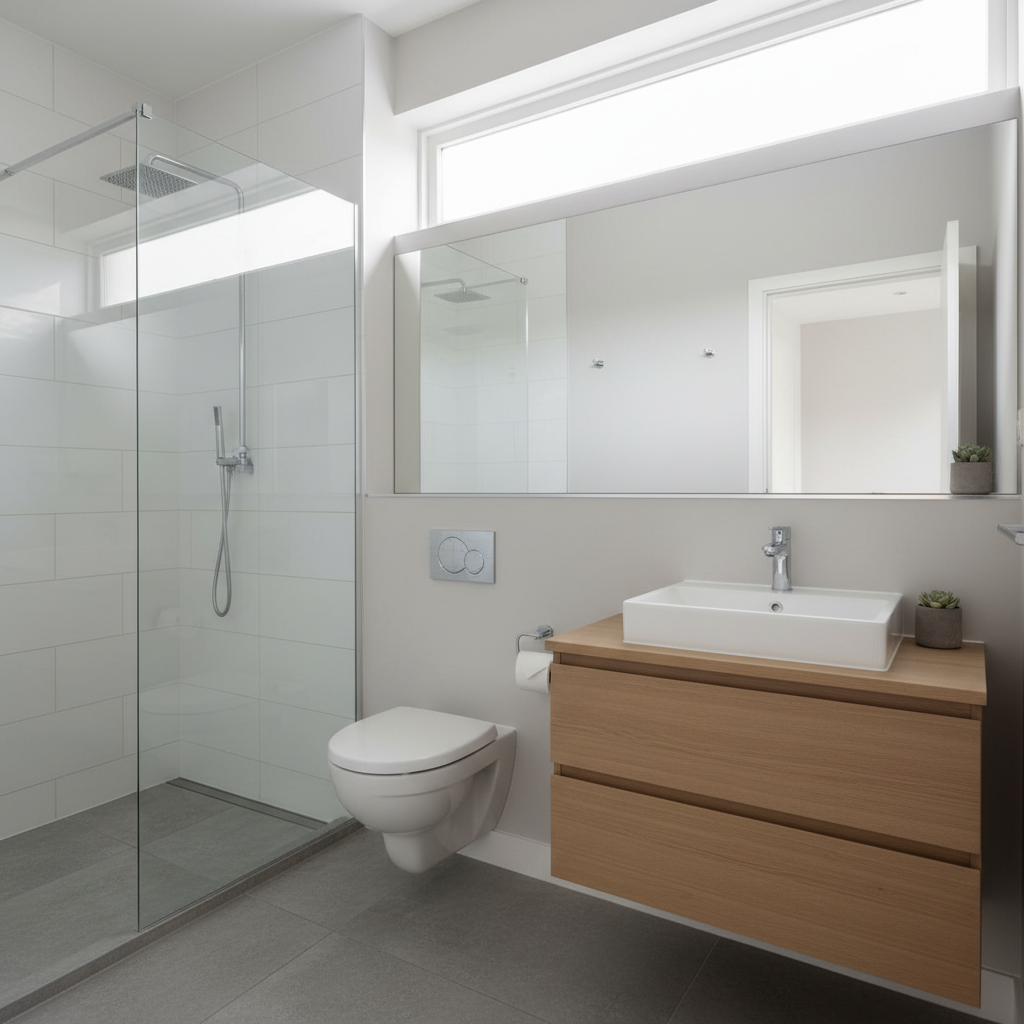
Wall-hung sanitaryware creates visual space by revealing floor area. A floating vanity or wall-mounted toilet makes cleaning easier while giving the illusion of more room. Choose compact designs without sacrificing comfort. Modern short-projection toilets sit 10-15cm closer to the wall than standard models. Space-saving basins measure 40-45cm wide instead of standard 50-55cm.
Shower over bath remains the most space-efficient solution for family bathrooms. Add a curved or P-shaped shower bath to create a more generous showering area. If you have just enough space, a compact walk-in shower (minimum 800mm x 800mm) eliminates bulky shower doors and creates an open feel.
Corner installations maximize awkward spaces. Corner basins, toilets, and shower enclosures tuck facilities into otherwise wasted areas. Recessed storage built into wall cavities (between studs or into false walls) provides storage without eating into floor space.
Light colours expand perceived space. White and pale neutrals reflect maximum light, but don't feel you must stick to boring beige. Soft greys, duck egg blue, pale sage, and blush pink all work beautifully. Large-format tiles reduce grout lines, creating a calmer, more spacious feel. Continuing the same tiles from floor to wall creates continuity.
Mirrors are your secret weapon. A large mirror above the basin reflects light and visually doubles the space. Consider a full-width mirror or even mirror tiles on one wall for maximum impact.
Lighting Your Bathroom Properly
Bathroom lighting combines technical requirements with creating the right atmosphere. UK building regulations require bathroom lighting zones, particularly around baths and showers where specific IP ratings protect against water ingress.
Layer your lighting for flexibility. Overhead lighting provides general illumination but creates unflattering shadows. Add task lighting around mirrors, ideally positioning lights either side of the mirror at face height rather than above, which casts shadows. Consider LED strips integrated into mirror surrounds or medicine cabinets for even, shadow-free lighting.
Dimmer switches let you adjust the mood from bright and energizing for morning routines to soft and relaxing for evening baths. Choose LED bulbs with adjustable colour temperature or install warm white (2700-3000K) for relaxing ambiance. Avoid cool white (4000K+) in bathrooms as it feels clinical.
Spotlights remain popular but position them carefully. Too many creates glare. Four to six spots typically suffice for an average bathroom. Consider directional spots to highlight design features or create visual interest.
If your bathroom has a window, make the most of natural light. Avoid heavy curtains that block light. Frosted film, venetian blinds, or shutters provide privacy while maximizing daylight.
Choosing Bathroom Colours and Materials
Colour sets the mood. Classic white creates a clean, timeless look that never dates. It works in any style from traditional Victorian to contemporary minimalist. However, all-white can feel cold and clinical. Warm it up with wood tones, brass fixtures, or textured tiles.
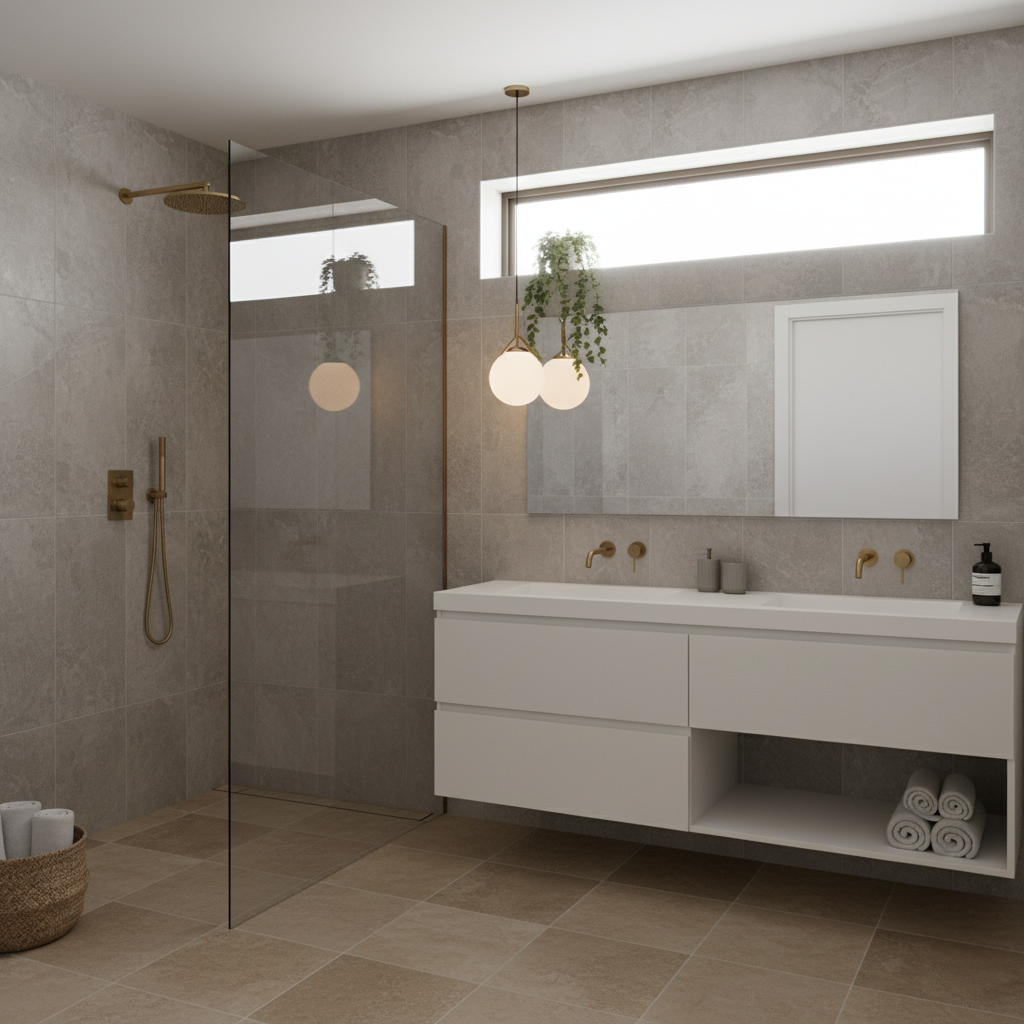
Contemporary neutrals offer sophistication. Soft greys, greiges, and taupes create calm, elegant spaces. They hide water marks better than pure white and provide a subtle backdrop for statement fixtures or artwork.
Bold colours add personality. Deep blues and greens create enveloping, cocoon-like spaces perfect for relaxation. Terracotta and warm ochres bring Mediterranean warmth. Dark colours work surprisingly well in small bathrooms, creating intimate, jewel-box spaces when paired with good lighting and reflective surfaces.
Natural materials bring warmth and texture. Stone tiles (limestone, travertine, slate) offer timeless beauty but require sealing and regular maintenance. Porcelain tiles convincingly replicate natural stone, wood, and concrete without the maintenance. Large-format porcelain (1200mm x 600mm or even 1600mm x 3200mm slabs) creates luxurious, hotel-like spaces with minimal grout lines.
Wood brings organic warmth but needs careful selection for bathroom humidity. Engineered wood flooring with waterproof cores, tiles that replicate wood, or timber-effect vinyl all provide the look without moisture concerns. Real wood vanities and shelving work beautifully when properly sealed and well-ventilated.
Brass, copper, and bronze fixtures add warmth and character. Brushed brass has replaced chrome as the finish of choice for many designers. Matte black creates dramatic contemporary style. Mix metals if you want, particularly in larger spaces, but maintain balance.
Storage Solutions That Work
Bathroom storage challenges every homeowner. You need space for towels, toiletries, cleaning products, and personal items while maintaining a clutter-free environment.
Vanity units provide essential storage. Choose drawer units over cupboards as they're easier to organize and access. Soft-close mechanisms feel luxurious and prevent slamming. Ensure the vanity is deep enough (ideally 450-500mm) to accommodate plumbing while leaving usable storage space.
Recessed niches in shower areas provide convenient storage for shampoo and shower gel without protruding shelves that collect water. Build them into the wall during renovation (between studs or in a false wall behind the shower). Tile them to match the surrounding walls for a seamless look.
Medicine cabinets with mirrored fronts combine storage with function. Modern versions include integrated lighting, USB charging, and demister pads. Position them above the basin within easy reach but high enough to avoid head-bumping.
Tall storage units maximize vertical space in larger bathrooms. A floor-to-ceiling cupboard provides substantial storage without consuming much floor area. Use the top shelves for items you rarely need.
Open shelving suits contemporary spaces and displays beautiful towels or bathroom accessories. However, everything on show must look good and stay organized. Limit open shelving to one wall or area to avoid clutter.
Heated towel rails serve double duty, warming towels while providing hanging storage. Ladder-style rails offer more hanging space than traditional panel radiators. Position them strategically so towels don't block the heat output.
Walk-In Showers and Wet Rooms
Walk-in showers continue to grow in popularity. The barrier-free design creates a spacious, accessible feel while looking effortlessly contemporary. Wet rooms take this further, fully tanking the entire bathroom and creating a completely open showering area.
Minimum 1200mm x 800mm gives comfortable showering space, though 1400mm+ feels more generous. The entire floor must slope towards the drainage point (typically 1:40 gradient). This requires raising the floor level or lowering the floor, which impacts ceiling height or structural work.
Glass screens contain water spray without closing in the space. Frameless glass (10mm toughened) looks most contemporary. Hinged screens open outward, making cleaning easier. Some designs omit screens entirely, relying on strategic placement of the showerhead and drain.
Wet room tanking is critical. Water must not penetrate to the structural floor or walls. Professional installation using waterproof membranes and tanking systems is essential. Building Control notification or approval is required.
Linear drains (channel drains) are sleeker than traditional circular grates. Position them along one edge of the shower area or even beneath the glass screen for an almost invisible look. Ensure the drain has sufficient capacity for your shower flow rate.
Large-format tiles or even seamless resin floors minimize grout lines that can accumulate dirt and mildew. If using smaller tiles, ensure they're suitable for wet areas with appropriate slip resistance ratings.
Underfloor heating is almost essential in wet rooms and walk-in showers. It keeps floors warm and speeds drying, reducing slip risks and mildew growth.
Period Property Bathroom Considerations
Period properties present unique opportunities and challenges for bathroom design. Many Victorian, Edwardian, and Georgian homes originally lacked indoor bathrooms entirely, with facilities added later in awkward conversions.
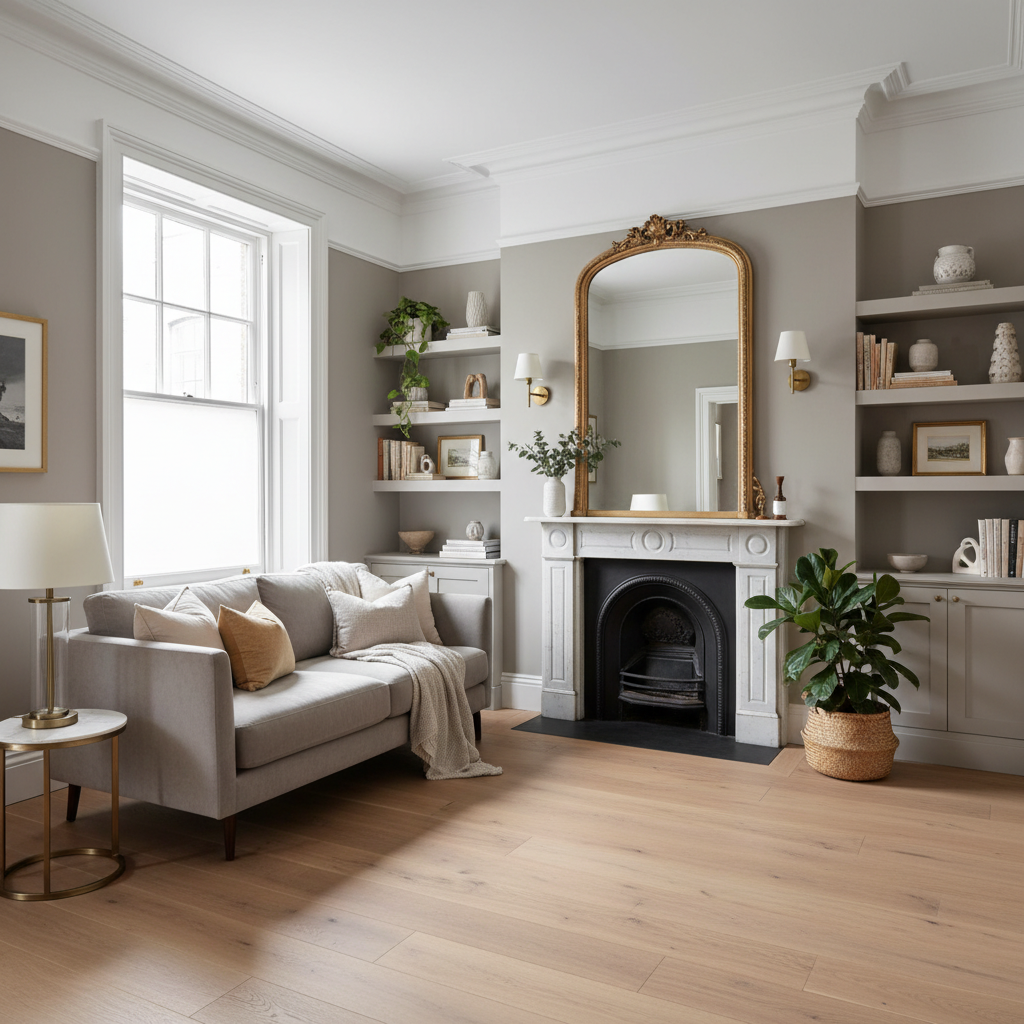
Original features worth preserving include decorative cornicing, ceiling roses, sash windows, and floorboards. Work around these rather than against them. A traditional roll-top freestanding bath suits period proportions beautifully. Classic sanitaryware with traditional styling harmonizes with original features.
Modern conveniences can blend seamlessly when chosen carefully. Traditional-style taps and shower fittings are available with modern ceramic cartridges for reliability. Mixer taps can replicate classic bridge designs. Concealed cisterns hide modern plumbing while allowing traditional high-level or close-coupled toilet designs.
High ceilings in period properties create generous vertical space. Use this for tall storage, elegant freestanding furniture, or dramatic pendant lighting. Picture rails and dado rails can define wall areas and guide tile or panelling heights.
Floorboards are common in period properties. If sound and level, sand and seal them with water-resistant treatments. Alternatively, cover them with engineered wood or wood-effect tiles. Avoid fully sealing with vinyl or sheet flooring as this can trap moisture underneath, causing rot.
Radiators in period bathrooms are often oversized cast-iron column radiators. Restore and repaint them for authentic charm and excellent heat output, or replace with traditional-style column radiators in contemporary finishes.
Listed buildings require consent for alterations. Even internal changes need approval if they affect historic character. Work with experienced architects and interior designers familiar with listed building regulations. Conservation officers can be pragmatic if your proposals respect the building's character while meeting modern living standards.
Ventilation and Heating Essentials
Proper ventilation prevents mold, mildew, and condensation damage. UK building regulations require mechanical ventilation in bathrooms without openable windows. Even with windows, extractor fans are advisable given British weather means windows are often closed.
Extractor fans must provide specific extraction rates measured in litres per second. Standard bathrooms require 15 l/s with a 15-minute overrun after lights switch off. Include humidity sensors that automatically activate the fan when moisture levels rise.
Position extractors as far from the door as possible (typically above the shower or bath) to draw moist air across the room. Duct them to an external wall or roof, never into the loft space where condensation causes problems.
Underfloor heating provides even, draft-free warmth perfect for bathrooms. Electric systems are straightforward to retrofit, sitting within floor build-ups of 10-25mm. Water-based systems integrate with central heating but require more significant installation. Set a separate thermostat for bathroom heating to maintain comfort while managing running costs.
Heated towel rails supplement heating while warming towels. Size them appropriately for the room volume. Many designs combine panel radiators with towel bars, maximizing heat output. Dual-fuel versions allow independent operation from central heating in summer.
Practical Considerations for UK Bathrooms
Water pressure affects everything. Low pressure (common in older properties with traditional gravity-fed systems) restricts shower and tap choices. Pump systems boost pressure, or choose mixer showers with built-in pumps. Digital showers with independent pumps offer precise temperature control regardless of water pressure.
Combination boilers provide good pressure but limit flow rates. Multiple showers running simultaneously may deplete hot water. Consider this when planning en-suites in larger homes.
Combi boilers cannot supply traditional thermostatic showers. They require mixers or digital systems. Check compatibility before purchasing expensive shower systems.
Building regulations cover more than ventilation. Floor loading must support heavy baths, particularly freestanding cast-iron or stone baths. Structural engineers may need to assess floor joists. Electrical work requires notification to Building Control or certified electrician sign-off. Water regulations specify approved backflow prevention and requirements for unvented hot water cylinders.
Budget realistically. Bathroom renovations typically cost £5,000-£8,000 for a standard bathroom, £8,000-£15,000 for a quality family bathroom, and £15,000+ for luxury installations. Costs increase significantly for structural changes, moving plumbing, or working in difficult-access properties.
Plan for disruption. Bathroom renovations typically take 2-3 weeks for straightforward refit, 4-6 weeks for significant alterations, and longer for listed properties requiring specialist trades. You'll need alternative washing facilities during this time.
Creating Your Dream Bathroom
Great bathroom design balances beauty with practicality. Start with function – ensure the layout works, storage meets your needs, and technical requirements are satisfied. Then layer in the aesthetic elements that make the space feel special.
Don't be afraid to express personality. Your bathroom should feel like your space, whether that's serene spa, bold contemporary, classic traditional, or eclectic mix. Invest in quality where it matters. Taps, showers, and sanitaryware get daily use and should last 15-20 years. Tiles are permanent features. Budget accordingly.
Consider professional help. Interior designers provide space planning expertise, access to trade suppliers, project management, and design flair that transforms bathrooms from functional to exceptional. For complex projects, particularly in period properties or involving structural changes, professional guidance prevents expensive mistakes.
Your bathroom should be a space you love using every day. With thoughtful design addressing your specific needs and the particular characteristics of UK homes, you can create a bathroom that's both beautiful and brilliantly functional for years to come.
FAQ
How much does a bathroom renovation cost in the UK? Expect £5,000-£8,000 for a basic renovation, £8,000-£15,000 for a quality family bathroom, and £15,000-£30,000+ for luxury installations. Costs vary by location, with London typically 20-30% higher than other regions.
Do I need planning permission to renovate my bathroom? Generally no, unless you're changing the layout in a flat (affecting fire regulations), working on a listed building, or adding new windows in conservation areas. Building regulations approval or notification is required for electrical work, ventilation, and structural changes.
What's the best flooring for UK bathrooms? Porcelain tiles offer durability, water resistance, and style. Luxury vinyl tiles provide warmth underfoot and realistic wood or stone effects. Stone tiles are beautiful but require sealing and regular maintenance. Avoid laminate and solid wood in wet areas.
How do I prevent mold in my bathroom? Install adequate ventilation (extractor fan with minimum 15 l/s extraction and overrun timer), wipe down wet surfaces after showering, keep the room heated to prevent condensation, and ensure grout and sealant are in good condition.
Should I choose a bath or shower? Consider your needs. Families with young children typically need a bath. If you have multiple bathrooms, a dedicated shower room offers convenience. En-suites often work well with walk-in showers. A shower over bath provides both options in limited space.
What bathroom style works best in period properties? Traditional designs with freestanding baths and classic sanitaryware complement period features, but contemporary designs can work beautifully when carefully detailed. The key is respecting proportions and original features rather than strict style matching.
How long does a bathroom renovation take? Standard bathroom refits take 2-3 weeks. Projects involving plumbing relocation, structural changes, or custom work require 4-6 weeks or more. Listed buildings and properties requiring council approvals add time. Always allow buffer time for unexpected issues.