The kitchen has evolved far beyond its utilitarian origins. Today, it serves as the heart of the home, a space where cooking, eating, working, and socialising seamlessly blend together. For UK homeowners, designing a kitchen presents unique considerations, from working with period architecture to maximising space in compact city flats.
This guide explores kitchen design ideas suited to British homes, covering everything from layout fundamentals to the finishing touches that make a kitchen truly yours.
Understanding Kitchen Layouts
Before choosing cabinets and worktops, the layout deserves careful consideration. The right arrangement makes cooking enjoyable rather than frustrating, regardless of available space.
The Working Triangle
Traditional kitchen design centres on the working triangle, connecting the hob, sink, and refrigerator. While modern kitchens often include additional zones, this principle remains valuable. Each leg of the triangle should measure between 1.2 and 2.7 metres, with a total perimeter not exceeding 8 metres.
Galley Kitchens
Common in London flats and terraced houses, galley kitchens run along two parallel walls. Despite their compact footprint, well-designed galley kitchens offer excellent efficiency. The key lies in maximising vertical storage, choosing integrated appliances, and ensuring adequate lighting throughout.
L-Shaped Layouts
L-shaped kitchens suit corner positions and open-plan arrangements. They provide ample worktop space while leaving floor area open, making them popular in British homes where the kitchen opens onto a dining or living area.
U-Shaped Designs
Where space permits, U-shaped kitchens offer the most storage and worktop area. They work particularly well in larger Victorian and Edwardian properties, where generous room sizes accommodate this configuration comfortably.
Island Kitchens
Kitchen islands have become increasingly popular, providing additional prep space, storage, and casual seating. However, they require careful planning. Allow at least 1.2 metres clearance around the island for comfortable movement, and consider how the island will be used before deciding on features like integrated sinks or hobs.
Working With Period Properties
Many UK homeowners live in period properties, presenting both opportunities and challenges for kitchen design.
Victorian and Edwardian Homes
These properties often feature high ceilings, original cornicing, and generous proportions. Kitchen designs can embrace this heritage through tall cabinetry that draws the eye upward, traditional-style units with modern functionality, and sympathetic colour choices that complement period features.
Consider retaining or reinstating original elements like ceiling roses and architraves. A contemporary kitchen can sit beautifully within a period room when the design respects rather than fights against its surroundings.
Georgian Properties
Georgian kitchens were typically located in basement areas, a tradition that continues in many London townhouses. Basements present specific challenges including limited natural light and lower ceiling heights. Solutions include pale colour schemes, strategic mirror placement, and layered artificial lighting to compensate for reduced daylight.
1930s Semi-Detached Houses
Britain's interwar housing offers solid construction but often dated layouts. These properties respond well to kitchen extensions that create open-plan spaces, connecting the kitchen to the garden through bi-fold or sliding doors.
Cabinetry Styles
Cabinet choice significantly influences overall kitchen character.
Shaker Style
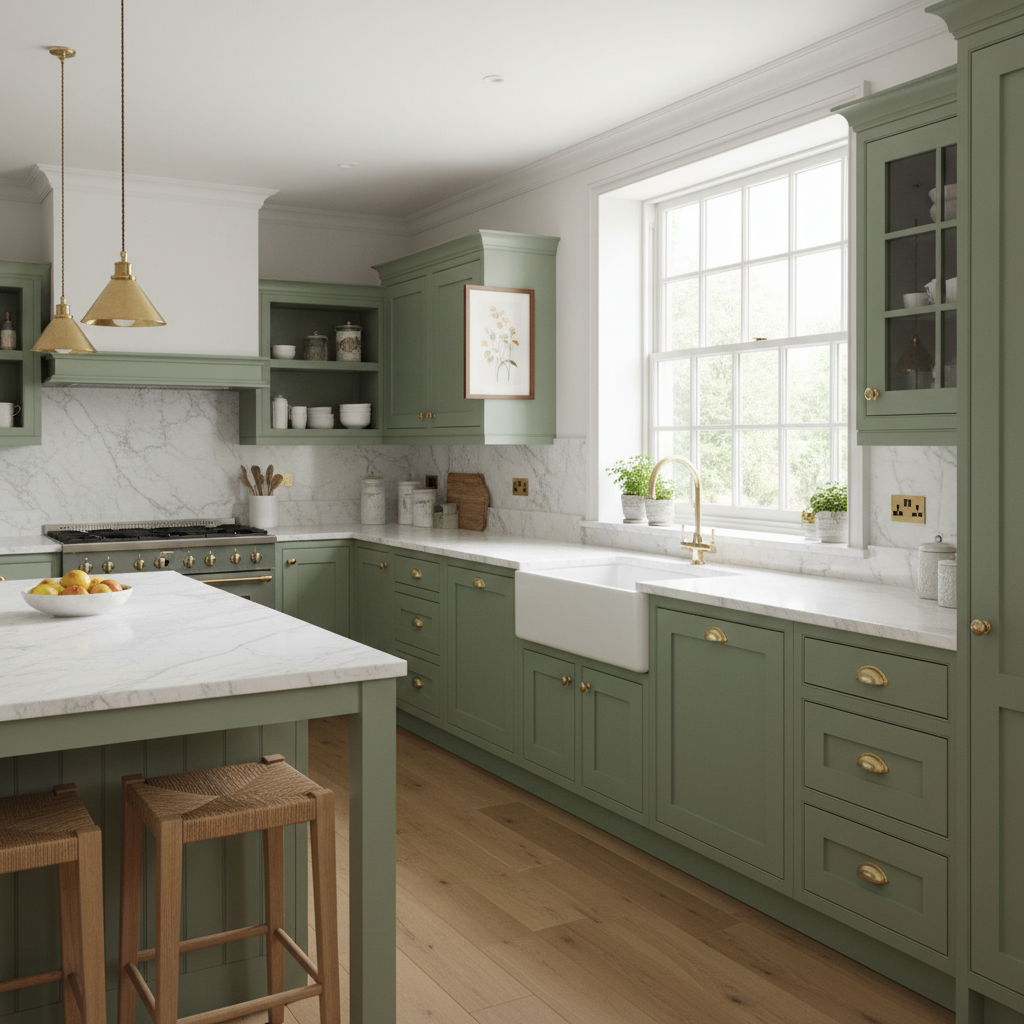
Shaker cabinets remain perennially popular, their simple framed doors suiting both traditional and contemporary settings. Originally developed by the American Shaker movement, this style works beautifully in British homes, offering timeless appeal without feeling dated.
Handleless Units
Sleek handleless cabinets create clean lines suited to modern interiors. Push-to-open mechanisms or integrated finger pulls maintain the uncluttered aesthetic. This style particularly suits compact kitchens where protruding handles might impede movement.
In-Frame Construction
For traditional properties, in-frame cabinets offer superior quality and authenticity. The doors sit within a visible frame, creating shadow lines that add depth and character. This construction method costs more but delivers a distinctively crafted appearance.
Painted Versus Natural Wood
Painted cabinets dominate the UK market, offering flexibility to change colour as tastes evolve. Popular choices include warm whites, sage greens, and deep blues. Natural wood finishes have seen a resurgence, with oak and walnut bringing warmth to contemporary schemes.
Worktop Materials
Worktops endure considerable wear, making material choice important both aesthetically and practically.
Quartz
Engineered quartz combines crushed stone with resin, creating a durable, non-porous surface. It requires no sealing, resists staining, and comes in countless colours and patterns. Many designs convincingly mimic natural marble without the associated maintenance concerns.
Granite
Natural granite offers unique patterning and excellent durability. Each slab differs slightly, providing genuine character. It requires periodic sealing but, properly maintained, lasts indefinitely.
Marble
Marble brings undeniable elegance but demands careful consideration. It stains easily, scratches relatively readily, and requires regular sealing. Many designers recommend limiting marble to low-use areas or accepting the patina that develops over time as part of its charm.
Wooden Worktops
Solid wood worktops suit traditional and farmhouse-style kitchens. Oak remains the most popular choice, offering durability and attractive grain. Wooden surfaces require oiling every few months and careful attention around sinks and hobs.
Composite Materials
Brands like Corian offer seamless, non-porous surfaces that can be thermoformed into organic shapes. These materials particularly suit contemporary designs where integrated sinks and drainers create flowing surfaces.
Colour and Finish
Kitchen colour choices have expanded dramatically beyond the all-white schemes that dominated recent decades.
Warm Neutrals
Warm whites, creams, and greiges create welcoming kitchens that feel neither clinical nor dated. These shades work particularly well in north-facing rooms or properties with limited natural light.
Bold Colours
Deep blues, forest greens, and even black have gained popularity for island units and feature walls. These stronger colours add personality while remaining sophisticated. Consider limiting bold choices to specific elements rather than entire kitchen runs.
Two-Tone Schemes
Combining different colours creates visual interest and breaks up large expanses of cabinetry. Popular combinations include white wall units with darker base cabinets, or a coloured island against neutral surrounds.
Metallic Accents
Brass, copper, and brushed gold hardware add warmth to kitchen schemes. These finishes appear in taps, handles, and light fittings, providing cohesion across the space. Matt black hardware offers a contemporary alternative.
Storage Solutions
Effective storage prevents clutter and keeps kitchens functional.
Pull-Out Systems
Pull-out larders, corner carousels, and drawer organisers maximise accessibility. Items stored at the back of deep cabinets become easily reachable, reducing the frustration of hunting for ingredients.
Integrated Bins
Built-in waste and recycling bins maintain kitchen aesthetics while accommodating multiple sorting requirements. Size these generously, as undersized bins quickly become annoying.
Open Shelving
Open shelves display attractive items while keeping everyday essentials within reach. However, they demand organisation and regular cleaning. Consider combining open shelving with closed cabinets for balance.
Pantry Storage
Where space allows, pantry cupboards provide excellent storage density. Walk-in pantries offer the ultimate in storage but require substantial floor area. Freestanding larder units achieve similar functionality in smaller spaces.
Lighting Design
Kitchen lighting requires careful layering to serve different functions.
Task Lighting
Under-cabinet lighting illuminates worktops for food preparation. LED strips provide even coverage without the shadows cast by overhead fixtures. Position these towards the front of wall cabinets to light the work zone effectively.
Ambient Lighting
Ceiling-mounted fixtures or recessed downlights provide general illumination. Dimmable options allow adjustment between bright task lighting and softer atmosphere for dining.
Feature Lighting
Pendant lights over islands and breakfast bars add visual interest while defining zones. Choose fixtures that complement the overall scheme, whether industrial-style metalwork or elegant glass.
Frequently Asked Questions
How much does a new kitchen cost in the UK? Kitchen costs vary enormously depending on size, specification, and complexity. Budget kitchens start around £5,000, mid-range projects typically cost £15,000 to £30,000, and high-end bespoke kitchens can exceed £50,000 or more.
How long does a kitchen renovation take? Allow two to four weeks for installation once units arrive. The total project timeline, including design, ordering, and lead times, typically spans three to six months.
Should I hire a kitchen designer? Professional design ensures optimal layout and avoids costly mistakes. Many kitchen companies offer design services, while independent designers provide unbiased advice across all suppliers.
What adds most value to a kitchen? Quality layouts, good lighting, and sufficient storage add more value than expensive materials alone. Buyers appreciate kitchens that function well rather than those featuring premium finishes in impractical arrangements.
How do I choose kitchen colours? Consider the room's natural light, adjacent spaces, and your personal preferences. Collect samples and view them in the actual kitchen at different times of day before committing.