Lighting transforms a living room more dramatically than almost any other element. The same space can feel cold and clinical or warm and inviting depending entirely on how it's lit. Yet lighting often receives less attention than sofas, paint colours, or curtains in the design process.
This guide covers everything you need to create a living room lighting scheme that works beautifully, from morning coffee to evening entertaining.
Understanding the Layers of Light
Effective lighting schemes combine three distinct layers, each serving different purposes. Mastering this concept is the foundation of successful living room lighting.
Ambient Lighting
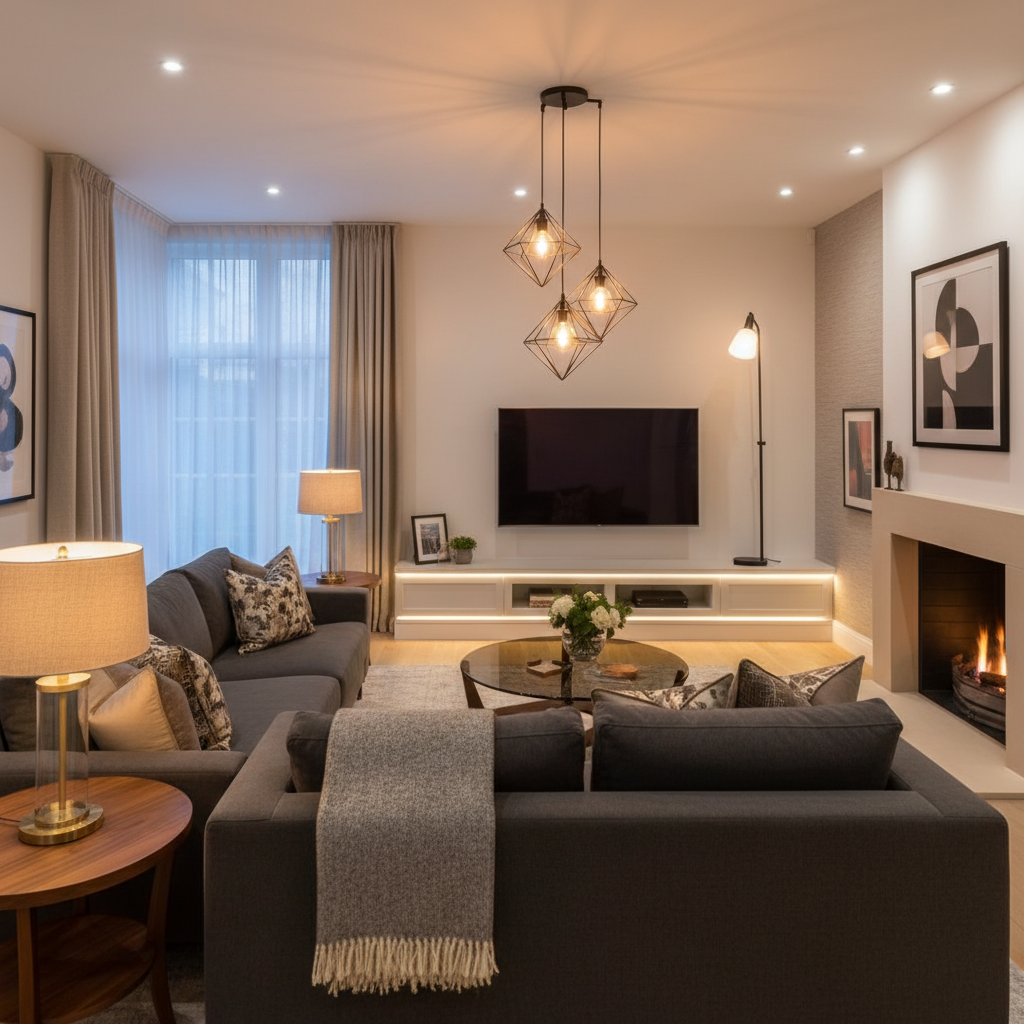
Ambient or general lighting provides overall illumination, replacing natural daylight as evening falls. Ceiling pendants, flush mounts, and recessed downlights typically serve this function. In living rooms, aim for warm, diffused ambient light rather than harsh overhead illumination.
Task Lighting
Task lighting illuminates specific activities. Reading lamps beside armchairs, adjustable floor lamps near sofas, and picture lights above artwork all qualify as task lighting. These fixtures should provide adequate brightness for their purpose without creating glare.
Accent Lighting
Accent lighting adds drama and depth, highlighting architectural features, artwork, or decorative objects. Wall washers, uplighters, and carefully positioned spotlights create visual interest and draw attention to a room's best features.
Planning Your Lighting Scheme
Before purchasing any fixtures, consider how you actually use your living room. Different activities require different lighting solutions.
Everyday Relaxation
For general evening relaxation, warm ambient lighting supplemented by table lamps creates a comfortable atmosphere. Dimmer switches prove invaluable, allowing adjustment as natural light fades.
Reading and Working
If you read regularly in your living room, dedicated task lighting becomes essential. Position reading lamps to illuminate pages without creating shadows or glare. Adjustable arms offer flexibility for different seating positions.
Entertaining
When hosting guests, accent lighting and dimmed ambient sources create atmosphere. Consider how the room flows during parties and ensure adequate light in conversation areas while maintaining softer illumination elsewhere.
Television Viewing
Avoid positioning lights where they reflect off screens. Bias lighting behind televisions reduces eye strain during extended viewing and creates a more cinematic atmosphere.
Choosing the Right Fixtures
With thousands of options available, selecting light fixtures can feel overwhelming. These principles help narrow the choices.
Scale and Proportion
Fixtures should relate proportionally to the room and furniture. A tiny pendant over a large sofa looks lost, while an oversized floor lamp beside a delicate chair overwhelms. Consider both the room's dimensions and individual furniture pieces when selecting fixture sizes.
Style Consistency
While mixing styles adds interest, complete discord creates visual chaos. Aim for fixtures that share at least one element, whether that's finish, era, or silhouette. A brass ceiling pendant, brass reading lamp, and brass picture light tie together naturally, even if their styles differ.
Quality of Light
Beyond aesthetics, consider how each fixture actually lights. Opaque shades direct light downward while translucent shades provide ambient glow. Exposed bulbs offer different qualities than hidden sources. Test fixtures where possible before committing.
The Importance of Dimmer Switches
If there's one piece of advice worth emphasising, it's this: install dimmer switches throughout your living room. The ability to adjust light levels transforms a single scheme into multiple moods.
Modern LED-compatible dimmers work with most contemporary bulbs. For period properties, dimmer switches designed to resemble traditional fittings maintain architectural integrity while providing modern functionality.
Colour Temperature Matters
Light colour, measured in Kelvin, dramatically affects atmosphere. For living rooms, aim for warm white bulbs between 2700K and 3000K. Cooler temperatures suit kitchens and bathrooms but feel clinical in relaxation spaces.
Ensure all bulbs in visible fixtures share the same colour temperature. Mixing warm and cool sources creates an unsettling effect that many homeowners don't consciously identify but definitely sense.
Natural Light Considerations
Artificial lighting doesn't exist in isolation. Consider how your scheme interacts with natural light throughout the day.
North-facing rooms in the UK receive cooler, bluer daylight and benefit from warmer artificial lighting to compensate. South-facing rooms enjoying golden afternoon sun can tolerate slightly cooler artificial sources.
Window treatments also affect lighting. Heavy curtains reduce natural light but provide privacy and insulation. Sheer blinds diffuse harsh sunlight while maintaining brightness. Consider how these elements work together across seasons.
Common Mistakes to Avoid
Relying on a Single Overhead Light
The "big light" approach leaves rooms flat and unwelcoming. Even modest living rooms benefit from multiple sources at different heights.
Ignoring Shadows
Position lights to illuminate faces in conversation areas. Overhead-only lighting casts unflattering shadows, while well-placed lamps flatter occupants and create warmth.
Forgetting Switches and Sockets
Plan socket positions before finalising furniture layouts. Floor lamps require nearby outlets, and trailing cables undermine even the most beautiful scheme.
Over-Lighting
More isn't always better. Living rooms should feel cosy in the evening, not bright enough for surgery. When in doubt, err toward fewer, better-positioned fixtures rather than abundant mediocre ones.
Final Thoughts
Good living room lighting doesn't announce itself. Instead, it creates an atmosphere that feels natural and comfortable, supporting how you actually live in the space.
Take time to observe your current lighting critically. Notice when the room feels right and when something seems off. These observations guide improvements far more effectively than following trends.
With thoughtful planning and quality fixtures, your living room can become a space that truly works, from bright weekend mornings to intimate evening gatherings.