Small bathrooms are the norm in British homes, particularly in London and the South East where every centimetre counts. Whether you're working with a Victorian terrace's awkwardly shaped bathroom, a modern flat's compact en-suite, or a converted cloakroom, the right layout can transform a cramped space into a functional, beautiful room that punches well above its weight.
The challenge isn't just fitting everything in. It's creating a bathroom that feels spacious, flows naturally, and accommodates your daily routines without compromise. After designing dozens of small bathrooms across London, I've learned that layout is everything. Get it right, and even a 3-square-metre bathroom can feel generous. Get it wrong, and you'll battle with awkward door swings and bruised knees for years.
Understanding Small Bathroom Dimensions
Before exploring layout options, let's define what we're working with. A small bathroom typically measures between 2 and 4 square metres. That might be a 1.5m x 2m cloakroom, a 1.8m x 2.2m family bathroom, or a 2m x 2m en-suite. Anything below 2 square metres requires particularly careful planning.
UK building regulations dictate minimum clearances that affect your layout choices. You need 200mm either side of a toilet for comfortable use, though 250-300mm feels better. Ideally, leave 700mm clear space in front of the toilet. Basins require a minimum 700mm clearance in front, while showers need at least 700mm opening space (though 800mm is more comfortable).
These measurements aren't just bureaucratic box-ticking. They reflect actual human proportions and movement patterns. Ignore them, and you'll create a bathroom that looks fine in photos but feels claustrophobic in use.
Period properties add another layer of complexity. Victorian and Edwardian bathrooms often occupy converted bedrooms with odd proportions, chimney breasts, and restricted window positions. Georgian townhouses might have bathrooms tucked into awkward corners. Modern conversions create bathrooms from understairs spaces or loft areas with sloping ceilings. Each presents unique layout challenges and opportunities.
The Wet Room Layout
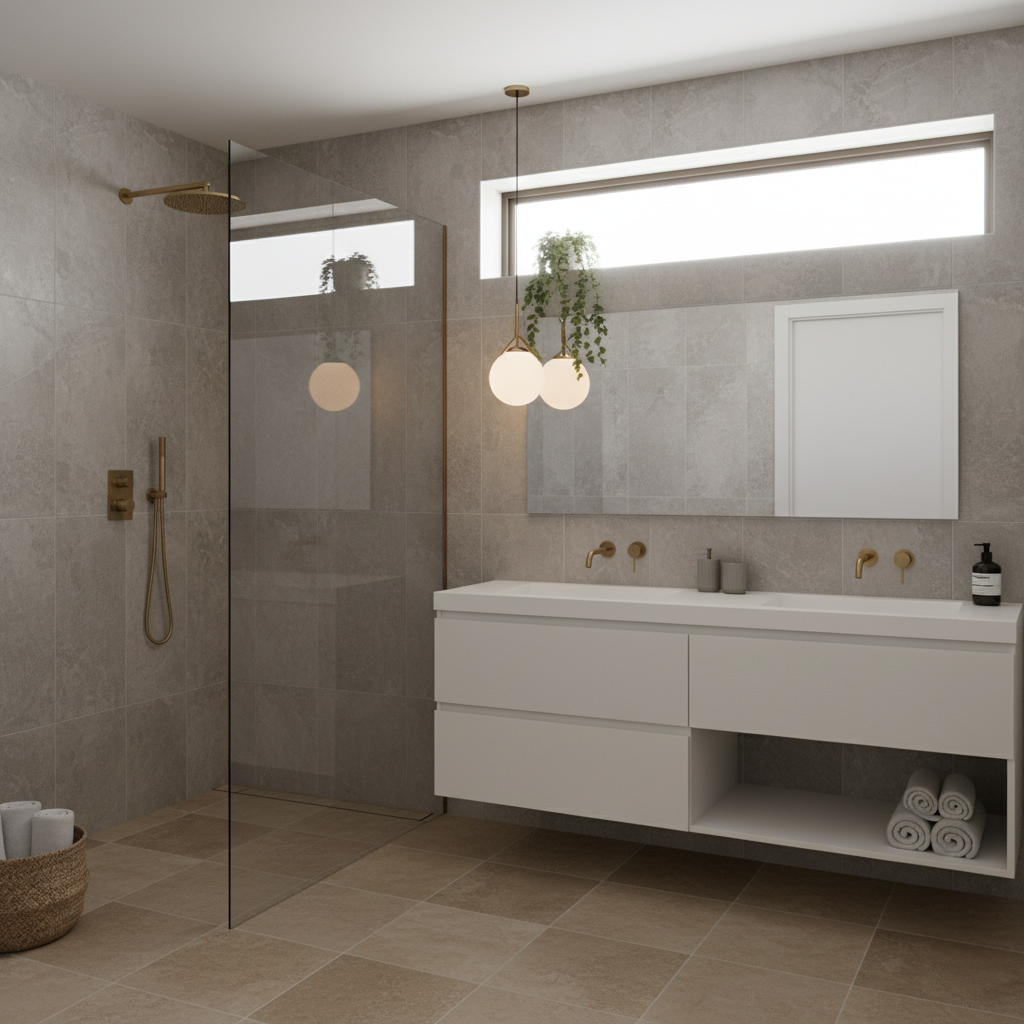
Wet rooms have revolutionised small bathroom design. By eliminating the shower enclosure entirely, you create an open, spacious feel while simplifying the layout. The entire floor becomes the shower tray, with a gentle gradient directing water to a discrete drain.
This layout works brilliantly in bathrooms where a traditional shower enclosure would dominate the space. You might position the showerhead at one end, with the toilet and basin at the other. Or create a corner shower zone with the shower screen protecting just the toilet and basin area rather than enclosing the shower completely.
Installation requires proper waterproofing and floor preparation. The floor needs tanking (waterproof membrane) extending at least 150mm up the walls. You'll want slip-resistant tiles and adequate floor falls (typically 1:80 gradient). A linear drain positioned against the wall looks sleeker than a central drain and simplifies the floor gradient.
Wet rooms suit ground floor bathrooms or spaces above non-habitable areas. First floor wet rooms above living spaces require extra waterproofing diligence. Building control will want to inspect the waterproofing before you tile.
For London Victorian terraces, wet rooms work wonderfully in bathrooms with restricted ceiling heights. Without a shower cubicle to navigate, lower ceilings become less oppressive. Consider positioning the showerhead at the highest ceiling point if you're working with a slope.
The cost premium for wet room installation runs £1,500-3,000 compared to a standard shower tray. You're paying for specialist waterproofing and more complex floor construction. However, the spatial benefits often justify the investment in very small bathrooms.
The Three-Piece Suite Layout
Most small bathrooms need to accommodate the essential three pieces: toilet, basin, and shower or bath. The art lies in arranging them efficiently.
The classic layout places the toilet at one end, basin in the middle (usually against the side wall), and shower or bath at the far end. This creates a natural flow and separates the toilet from the basin and shower zone. If your bathroom measures around 2m x 1.8m, this linear arrangement often works best.
Consider which direction the door opens. Ideally, you want the door to shield the toilet from immediate view when opened. Nobody wants the toilet as the first thing visible from the hallway. If your door currently opens the wrong way, switching the swing direction can improve privacy and layout flow.
Corner toilets save valuable space by tucking into the corner rather than protruding into the room. Combined with a corner basin, you might reclaim 15-20cm of usable space. Modern corner sanitaryware looks stylish and integrated, unlike the cramped afterthoughts of old designs.
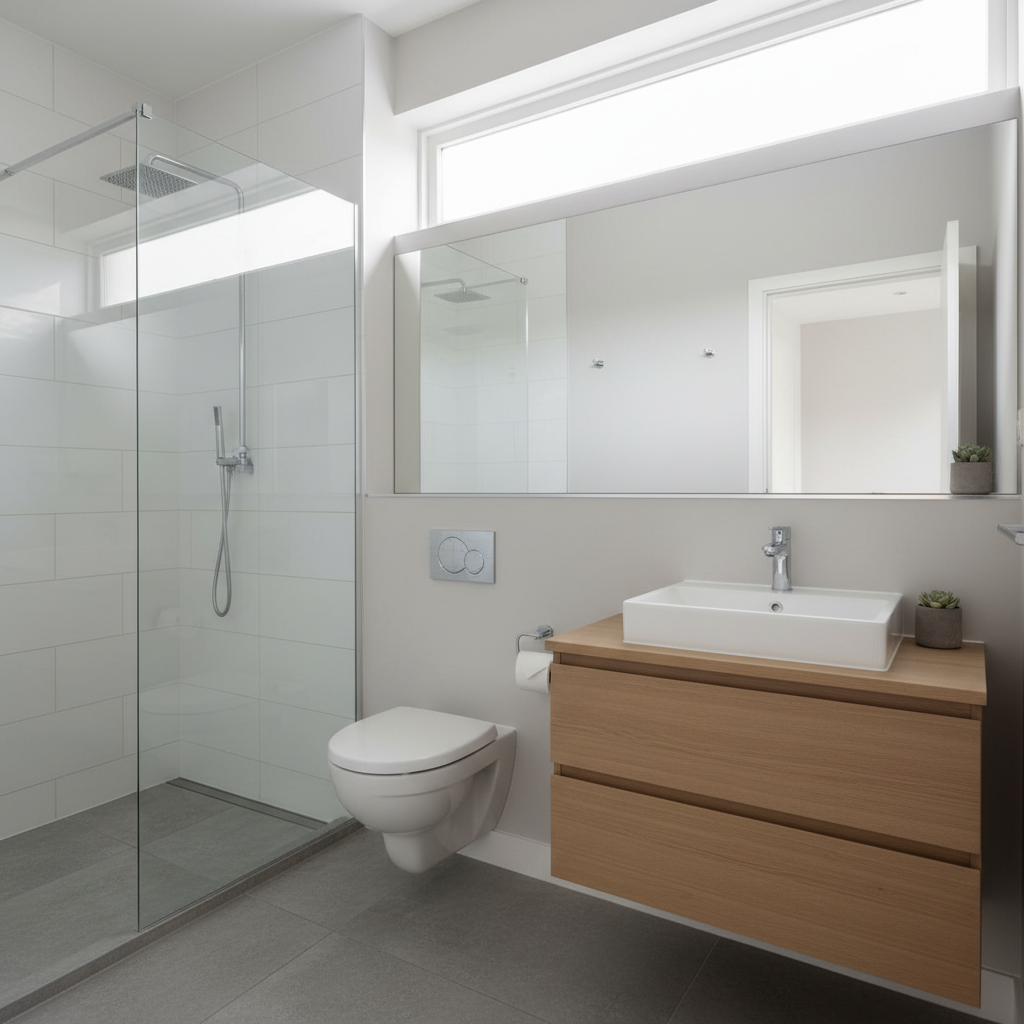
Wall-hung toilets and basins create visual space by revealing floor area. The concealed cistern sits inside the wall cavity, producing a cleaner look and easier floor cleaning. Installation costs more (£200-400 extra) because you need a sturdy frame and potentially a false wall, but the spatial benefits often justify it.
Compact sanitaryware designed specifically for small spaces can make surprising differences. Short-projection toilets extend 650-700mm from the wall instead of standard 750-800mm. That extra 50-100mm might be the difference between fitting a comfortable shower or squeezing in a cramped cubicle.
Shower or Bath Decisions
This question dominates small bathroom planning. Most people want both, but space rarely permits. The decision should reflect your household's genuine needs rather than future buyer concerns.
If you have another bathroom with a bath elsewhere in the home, choose the shower. You'll gain 30-40cm of length and create a more spacious, practical bathroom. Walk-in showers with minimal glass screening feel luxurious compared to cramped shower-baths with curtains.
Shower-over-bath remains the pragmatic choice for single-bathroom homes, particularly with young families. Modern options have improved. P-shaped or L-shaped shower baths provide a generous 800mm shower area at one end while maintaining a usable bath. The curved shape prevents the bath from dominating the room visually.
Choose a 1600mm or 1700mm bath rather than the standard 1700mm or 1800mm if every centimetre counts. Shorter baths still provide comfortable bathing for most people while releasing valuable space. Japanese-style deep soaking baths measure just 1200-1400mm long but 550-600mm deep, offering a luxurious bathing experience in minimal floor space.
For awkward layouts, corner baths can work if specified carefully. Cheap corner baths waste space with impractical shapes. Quality corner baths designed with actual bathing in mind can maximise an awkward space. However, I generally prefer rectangular baths for ease of cleaning and more predictable layouts.
Quadrant shower enclosures suit corner installations. The curved glass door requires less clearance than a hinged door while creating an open feel. For very small spaces, bi-fold shower doors reduce the swing space required.
The Cloakroom Layout Challenge
Cloakrooms (downstairs WCs) present unique layout challenges with typically 1.5m x 1m or smaller dimensions. You're fitting just a toilet and basin, but the tightness demands creative thinking.
The most common arrangement places the toilet at the far end with the basin on a side wall near the door. This keeps the toilet further from the entrance and provides natural basin access. However, if your cloakroom is particularly narrow (under 900mm), you might need the basin directly opposite the toilet to achieve adequate clearances.
Wall-hung sanitaryware becomes almost essential in cloakrooms. The floor space creates a less cluttered feel, and you eliminate the difficult-to-clean area behind a floor-standing toilet. Combine this with a small wall-hung basin (400-450mm) and you create surprising spaciousness.
Corner basins maximise tight cloakrooms. Position them in the corner adjacent to the toilet with the tap on the side wall. You'll need to check pipe runs work, but this arrangement often creates better circulation space than a standard wall-mounted basin.
Consider pocket doors or outward-opening doors if the cloakroom sits off a hallway. An inward-opening door steals valuable floor space. A pocket door sliding into the wall cavity eliminates door swing entirely, though installation costs more and requires space within the wall.
Lighting matters enormously in cloakrooms, which rarely have windows. A single overhead light creates a dingy space. Layer lighting with overhead spots plus a lit mirror or wall lights. This creates ambiance and makes the small space feel more considered.
The En-Suite Challenge
En-suites carved from bedrooms present specific layout difficulties. You're typically working with 2-3m depth but only 1.5-2m width, often with the door in an inconvenient position.
The linear layout works best here: door, basin, toilet, and shower progressing into the room. This creates logical flow and privacy, with the shower (the wettest zone) furthest from the bedroom door. Wall-hung sanitaryware prevents the narrow room feeling like a bowling alley.
Consider whether you need a door. An en-suite used by just a couple might benefit from an open doorway or sliding door, creating better space and light flow. Privacy matters less between partners than maximising your limited square metres. A well-positioned entrance wall shields the toilet from direct bedroom view while keeping the space open.
Pocket doors or sliding barn doors save the swing space of a standard door. In a 1.5m-wide en-suite, a door opening inward consumes nearly half your width. An 800mm pocket door eliminates this entirely.
Narrow en-suites benefit from end walls becoming feature walls. Bold tiles, wallpaper, or paint on the far wall draws the eye lengthwise, making the narrow space feel more intentional than accidental.
Consider a shower tray at floor level rather than a raised tray. The seamless transition makes the room feel larger and suits accessibility requirements. Ensure adequate floor gradient for drainage.
Period Property Layout Considerations
Victorian and Edwardian houses create specific bathroom layout challenges. You might be working with a converted bedroom where the chimney breast reduces usable width, or an awkward space above the stairs with restricted ceiling height.
Chimney breasts can become features rather than obstacles. If a chimney breast reduces your width at one end, position the toilet or basin in the alcoves either side. The reduced width matters less for these fixtures than for the shower area. Use the wider section for the shower where you need uninterrupted space.
Boxing in pipes and creating false walls maintains period proportions while concealing modern necessities. Victorian rooms have high ceilings and generous proportions. Lowering the ceiling above the toilet or basin area (creating a soffit or bulkhead) accommodates pipe runs while maintaining the room's proportions. The height variation adds architectural interest.
Period properties often have windows in inconvenient positions. Work with them rather than against them. A window above the proposed toilet position isn't ideal, but frosted glass or shutters solve privacy while maintaining light. A window in the shower area requires waterproof shutters or treated wooden blinds.
Original floorboards need protecting. Run pipes through ceiling voids below rather than notching original joists extensively. Building control and conservation officers scrutinise period property alterations. Document original features, work sympathetically, and engage specialists who understand period buildings.
Georgian townhouses with listed building status require particular sensitivity. You'll need listed building consent for bathroom alterations. Work with architects experienced in listed buildings. Solutions prioritise reversibility and sympathetic materials.
Plumbing and Structural Realities
Layout planning must acknowledge plumbing realities. While almost anything is technically possible, moving a toilet location significantly drives costs up. The toilet waste pipe requires a fall of at least 1:40 (25mm per metre). Ground floor bathrooms can drain externally with relative ease. First floor bathrooms require internal soil stacks.
Moving a toilet from one side of the room to the other might require raising floor levels to accommodate pipe falls, reducing ceiling height. Or it might demand new soil stack installation at £2,000-3,000. Sometimes the existing toilet position dictates the entire layout.
Basin and shower waste pipes are more flexible with smaller diameters and gentler fall requirements. You can usually reroute these without major structural work. Hot and cold water supplies are similarly flexible, though keeping basins and showers near existing supply points reduces costs.
Check floor loadings if installing a large bath in a loft conversion or older property. A cast iron bath filled with water and a person exceeds 300kg. Ensure the floor structure handles this. Consult a structural engineer for conversions or if replacing a lightweight shower with a heavy bath.
Electrical requirements follow strict bathroom zones. Socket outlets are prohibited except for shavers. Light switches must sit outside the bathroom or be pull cords. Any electrical work requires Part P compliance. Factor professional electrician costs into your budget from the start.
Storage Within Small Bathroom Layouts
Storage integration makes or breaks small bathroom functionality. Built-in storage during the layout planning stage works better than afterthought furniture.
Vanity units combine basin and storage efficiently. Even a 600mm vanity provides cupboard space for cleaning products, spare toiletries, and daily essentials. Wall-hung vanities look lighter than floor-standing units while providing identical storage.
Recessed medicine cabinets sit flush with the wall, stealing storage space from the wall cavity rather than the room. A recessed mirrored cabinet above the basin combines mirror, storage, and lighting in one efficient fixture. Depth limitation (typically 100-120mm) restricts what you can store, but suits bathroom products perfectly.
The area above the toilet is dead space in most bathrooms. A slim shelving unit or cabinet specifically designed to fit over the cistern adds storage without consuming floor space. Open shelving looks lighter than closed cabinets and suits display items like rolled towels and pretty bottles.
Shower niches built into the stud wall provide shampoo and soap storage within the shower without protruding shelves. Plan these during the layout stage rather than trying to add them later. Position them at comfortable reaching height (1100-1200mm from the floor).
Consider vertical space. Tall, slim storage units (300mm wide, 1800mm tall) fit into narrow gaps beside basins or toilets. They hold surprising amounts while maintaining an uncluttered floor area.
Common Small Bathroom Layout Mistakes
Door swing issues plague poorly planned small bathrooms. A door crashing into the toilet or basin every time you enter makes the bathroom frustrating daily. Mark door swing arcs on your floor plan. Ensure adequate clearance or switch the swing direction.
Ignoring actual use patterns creates dysfunctional layouts. If two people use the bathroom simultaneously during morning routines, can one shower while the other brushes teeth? Does the toilet position provide privacy from the basin area? Think through realistic scenarios.
Oversized sanitaryware ruins small bathroom layouts. That stunning 800mm basin dominates a small bathroom, leaving inadequate circulation space. Choose sanitaryware proportionate to the room size. Compact doesn't mean compromising quality.
Inadequate clearances create a cramped feel regardless of actual size. Even if items technically fit, insufficient space to move comfortably makes the bathroom unpleasant. Prioritise circulation space over squeezing in extra fixtures.
Poor lighting amplifies small bathroom deficiencies. A single central light creates shadows and gloom. Layer ambient, task, and accent lighting. Light every zone properly. Consider heated mirrors that include integrated lighting.
Frequently Asked Questions
What's the minimum size for a three-piece bathroom? The absolute minimum is approximately 1.8m x 1.8m (3.24 square metres), but this requires careful planning with compact sanitaryware. More comfortably, aim for 2m x 2m or larger. Anything smaller typically suits a two-piece cloakroom better than a full bathroom.
Should I choose a shower or bath in a small bathroom? If this is your only bathroom and you have young children, include a bath. Otherwise, a walk-in shower creates a more spacious feel and better functionality. Consider your household's genuine needs rather than theoretical resale value.
Can I move the toilet to improve the layout? Technically yes, but moving a toilet significantly increases costs due to soil pipe requirements and potential floor level changes. Budget an extra £1,500-3,000 for relocating a toilet. Sometimes the existing position should anchor your layout.
How much should I budget for a small bathroom renovation? A basic small bathroom renovation costs £4,000-6,000 including sanitaryware, tiles, and installation. Mid-range renovations run £7,000-10,000. High-end small bathrooms with premium finishes cost £12,000-18,000. Moving plumbing or structural work increases costs significantly.
Are wet rooms suitable for small bathrooms? Yes, wet rooms work brilliantly in small spaces by eliminating the shower enclosure entirely. However, they require proper waterproofing and drainage installation, adding £1,500-3,000 to the project. The open feel often justifies this investment.
What's the best flooring for small bathrooms? Large-format tiles (600mm x 600mm or larger) create fewer grout lines, making small bathrooms feel more spacious. Choose slip-resistant porcelain tiles rated for bathroom use. Light colours reflect maximum light and expand perceived space.
Making Your Small Bathroom Work Hard
Small bathroom layout planning demands careful thought, precise measurement, and realistic assessment of your needs. The difference between a cramped bathroom and a well-planned compact bathroom often comes down to 10-15cm in the right places and choosing appropriate fixtures.
Start by measuring your space accurately, including all awkward corners, boxing, and door swings. Create a scale plan (graph paper works perfectly) and cut out scale sanitaryware shapes. Physically arrange them to test different configurations. This hands-on approach reveals clearance issues that might not be obvious from drawings.
Consider how you actually use the bathroom. Are you renovating a family bathroom where morning routines create bottlenecks? An en-suite for a couple where space feels more critical than separate access? A cloakroom that guests use three times a year? Different uses demand different layout priorities.
Think long-term. Is this your forever home where your needs will evolve, or a property you'll likely move from within five years? Are you designing for yourself or theoretical future buyers? Be honest about these questions because they influence layout decisions.
Work with your space's strengths rather than fighting its limitations. An awkward alcove becomes a perfect shower niche. A sloping ceiling becomes a feature with careful lighting. A narrow room gains character with a bold end wall. Period features like chimney breasts or original windows become design opportunities.
Most importantly, don't try to fit too much in. A well-planned small bathroom with three carefully chosen pieces beats a cramped space trying to accommodate four. Quality over quantity creates the spacious, functional bathroom that makes your daily routines genuinely pleasant rather than something to endure.
Small bathrooms demand thoughtful design, but they reward that effort with spaces that feel far more generous than their dimensions suggest.