Small living rooms are the reality for most UK homeowners, particularly in London and the South East where property prices mean every square metre counts. But a compact living room doesn't mean compromising on style, comfort, or functionality. With thoughtful design, strategic furniture choices, and clever spatial planning, even the smallest living room can feel generous, welcoming, and perfectly suited to modern living.
The key is understanding that small room design isn't about cramming everything in or making do. It's about editing, prioritising, and making intentional choices that serve both your lifestyle and your aesthetic vision.
Understanding Your Space and Priorities
Before making any design decisions, assess how you actually use your living room. Do you entertain frequently, or is it primarily a quiet retreat? Do you need a dedicated workspace? Will children play here? Does the room serve multiple functions?
Measure your room carefully, noting architectural features like alcoves, bay windows, radiators, and chimney breasts. In period properties, these features often dictate furniture placement. Photograph your space from multiple angles. Images reveal spatial relationships and proportions that measurements alone can't capture.
Consider natural light sources and times of day when you use the room most. A north-facing room requiring artificial lighting much of the day needs a different approach from a sun-filled south-facing space. Traffic flow matters too. How do people move through the room? Where are doorways, and do they swing in or out?
British living rooms, particularly in Victorian and Edwardian terraces, often have awkward proportions. Long, narrow rooms. Low ceilings. Oddly positioned fireplaces. Recognising these quirks early helps you work with them rather than against them.
Strategic Furniture Selection and Placement
Furniture scale makes or breaks small room design. The instinct to choose the smallest possible pieces is understandable but often wrong. Tiny furniture floating in space looks apologetic and emphasises the room's limitations. Instead, select appropriately scaled pieces that fill the space confidently without overwhelming it.
A two-seater sofa might fit, but if you regularly host guests or have a family, an L-shaped or modular sofa using corners efficiently might work better. Sofas with exposed legs create visual lightness, showing floor space beneath. Low-backed designs maintain sightlines across the room, preventing a boxed-in feeling.
Float furniture away from walls when possible. This sounds counterintuitive in a small space, but positioning a sofa slightly forward creates circulation space behind and makes the room feel more dynamic. Even 15-20cm makes a difference. Use the space behind for a console table, floor lamp, or plants.
Multi-functional furniture works hard in compact spaces. Ottomans provide seating, footrest, coffee table, and storage. Nesting tables offer flexible surface space. Window seats with lift-up storage maximise awkward areas. Consider sofa beds for guest accommodation, but choose quality mechanisms. Poor sofa beds serve neither function well.
Avoid bulky coffee tables that dominate floor space. A large ottoman or several small side tables offer more flexibility. Round or oval shapes soften the room and improve traffic flow compared to sharp corners. Glass tops create visual lightness while providing practical surface area.
Built-in furniture maximises awkward spaces. Alcove shelving flanking a chimney breast provides substantial storage without eating into floor space. Window seats transform bay windows into functional seating while hiding radiators underneath. Bespoke joinery costs more initially but delivers space efficiency impossible with freestanding pieces.
Clever Storage Solutions
Clutter destroys the illusion of space faster than anything else. Effective storage isn't optional in small living rooms; it's essential. The goal is hiding the everyday mess while keeping what you need accessible.
Floor-to-ceiling shelving uses vertical space efficiently. Take shelving right to the ceiling, even if you need a step stool for top shelves. Use upper shelves for occasional items or display pieces. Lower shelves hold everyday items. This draws the eye upward, making ceilings feel higher.
Closed storage versus open shelving requires balance. Too much closed storage makes rooms feel heavy. Too much open shelving can look cluttered. Mix both. Use closed cabinets for utility items (electronics, paperwork, children's toys) and open shelves for curated displays.
Media storage needs planning. Modern televisions are slim, but accompanying equipment, game consoles, and cables create mess. Built-in media units with cable management, ventilation for heat-generating equipment, and closed storage for unsightly items keep things tidy. Wall-mounted televisions free up floor space.
Hidden storage opportunities exist everywhere. Underneath window seats. Inside ottomans. Behind sofa arms in storage sofas. Under stairs if your living room adjoins the hallway. Recessed shelving built into partition walls creates storage without protruding into the room.
Consider vertical storage for specific items. Magazine racks mounted on walls. Narrow shelving for books. Wall-mounted cabinets for music or gaming collections. Floating shelves in dead spaces above doors or radiators.
Colour Schemes That Expand Space
Colour profoundly affects spatial perception. Light colours reflect light, making rooms feel larger and brighter. But that doesn't mean defaulting to magnolia. Contemporary neutrals, soft greys, warm taupes, and gentle off-whites all work beautifully while adding character.
Painting walls, ceiling, and woodwork in the same or similar tones blurs boundaries between surfaces, making the room feel more expansive. High-contrast schemes, particularly dark walls with white ceilings, emphasise the room's limits. Tonal schemes create cohesion.
That said, don't fear darker colours entirely. Rich, deep shades like navy, forest green, or charcoal can make small rooms feel cocooning and sophisticated rather than cramped. The key is committing fully. Paint everything, including woodwork and ceiling, in complementary dark tones. Add plenty of lighting and reflective surfaces to prevent the space feeling gloomy.
Accent walls in small rooms require caution. They can work if the chosen wall has architectural interest (a chimney breast, for example) or if you're using wallpaper with pattern that needs containing. But randomly painting one wall darker often just emphasises the room's compact dimensions.
Flooring colour matters too. Light wood floors or pale carpets reflect light and feel spacious. Dark floors can look sophisticated but need balancing with lighter walls and plenty of light. Continuing the same flooring from hallway into living room creates flow and makes both spaces feel larger.
Lighting Design for Small Spaces
Good lighting transforms small spaces. Relying solely on a central ceiling pendant creates harsh shadows and emphasises limitations. Layer your lighting with ambient, task, and accent sources.
Recessed downlights provide even ambient lighting without visually cluttering the ceiling. Position them carefully to avoid creating spotlighting effects. Dimmer switches offer flexibility for different activities and moods.
Wall lights save precious surface and floor space while adding ambient lighting. Picture lights, uplighters flanking a chimney breast, or swing-arm reading lights beside a sofa provide task lighting without floor lamps eating into circulation space.
Table lamps add warmth and human scale but require surface space. Choose slim bases or consider unusual positions like window sills or narrow shelving. Floor lamps work where table surfaces are limited. Arc floor lamps reach over seating, providing task lighting without side tables.
Mirrors positioned opposite or adjacent to windows multiply natural light. Large mirrors create the illusion of extended space by reflecting the room back. Position them thoughtfully; you want to reflect light and pleasing views, not clutter or doorways.
Consider LED strip lighting concealed behind floating shelves or under built-in furniture. This creates ambient glow without visible fixtures. It's particularly effective behind television units or under window seats.
Natural light maximisation matters enormously in UK homes where grey days dominate. Keep window treatments simple. Avoid heavy curtains that block light even when open. Sheer curtains, roller blinds, or shutters provide privacy without sacrificing brightness. Mount curtain poles higher and wider than the window frame so curtains stack clear of the glass when open.
Creating Zones in Multi-Purpose Rooms
Many small living rooms serve multiple functions: living space, home office, dining area, play space. Creating subtle zones helps each function feel intentional rather than chaotic.
Furniture placement defines zones without requiring walls or dividers. An L-shaped sofa naturally creates a seating zone. Position your desk behind the sofa to separate work from relaxation. A bookshelf perpendicular to the wall suggests division without blocking light or sightlines.
Rugs define areas beautifully. A large rug anchoring the seating area creates a visual boundary. A smaller rug under a dining table (if you're combining living and dining) suggests a separate zone. Ensure rugs are large enough; all sofa legs should sit on the rug, or at least the front legs.
Lighting helps zone spaces. A pendant over a dining table or desk creates a focal point for that activity. Different lighting in the seating area establishes separation. Individual zones can have their own lighting controls.
Subtle colour variations work in open-plan spaces but require caution in small single rooms. Different paint colours can make the space feel chopped up. Instead, vary accessories, cushions, or artwork to suggest different purposes without fragmenting the space visually.
Dealing with Period Property Challenges
Victorian and Edwardian living rooms have character but also challenges. High ceilings can make floor space feel even smaller. Picture rails, cornicing, and ceiling roses are beautiful but visually busy. Fireplaces dominate the room but may be non-functional.
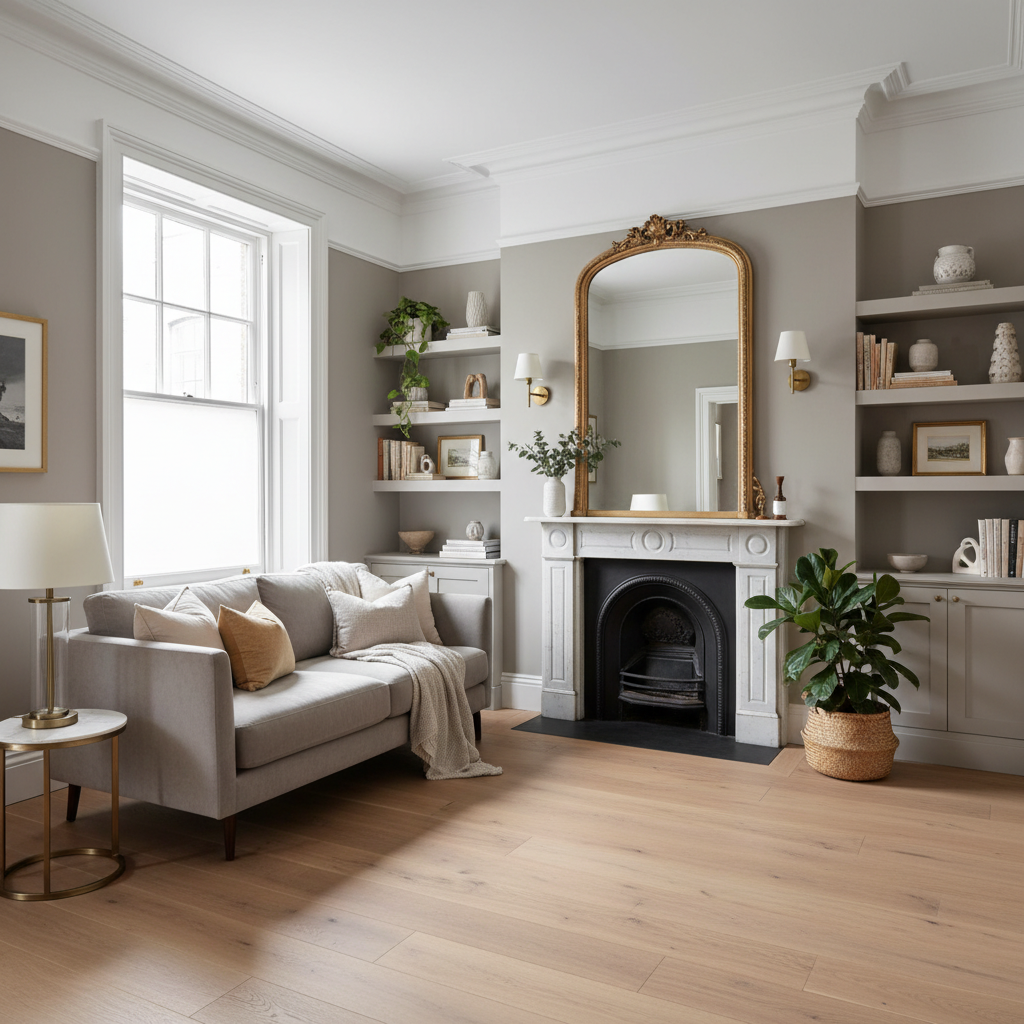
Embrace original features rather than fighting them. A beautiful fireplace becomes your focal point; arrange furniture to acknowledge it. Alcoves flanking the chimney breast are perfect for built-in shelving or cabinetry. The depth of alcoves provides storage without reducing floor space.
Picture rails can make rooms feel chopped horizontally. Paint walls and everything above the picture rail, including the ceiling, in the same colour to visually raise the ceiling. Alternatively, remove picture rails if the room feels too busy (unless you're in a listed property or conservation area).
Bay windows are glorious features providing excellent natural light. Make them work harder with window seating, tucking radiators underneath. Bay windows often create awkward corners; use these for occasional chairs, floor lamps, or tall plants.
Period properties often have chimneys taking up significant floor space. Use this to your advantage. The chimney breast creates a natural focal point. Alcoves either side provide symmetry and storage. Even if the fireplace isn't functional, you can use it for display, candles, or decorative logs.
Sash windows in period properties are beautiful but can be draughty. Address this with secondary glazing or careful restoration. Window treatments need careful selection. Full-length curtains suit tall windows but can overwhelm small rooms. Roman blinds or shutters work beautifully in period properties while taking up less visual space.
Avoiding Common Small Living Room Mistakes
Too much furniture is the cardinal sin of small room design. Every piece should earn its place through function, beauty, or ideally both. Editing is hard but essential. That inherited armchair taking up space but rarely used? Rehome it.
Pushing all furniture against walls actually makes rooms feel smaller by creating a dead zone in the middle. Float at least some pieces to create intimate, purposeful arrangements.
Neglecting scale creates awkward spaces. Giant sectionals in tiny rooms overwhelm. Equally, furniture that's too small looks apologetic. Aim for appropriate scale that fills the space confidently.
Ignoring traffic flow frustrates daily living. People need clear paths through the room. Furniture arrangements that require climbing over the sofa or squeezing sideways past the coffee table won't work long-term.
Overhead lighting only creates harsh, unflattering illumination that emphasises the room's limitations. Layer your lighting sources for flexibility and atmosphere.
Too many small accessories create visual clutter even if technically tidy. Group accessories, edit collections, and leave some surfaces clear. Negative space is valuable in small rooms.
Matching everything makes spaces feel lifeless. Mix textures, materials, and styles for depth and interest. A room where every piece is the same wood tone and modern style lacks the layering that creates character.
Texture and Pattern for Interest Without Clutter
Texture adds depth without requiring physical space. Smooth leather against nubby wool against smooth wood creates visual interest. Velvet cushions, linen curtains, wool rugs, and brass accents all contribute layers that make the space feel curated and intentional.
Pattern requires more caution in small rooms but shouldn't be avoided entirely. Large-scale patterns often work better than small, busy prints. A large-format geometric or botanical wallpaper on one wall creates impact without overwhelming. Small ditsy florals can look fussy.
Mix pattern scales if using multiple patterns. Large, medium, and small scale patterns in coordinating colours create harmony. Stick to a limited colour palette when mixing patterns to maintain cohesion.
Textured wallpapers add subtle interest without bold pattern. Grasscloth, linen-effect, or subtly embossed papers create depth while remaining neutral enough not to overwhelm.
Wooden textures warm spaces. Exposed floorboards, wooden furniture, or wooden accessories prevent all-white schemes from feeling clinical. Mix wood tones rather than matching everything for a more collected, relaxed feel.
Metallic accents catch light and add subtle glamour. Brass, copper, or brushed nickel in light fixtures, picture frames, or accessories create small moments of reflection without requiring mirrors.
Plants and Greenery
Plants bring life to small living rooms without requiring much floor space. Tall plants in corners draw the eye upward. Trailing plants on high shelves soften edges. Small plants grouped on shelving add colour and texture.
Choose plants suited to your light levels. Snake plants and pothos tolerate low light. Fiddle leaf figs and rubber plants need bright, indirect light. Match plants to your lifestyle too; if you travel frequently, choose low-maintenance varieties.
Vertical plant displays maximise limited floor space. Wall-mounted planters, plant shelves, or plant stands that stack pots vertically all work well. A single large plant makes more impact than multiple tiny pots dotted about.
Consider plant containers as design elements. Beautiful planters become decorative objects. Mix materials and heights for interest, but keep colours cohesive to avoid visual clutter.
Making It Work for Your Life
Design principles matter, but your living room must work for your actual life. If you have young children, white sofas aren't practical regardless of how spacious they make the room feel. If you work from home, you need proper office space, not a laptop perched on the sofa arm.
Practical fabrics survive family life better. Leather and performance fabrics resist stains and wear. Removable, washable cushion covers make maintenance easier. Dark colours and patterns hide marks better than pale, plain fabrics.
Budget realistic costs. Small rooms aren't necessarily cheaper to furnish. Quality furniture scaled appropriately for smaller spaces often costs more than standard pieces. Built-in storage and bespoke joinery carry significant costs but deliver space efficiency impossible otherwise.
Plan for flexibility. Modular furniture reconfigures as needs change. Neutral bases with changeable accessories allow you to refresh the space without replacing everything. Furniture on castors moves easily for cleaning or rearranging.
Frequently Asked Questions
What colours make a small living room look bigger? Light, neutral colours reflect maximum light and make rooms feel more spacious. Soft whites, pale greys, warm beiges, and gentle pastels all work well. Painting walls, ceiling, and trim in similar tones blurs boundaries and expands perceived space. That said, darker colours can work if you commit fully and balance them with good lighting.
How do you arrange furniture in a small living room? Start with your largest piece, typically the sofa, positioning it to create the room's focal point, often facing a fireplace or television. Float furniture slightly away from walls rather than pushing everything against them. Use corners efficiently with L-shaped arrangements or corner furniture. Ensure clear traffic paths through the room. Choose appropriately scaled pieces rather than defaulting to the smallest options.
What size sofa fits a small living room? Measure your space carefully, allowing for circulation space around the sofa. A standard two-seater (150-180cm) fits most small rooms, but an L-shaped sofa using a corner efficiently might provide more seating in the same footprint. Choose sofas with exposed legs to create visual lightness. Avoid oversized sectionals that overwhelm the space.
How can I make my small living room multi-functional? Use furniture that serves multiple purposes: ottomans for seating and storage, nesting tables that expand when needed, sofa beds for guests. Create subtle zones using furniture placement and rugs. A desk behind the sofa creates a work area without requiring a separate room. Built-in storage keeps different functions organised.
Should I use a rug in a small living room? Yes, but choose the right size. A rug that's too small makes the room feel choppy. Ideally, all furniture legs should sit on the rug, or at least the front legs of sofas and chairs. This anchors the seating area and makes the room feel larger. Pale rugs reflect light; darker rugs can look sophisticated but need balancing with lighter elements.
What lighting works best in small living rooms? Layer multiple light sources rather than relying on a single overhead fixture. Combine recessed downlights for ambient lighting, wall lights to save floor space, and task lighting for reading or working. Dimmer switches provide flexibility. Maximise natural light by keeping window treatments simple and positioning mirrors to reflect light into the room.
How do I decorate a small living room on a budget? Paint is the most cost-effective transformation. Update tired walls with contemporary neutrals. Rearrange existing furniture to improve flow before buying new pieces. Shop secondhand for quality vintage finds. DIY simple projects like floating shelves or painting furniture. Invest in one or two key pieces rather than filling the room with cheaper items that won't last.
Can I have a dark colour scheme in a small living room? Yes, if done thoughtfully. Dark colours can make small rooms feel cocooning and sophisticated rather than cramped. The key is committing fully by painting walls, ceiling, and trim in coordinating dark tones rather than creating high contrast. Balance dark colours with excellent lighting, mirrors, and light-coloured furniture or accessories.
Creating a beautiful, functional small living room requires thoughtful planning and intentional choices. By understanding your priorities, selecting appropriately scaled furniture, maximising storage, using colour strategically, and layering lighting, even the most compact space can feel generous and welcoming. The constraints of small rooms push you to edit ruthlessly, keeping only what truly serves your life, and that clarity often results in more satisfying spaces than rooms with unlimited square footage.