Victorian houses remain among the most desirable properties in London and the South East. Their generous proportions, architectural detailing, and inherent character offer a foundation that modern homes simply cannot replicate. Yet designing interiors for these heritage properties requires a thoughtful approach that balances preservation with practical contemporary living.
Whether you have recently purchased a Victorian terrace in Islington, inherited a villa in Richmond, or are refreshing a property you have lived in for years, understanding how to work with your home's period features whilst creating spaces that function for modern life proves essential.
Understanding Your Victorian Property
Victorian architecture spans over six decades, from 1837 to 1901, and encompasses enormous variety. Early Victorian homes often retained Georgian influences with simpler detailing, whilst mid-Victorian properties embraced more elaborate ornamentation. Late Victorian houses, particularly those built during the 1880s and 1890s, frequently display the most exuberant decorative features.
Identifying Your Home's Era
The specific period of your Victorian property influences appropriate design choices. Early Victorian homes suit slightly more restrained approaches, whilst later properties can accommodate bolder decorative treatments. Look at your home's architectural details, original features where they survive, and research when your street was developed to understand your property's historical context.
In London, many Victorian terraces were built speculatively by developers who followed pattern books, meaning homes in the same street often share similar original layouts and features. Understanding this context helps inform decisions about what to preserve, restore, or adapt.
Original Features to Preserve
Victorian homes often retain original features that deserve preservation and celebration. Cornicing, ceiling roses, fireplaces, skirting boards, architraves, and decorative plasterwork represent craftsmanship rarely replicated economically today. Even seemingly minor details like original door furniture, timber floorboards, and internal shutters contribute significantly to a property's character and value.
Before beginning any renovation work, survey your property carefully to identify surviving original features. Some may be hidden beneath layers of paint, carpet, or later additions. Ceiling roses are frequently discovered beneath false ceilings, original fireplaces behind boarding, and timber floors under fitted carpets.
Designing for Victorian Proportions
One of the greatest assets of Victorian properties is their generous room proportions. High ceilings, tall windows, and substantial room sizes create opportunities that smaller modern homes cannot match. Good Victorian interior design works with these proportions rather than against them.
Ceiling Height Considerations
Victorian ceiling heights, typically between nine and twelve feet in principal rooms, require careful consideration of scale. Furniture that looks appropriate in a modern apartment can appear diminished in a Victorian room. Choose substantial pieces that hold their own against the architectural setting.
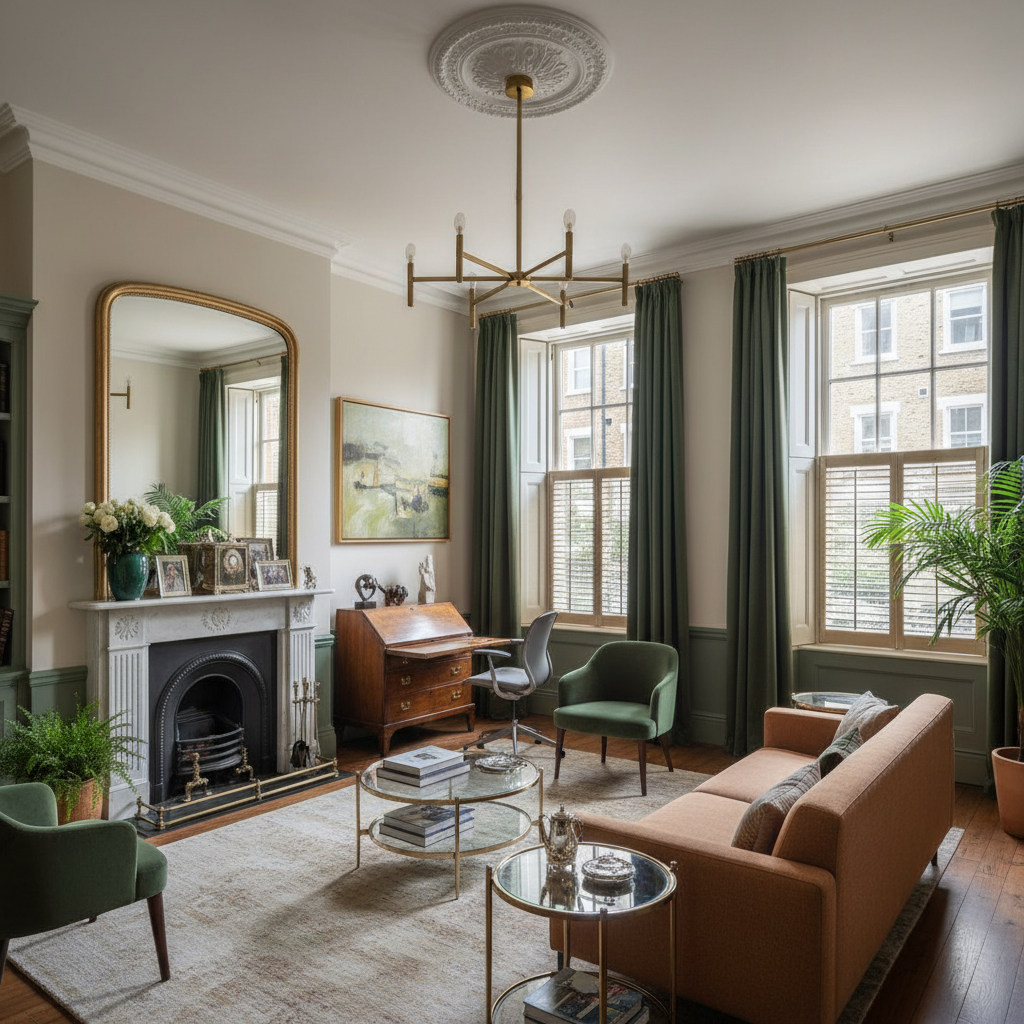
Lighting deserves particular attention in high-ceilinged rooms. A single central pendant at standard drop height leaves much of the room inadequately lit whilst emphasising the ceiling void. Layer your lighting with table lamps, floor lamps, and wall lights alongside overhead fixtures. Where ceiling roses exist, pendants that work with these features respect the room's architecture whilst providing functional illumination.
Working With Tall Windows
Victorian sash windows admit abundant light but require thoughtful treatment. Full-length curtains suit the proportions of these windows, drawing the eye upward and emphasising ceiling height. Mount curtain poles or tracks as close to ceiling level as practical rather than immediately above the window frame.
Internal shutters, original or reproduction, provide both period authenticity and practical benefits including insulation and light control. Where original shutters survive, their restoration often proves more cost-effective than replacement and maintains the property's heritage value.
Colour Approaches for Victorian Homes
Victorian original colour schemes were often darker and more saturated than modern tastes prefer. Rich reds, deep greens, intense blues, and elaborate decorative painting characterised high Victorian interiors. However, working sympathetically with a Victorian property does not require historical recreation.
Contemporary Colour in Period Settings
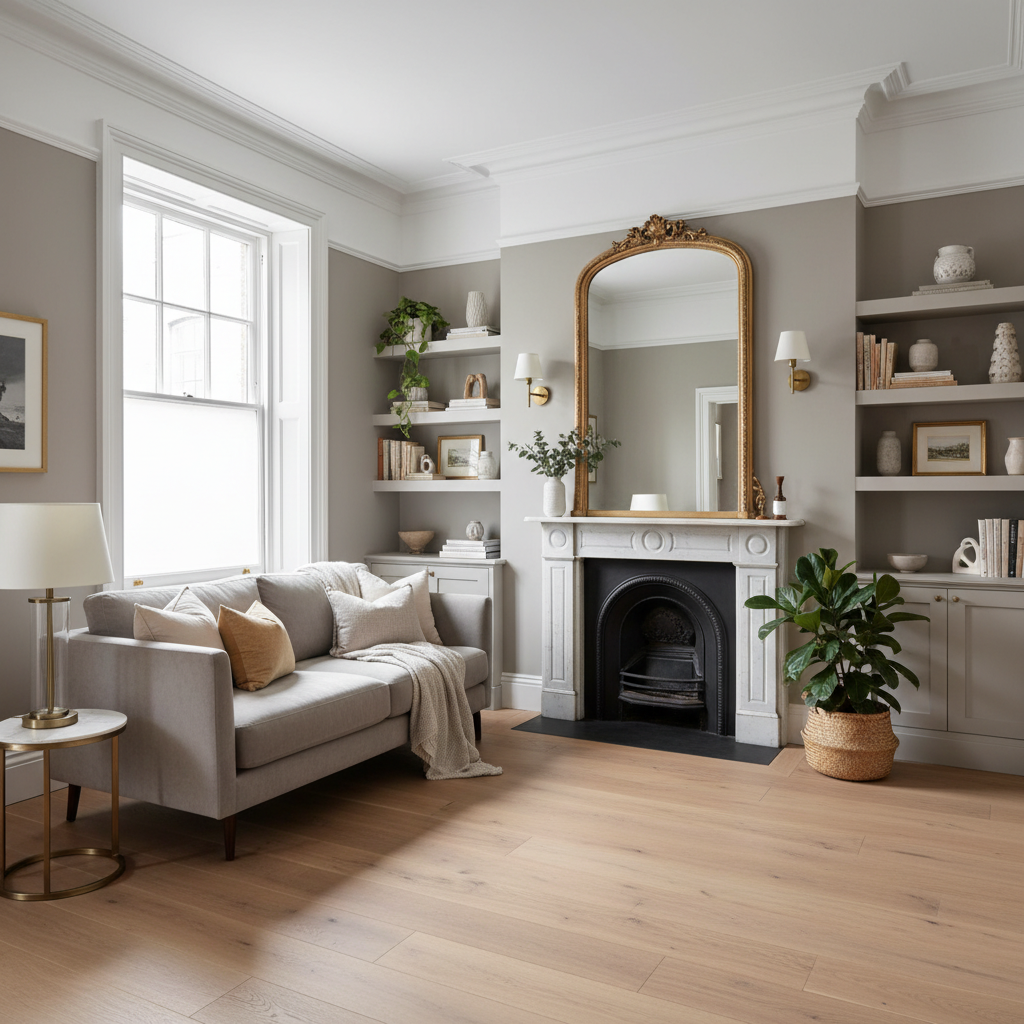
Many designers find that Victorian homes actually suit contemporary neutral palettes exceptionally well. The architectural detailing provides visual interest, allowing walls to recede whilst cornicing, fireplaces, and joinery take centre stage. Soft whites, warm greys, and sophisticated neutrals create calm backdrops that complement rather than compete with period features.
Heritage paint collections from manufacturers like Farrow & Ball, Little Greene, and Edward Bulmer offer colours developed specifically for period properties. These ranges include both historically accurate shades and contemporary neutrals formulated to work with the undertones common in Victorian architecture.
Using Colour to Enhance Features
Strategic colour choices can emphasise architectural features. Painting cornicing in a lighter shade than walls makes it more prominent. Picking out ceiling roses in contrasting colour draws attention to these often-overlooked details. Deeper tones on lower walls with lighter shades above create visual interest whilst referencing Victorian dado rail arrangements.
Consider the flow of colour through your property. Victorian terraces typically have interconnected reception rooms and hallways where colour choices become visible together. Establishing a cohesive palette that works across these connected spaces creates unity whilst allowing individual room character.
Flooring for Victorian Properties
Original Victorian timber floors, typically pine or deal in less formal rooms and hardwoods in principal spaces, represent significant heritage value. Where these survive in reasonable condition, restoration and refinishing proves preferable to replacement.
Restoring Original Floors
Timber floor restoration typically involves lifting boards to address underlying issues, replacing damaged sections with reclaimed timber of matching species and age, and sanding to remove accumulated finishes. Professional restoration preserves the patina and character that new timber cannot replicate.
The final finish affects both appearance and practicality. Traditional wax offers authentic appearance but requires regular maintenance. Oil finishes penetrate the timber and are easier to maintain than wax. Lacquer provides the most durable finish but can appear less sympathetic to period settings.
Alternative Flooring Approaches
Where original floors have been lost or prove beyond restoration, several approaches suit Victorian properties. Reclaimed timber from architectural salvage sources matches the age and character of the property. New timber in appropriate species and widths can work well, though avoiding overly perfect, machine-finished boards helps maintain period authenticity.
Victorian geometric tiles in hallways and vestibules are frequently damaged or missing. Specialist suppliers offer reproduction tiles that match original patterns, allowing authentic restoration. Encaustic and geometric tiled floors represent significant value in Victorian properties and merit preservation or restoration where feasible.
Kitchen Design in Victorian Homes
Kitchens present particular challenges in Victorian properties. Original Victorian kitchens occupied basement or rear service areas quite different from contemporary expectations. Modern kitchen design within Victorian homes requires balancing functionality with architectural sensitivity.
Integrating Modern Kitchens
Many Victorian terraces now feature kitchen extensions or opened-out rear spaces combining kitchen, dining, and living functions. These contemporary additions can contrast dramatically with the period interior or attempt to blend more seamlessly depending on design approach.
Where kitchens remain within original room footprints, cabinetry styles that reference Victorian joinery often prove most successful. Shaker-style doors, frame and panel construction, and traditional hardware connect visually with the property's heritage without attempting historical recreation.
Period-Appropriate Materials
Victorian kitchens used materials including timber, stone, and ceramic that remain appropriate for contemporary period-sympathetic design. Marble worktops, timber cabinetry, and ceramic sinks all suit Victorian properties whilst providing modern functionality.
Consider how modern appliances integrate with period settings. Concealing refrigerators, dishwashers, and other appliances behind cabinetry maintains visual continuity. Range cookers reference Victorian ranges whilst providing contemporary cooking capabilities.
Bathroom Considerations
Victorian bathrooms evolved considerably across the period, from minimal facilities in early homes to increasingly elaborate sanitary arrangements in later properties. Modern bathroom design within Victorian houses requires accommodating contemporary expectations within often challenging spatial constraints.
Period Bathroom Fixtures
Victorian-style sanitaryware from manufacturers including Burlington, Lefroy Brooks, and traditional ranges from mainstream suppliers offers authentic appearance with modern performance. High-level cisterns, pedestal basins, and freestanding baths suit period properties whilst meeting contemporary standards.
Original Victorian bathroom fixtures occasionally survive and can be restored for continued use. Professional restoration of antique sanitaryware proves surprisingly feasible, though plumbing requirements may need updating to meet current regulations.
Small Bathroom Challenges
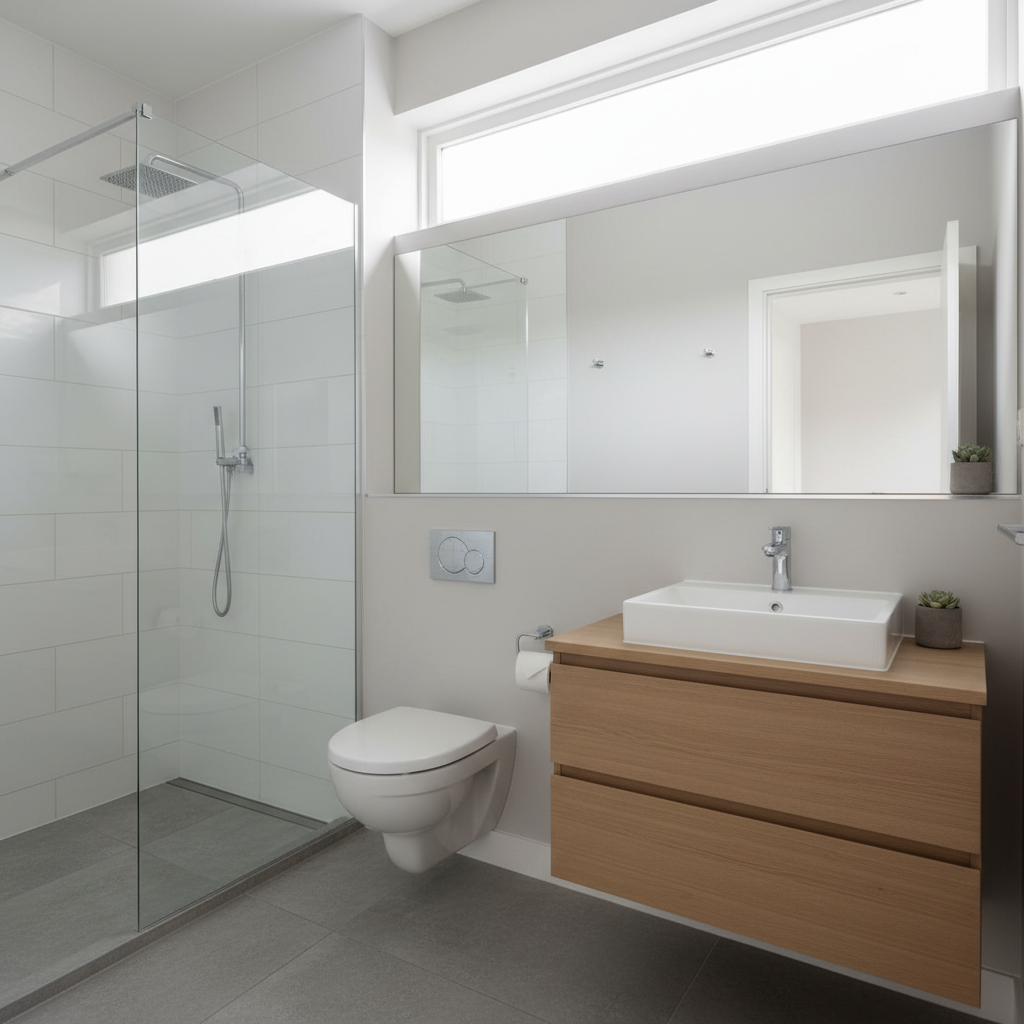
Victorian properties often have small bathrooms, particularly where these were inserted into existing rooms during twentieth-century modernisation. Maximising functionality within tight footprints requires careful planning of layouts, fixture sizing, and storage solutions.
Wall-mounted fixtures increase floor area visibility, making small rooms feel larger. Recessed storage within stud walls provides capacity without consuming floor space. Consistent use of colour and materials reduces visual fragmentation in compact bathrooms.
Lighting Strategies
Victorian homes predate electricity, and original gas fittings rarely survive functionally. Designing lighting schemes for Victorian properties requires considering both the atmospheric qualities appropriate to period interiors and practical contemporary illumination needs.
Layered Lighting
Successful Victorian interior lighting layers multiple sources rather than relying on single central fixtures. Table lamps and floor lamps provide ambient illumination whilst creating pools of light that reference the gaslight and candlelight originals. Wall brackets, particularly in hallways and dining rooms, suit period settings and provide practical task lighting.
Central pendants work best as decorative elements rather than primary light sources. Opulent chandeliers, lanterns, and decorative shades draw the eye upward and emphasise ceiling height whilst contributing to overall ambience.
Modern Technology in Period Settings
Contemporary lighting technology, including LED sources and smart controls, integrates into period settings without visual intrusion. Dimming capability proves particularly valuable, allowing adjustment between bright practical illumination and atmospheric lower levels.
Consider carefully the colour temperature of light sources. Warm white illumination around 2700K suits period interiors, whilst cooler temperatures can appear harsh against traditional finishes. Quality LED sources now replicate the warmth of incandescent bulbs that complemented period decoration.
Working With Fireplaces
Fireplaces represent focal points in Victorian rooms, even when no longer functional for heating. Original marble, slate, timber, and cast iron fireplaces survived varying levels of twentieth-century neglect and deserve restoration where feasible.
Restoring Original Fireplaces
Marble and slate surrounds often respond well to professional cleaning and repair. Cast iron inserts and grates can be stripped, treated, and refinished. Timber surrounds may need repair or consolidation but generally survive well.
Where original fireplaces have been removed, period-appropriate replacements from architectural salvage sources provide authentic character. Alternatively, contemporary designs in traditional materials can work successfully in period settings.
Functional Versus Decorative Use
Gas fires designed for period fireplaces provide convenient warmth whilst maintaining authentic appearance. Modern balanced flue gas fires offer high efficiency within traditional surrounds. Where working chimneys survive, wood burning stoves can be fitted, though installation requires professional assessment and appropriate lining.
Purely decorative treatments, including pillar candles, dried flowers, or carefully chosen ornaments, provide visual interest when fireplaces serve no heating function.
Balancing Old and New
The most successful Victorian interiors rarely attempt wholesale historical recreation. Instead, they balance period architecture with contemporary furniture, art, and accessories in ways that feel natural rather than contrived.
Contemporary Furniture in Period Settings
Modern furniture often works surprisingly well against Victorian backgrounds. Clean-lined contemporary sofas gain gravitas from ornate surroundings. Simple modern chairs contrast effectively with elaborate cornicing. The key lies in quality and scale, as cheap or undersized contemporary pieces appear diminished by Victorian proportions.
Mixing Antique and Modern
Combining antique and contemporary pieces creates layered interiors that reference the property's age without museum-like recreation. Victorian antiques obviously suit Victorian properties, but earlier Georgian pieces and later Edwardian items also work harmoniously. Mid-century modern furniture from the 1950s and 1960s provides effective contrast when used judiciously.
Practical Considerations
Beyond aesthetic choices, Victorian properties often require practical improvements addressing heating, insulation, and services whilst respecting heritage character.
Heating Victorian Spaces
High ceilings and single-glazed windows make Victorian properties challenging to heat efficiently. Modern central heating systems with appropriately sized radiators provide practical solutions. Traditional column radiators suit period settings better than modern panel types.
Secondary glazing provides insulation improvements where original sash windows are retained, maintaining external appearance whilst reducing heat loss. Internal insulation of solid walls requires careful specification to avoid moisture problems.
Modern Services
Integrating contemporary services including electrical, data, and media systems requires planning to minimise visual intrusion. Surface-mounted trunking appears unsympathetic in period settings. Routing cables through floor voids, ceiling spaces, and carefully planned chases within plasterwork provides invisible integration.
Frequently Asked Questions
Should I strip all the paint from my Victorian woodwork?
Not necessarily. Layers of paint built up over decades contribute to the texture and character of period joinery. Stripping to bare timber creates a rawer appearance that may not suit all interiors. Consider whether the existing paint condition allows overpainting, which often proves more sympathetic than stripping.
How do I find appropriate contractors for Victorian property work?
Seek contractors experienced with period properties. Conservation-accredited professionals, recommendations from local conservation officers, and referrals from heritage organisations like SPAB (Society for the Protection of Ancient Buildings) help identify appropriately skilled tradespeople.
Can I create an open plan layout in my Victorian terrace?
Many Victorian terraces successfully accommodate opened-out ground floor layouts, though structural implications require professional assessment. Consider retaining some definition between spaces through partial walls, changes in ceiling treatment, or flooring transitions that reference original room boundaries.
What should I do about missing original features?
Options include sourcing period-appropriate replacements from architectural salvage, commissioning reproduction pieces from specialist craftspeople, or accepting the absence as part of the property's evolution. Avoid obviously fake or inappropriate substitutions that diminish rather than enhance character.
How do I balance my contemporary taste with period appropriateness?
Trust your instincts whilst remaining informed about period characteristics. Your home should reflect your life and preferences, not serve as a museum. Use period architecture as a framework that supports rather than constrains contemporary living. The best Victorian interiors today feel both rooted in heritage and entirely current.