Home › Regulations › Carbon monoxide alarms
Carbon Monoxide Alarm Regulations UK: Where You Need One and Where It Goes
Carbon monoxide alarm regulations in the UK changed on 1 October 2022. In England, Building Regulations now require a carbon monoxide alarm whenever a new or replacement fixed combustion appliance is installed in a home, and that includes gas boilers, not just wood burners. Landlords must also fit one in every room used as living accommodation that has a fixed combustion appliance, other than a gas cooker. This page sets out when an alarm is required, exactly where Approved Document J says to mount it, which type to buy, and how the rules differ for renovations, rentals, Scotland and Wales.
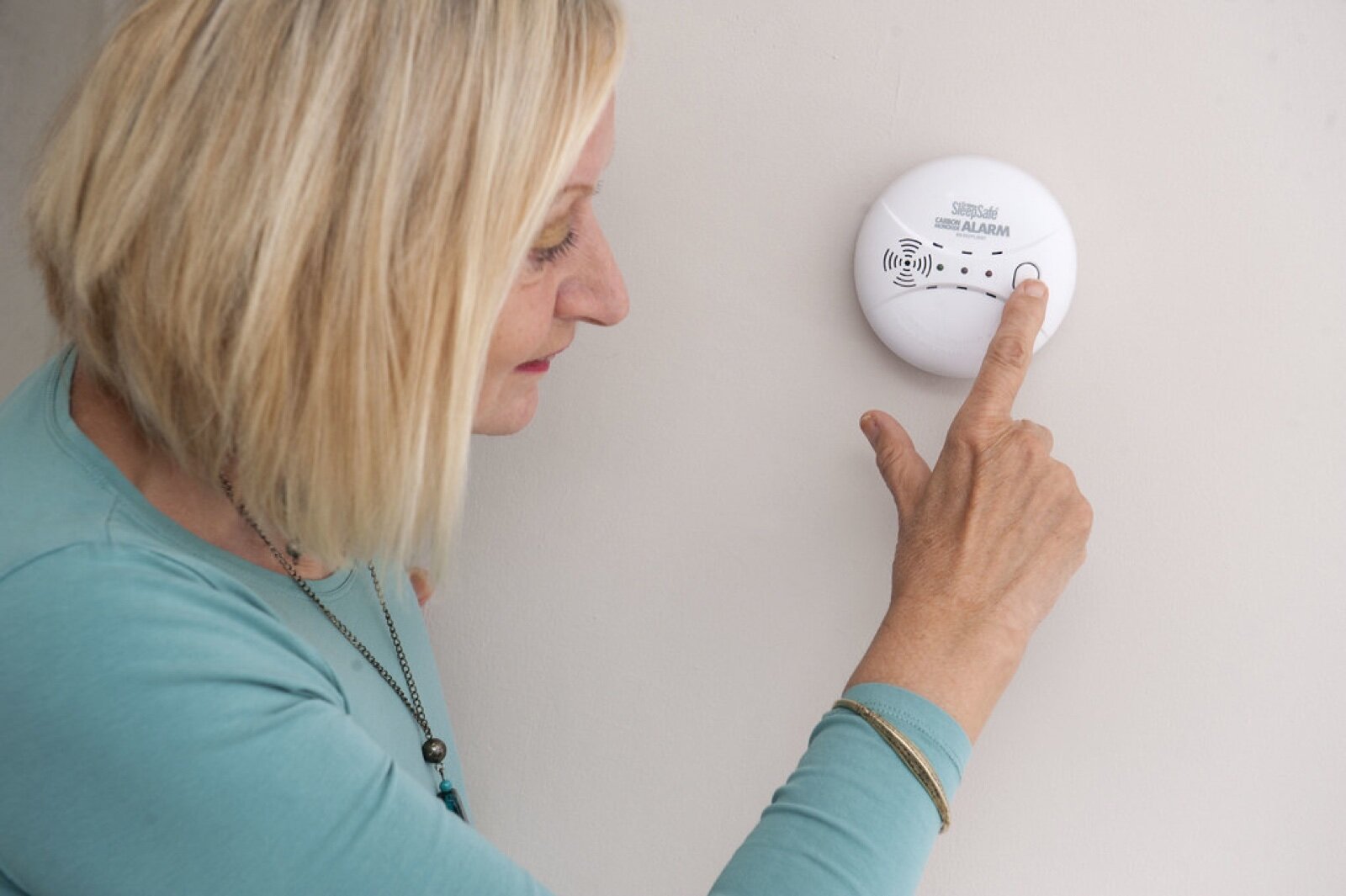
When it is required: whenever a new or replacement fixed gas, oil or solid fuel appliance is installed in a dwelling (gas appliances used only for cooking are excluded).
Where: in the same room as the appliance, 1m to 3m from it horizontally, on the ceiling at least 300mm from any wall, or high on a wall but not within 150mm of the ceiling.
Which type: BS EN 50291-1:2018, with a battery that lasts the alarm's working life, or a hard-wired mains Type A alarm with a sensor failure warning. Not a plug-in.
Rentals in England: an alarm in every room used as living accommodation with a fixed combustion appliance, except gas cookers, since 1 October 2022.
The rule in the Building Regulations
The legal requirement is Part J of the Building Regulations, requirement J3: where a fixed combustion appliance is provided, "appropriate provision shall be made to detect and give warning of the release of carbon monoxide". It applies only to fixed appliances in dwellings.
Until 2022 the guidance only asked for an alarm with new solid fuel appliances such as stoves and open fires. The 2022 amendments to Approved Document J extended it, so the guidance now covers three groups of appliance:
- Solid fuel (paragraph 2.34): a new or replacement fixed solid fuel appliance, such as a wood burner or multi-fuel stove.
- Gas (paragraph 3.43): a new or replacement fixed gas appliance, excluding gas appliances used solely for cooking. A new gas boiler or gas fire needs an alarm; a new gas hob does not.
- Oil (paragraph 4.30): a new or replacement fixed oil-burning appliance, such as an oil boiler or range.
In each case the alarm goes in the room where the appliance is. If a boiler is in a kitchen, the alarm goes in the kitchen; if it is in a loft or cupboard, the guidance still points to the room containing it.
Where to fit a carbon monoxide alarm
Approved Document J gives the same positioning rules for all three fuel types. The alarm should be in the same room as the appliance and:
- On the ceiling, at least 300mm from any wall; or
- On a wall, as high up as possible, above any doors and windows, but not within 150mm of the ceiling; and
- Between 1m and 3m horizontally from the appliance.
Carbon monoxide mixes with warm air from the appliance and rises, which is why the alarm goes high. Keep it out of the dead air in the very corner of a ceiling, away from extractor fans and windows that would dilute the reading, and not directly above a hob or sink. Further installation advice is in BS EN 50292 and the manufacturer's instructions, which the Approved Document points to.
| Mounting | Rule |
|---|---|
| Ceiling | At least 300mm from any wall |
| Wall | As high as possible, above doors and windows, not within 150mm of the ceiling |
| Distance from appliance | Between 1m and 3m horizontally |
| Room | Same room as the appliance |
Source: Approved Document J, 2010 edition incorporating 2022 amendments, paragraphs 2.36, 3.45 and 4.32.
Which alarm to buy
Approved Document J asks for an alarm that complies with BS EN 50291-1:2018 and is powered by a battery designed to last the working life of the alarm, with a warning when that life is about to end. In practice that means a sealed long-life battery alarm, typically sold as a seven or ten-year unit.
A mains-powered, hard-wired Type A alarm is an acceptable alternative, as long as it has a sensor failure warning. Type A alarms have an output that can trigger other devices, such as interlinked alarms or specialist alerts for older or disabled people. Plug-in alarms are specifically ruled out, because they are too easy to unplug.
Renovations: when the rule bites
The trigger is installing a fixed combustion appliance, new or replacement. That catches many projects that clients do not think of as "building work":
- Replacing a gas boiler, even like for like. The Gas Safe registered engineer self-certifies the installation, so make sure an alarm in the right position is part of the job.
- Adding a wood burner to a reopened fireplace. The installer, or building control if no competent person scheme is used, will expect an alarm in the room; see our guide to hearth regulations for the rest of the installation rules.
- Moving a boiler into a new utility room or loft during a kitchen or loft project. The alarm goes in the room where the boiler ends up.
- Fitting a gas fire in a living room.
Replacing a gas cooker or hob does not trigger the requirement, though fitting an alarm in a kitchen with any gas appliance is still sensible. Smoke alarms are covered by different rules; see our guide to smoke alarm regulations.
Rented homes in England
The Smoke and Carbon Monoxide Alarm (Amendment) Regulations 2022 came into force on 1 October 2022 for both private and social landlords. Landlords must:
- fit a carbon monoxide alarm in any room used as living accommodation that contains a fixed combustion appliance, excluding gas cookers;
- check each alarm is working on the day a new tenancy begins; and
- repair or replace an alarm once told it is faulty.
The regulations do not set the type of alarm, but the government's guidance recommends following British Standards. A landlord who fails to comply with a remedial notice can face a penalty of up to £5,000.
Scotland and Wales
Scotland: since February 2022 every home, owned or rented, must have a carbon monoxide alarm in each room with a fixed combustion appliance (other than one used only for cooking) or a flue. Alarms must meet BS EN 50291-1 and have a sealed battery for their lifespan, or be hard-wired.
Wales: under the Renting Homes (Wales) Act, since 1 December 2022 landlords must provide a carbon monoxide alarm in every room containing a gas, oil or solid fuel appliance. Unlike England, this includes rooms with a gas cooker.
An alarm is not a substitute for servicing
Approved Document J makes the point itself: an alarm should not be regarded as a substitute for correct installation and regular servicing. Have gas appliances serviced as the manufacturer recommends, chimneys swept before the heating season, and keep air vents clear. Test the alarm monthly with its button and replace the whole unit when the end-of-life warning sounds.
Frequently Asked Questions
Is a carbon monoxide alarm a legal requirement in the UK?
In England, Building Regulations require one when a new or replacement fixed gas, oil or solid fuel appliance is installed, other than a gas cooker. Landlords must fit one in rooms with a fixed combustion appliance. Scotland requires one in every home with such an appliance or a flue.
Do I need a carbon monoxide alarm with a new gas boiler?
Yes. Since 1 October 2022 Approved Document J asks for an alarm in the room containing a new or replacement fixed gas appliance, and a boiler is one. Only gas appliances used solely for cooking are excluded.
Where should a carbon monoxide alarm be placed?
In the same room as the appliance, 1m to 3m from it horizontally, either on the ceiling at least 300mm from any wall or high on a wall above doors and windows but not within 150mm of the ceiling.
Can I use a plug-in carbon monoxide alarm?
Not to meet the Building Regulations guidance. It asks for a sealed long-life battery alarm to BS EN 50291-1:2018, or a hard-wired mains Type A alarm with a sensor failure warning. Plug-in types are excluded.
Do landlords need a carbon monoxide alarm for a gas cooker?
Not in England, where gas cookers are excluded. In Wales they do: the requirement covers every room with a gas appliance, including a cooker.