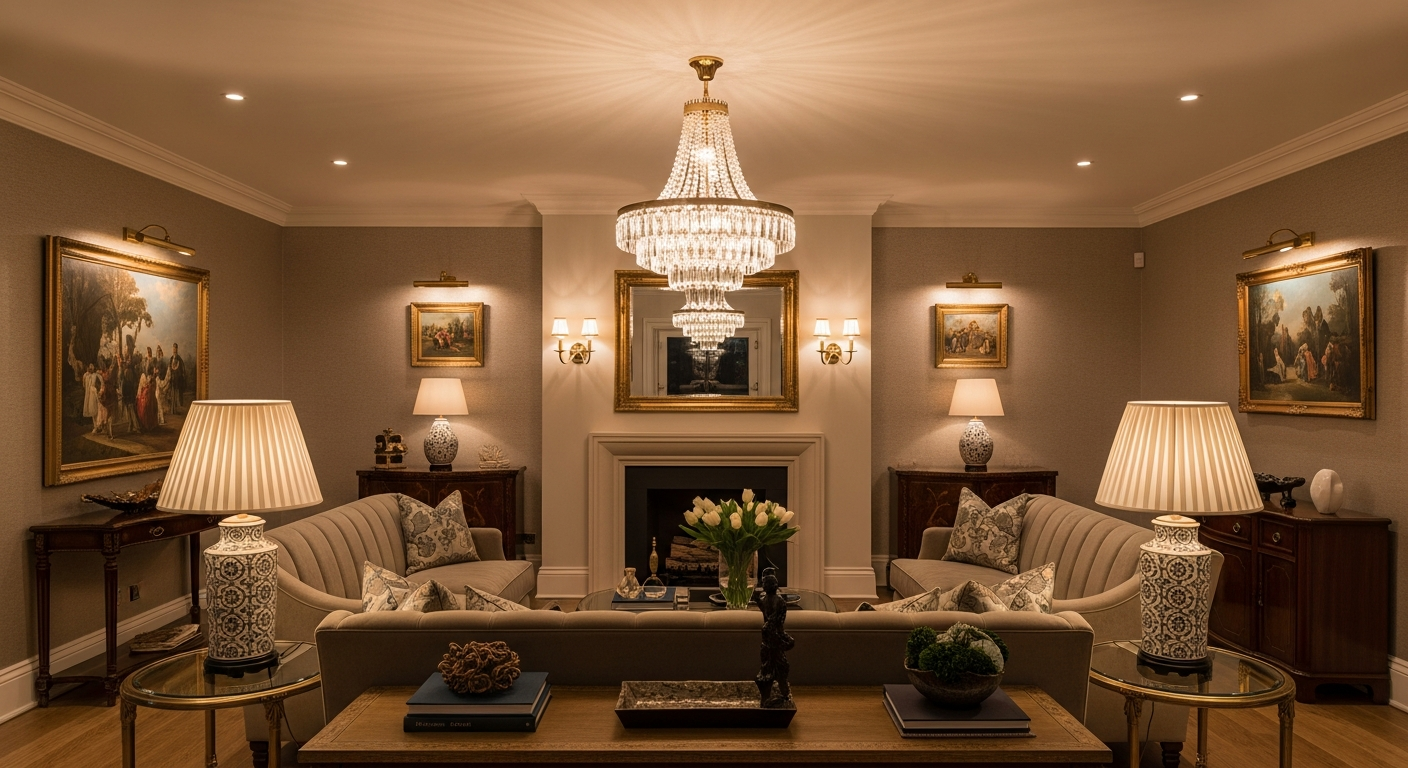
Lighting is the single most underestimated element of interior design. You can have perfect furniture, exquisite colour schemes, and flawless proportions, and still end up with a room that feels wrong. Usually, the culprit is lighting.
Most homes suffer from the same basic problem: not enough light, in not enough places, with not enough variety. The builder-standard approach, one ceiling pendant per room, creates flat, uninviting spaces where shadows fall wrong and nobody looks their best.
Professional lighting design transforms rooms. It creates atmosphere, defines zones, highlights what matters, and hides what doesn't. Better yet, it's achievable at most budgets once you understand the principles.
The Layered Lighting Principle
Effective lighting combines three distinct types, each serving different purposes:
Ambient lighting provides overall illumination. This is your background light, bright enough to move around safely, see faces clearly, and perform general tasks. Traditional ceiling fixtures serve this function, as do recessed downlights, uplighters, and wall washers.
Task lighting illuminates specific activities. Reading, cooking, applying makeup, working at a desk, each requires focused, appropriate light exactly where needed. Table lamps, desk lights, under-cabinet kitchen strips, and pendant lights over islands all provide task illumination.
Accent lighting creates drama and focus. Picture lights, display cabinet illumination, architectural feature highlighting, and decorative fixtures draw attention where you want it and create visual interest.
The magic happens when you combine all three layers with separate controls. Bright, even ambient light for cleaning or entertaining large groups. Lower ambient with stronger task light for evening reading. Minimal ambient with accent lighting for intimate dinners or movie nights.
Understanding Colour Temperature
Light colour dramatically affects how spaces feel. "Warm" light (around 2700-3000 Kelvin) casts a yellowish glow reminiscent of incandescent bulbs and candlelight. "Cool" light (4000K and above) appears whiter or even bluish, resembling daylight.
For most residential applications, warm light works better. It flatters skin tones, makes spaces feel cosy, and suits evening activities when most people actually use their homes. Cool light can feel clinical in living spaces, though it suits task-focused areas like garages or utility rooms.
Consistency matters more than specific temperature. Mixing warm and cool light sources in the same space creates visual discord. Choose a colour temperature and stick with it throughout connected spaces.
Modern LED bulbs allow temperature selection, often printed on the packaging as Kelvin ratings or descriptors like "warm white" (2700K), "soft white" (3000K), or "daylight" (5000K+). Avoid anything above 3000K for living spaces unless you specifically want a crisp, energising atmosphere.
Living Room Lighting
Living rooms serve multiple purposes: relaxation, entertainment, reading, conversation, perhaps working from home. Lighting must accommodate all these activities.
Start with ambient lighting that covers the room evenly without harsh shadows. Recessed downlights work well but require ceiling depth; surface-mounted alternatives exist for rooms without suspended ceilings. A decorative pendant or chandelier adds character while contributing ambient light.
Add table lamps beside sofas and armchairs for reading. Floor lamps create pools of light that define seating areas within larger rooms. Both should be positioned so light falls on book or screen without glare.
Consider accent lighting for artwork, shelving, or architectural features. LED strips concealed behind shelves or under floating furniture create gentle background glow that adds depth and interest.
Install dimmers on all fixed lighting. The difference between "bright enough for hoovering" and "relaxed evening ambiance" shouldn't require turning lights off entirely.
Kitchen Lighting
Kitchens present particular challenges. You need bright, shadow-free light for food preparation, knives and hot pans demand clear visibility. But you also want pleasant atmosphere for eating and socialising, which many modern kitchens accommodate.
Under-cabinet lighting is essential for worktop illumination. Position it toward the front of wall units so light falls on the work surface, not your hands. LED strips or linear fixtures work well; avoid visible bulbs or hotspots.
Overhead lighting should be bright but diffuse. Recessed downlights positioned above the worktop edge (not centred in the room) prevent your body from casting shadows on preparation areas. Consider task pendants over islands or peninsulas, both functional and decorative.
Separate circuits for work lighting and ambient lighting allow you to transition from bright cooking mode to softer entertaining mode. The harsh light that helps you chop vegetables isn't what you want while eating the results.
Bedroom Lighting
Bedroom lighting should transition from functional to restful. Avoid overhead lights that shine directly into eyes when lying in bed, a surprisingly common design failure.
Bedside lighting is crucial. Choose lamps tall enough that light falls on reading material without requiring uncomfortable positions. Adjustable-arm lamps offer flexibility; table lamps should position bulbs at roughly seated eye level.
Consider concealed lighting behind headboards or beneath beds for gentle ambient illumination that doesn't disturb sleeping partners. Wardrobes and dressing areas need their own lighting, interior wardrobe lights make morning routines easier.
If ceiling fixtures are necessary, position them toward the foot of the bed or use wall-washing techniques that avoid direct eyelines. Dimmers are essential; gradually reducing light signals bedtime to our circadian systems.
Bathroom Lighting
Bathrooms require careful consideration of both function and flattery. The harsh overhead lighting common in bathrooms does nobody any favours, it casts unflattering shadows and makes 3am visits uncomfortably bright.
Mirror lighting matters most for grooming. Vertical strips or sconces either side of mirrors illuminate faces evenly without shadows under eyes or chin. Overhead lighting above mirrors creates exactly the unflattering shadows you want to avoid.
Shower areas need waterproof fixtures (IP65 rated minimum) with enough illumination to see clearly. Recessed downlights work well; consider warm colour temperature to make morning showers less jarring.
Night lights, either dedicated fixtures or dimmed main lighting, make nocturnal bathroom visits possible without full wake-up brightness. Motion sensors can trigger appropriate lighting automatically.
Dining Room Lighting
The dining table is the obvious focus, and a pendant or chandelier directly above creates both illumination and visual anchor. Position the fixture low enough to feel connected to the table (60-75cm above tabletop) but high enough to avoid blocking sightlines.
Choose fixtures with dimmable bulbs. Bright for family meals where you need to see what children are eating; low for dinner parties where candlelight can supplement.
Add ambient lighting so the rest of the room doesn't disappear into darkness. Wall sconces, artwork lighting, or concealed cove lighting all work well as supporting cast to the main pendant.
Hallways and Stairs
These transitional spaces are often afterthoughts but set the tone for entering your home. Avoid single overhead fixtures that create pools of light surrounded by gloom.
Wall-mounted fixtures or multiple ceiling points distribute light more evenly. Consider the view from outside, your entrance should look welcoming, not harsh or gloomy through glazed doors.
Stairways need lighting at top and bottom, ideally with two-way switching. Stair treads should be clearly visible; consider LED strips integrated into handrails or step nosings for subtle guidance lighting.
Summary
Good lighting transforms spaces. It takes practice to see lighting as designers do, as a malleable element that shapes how rooms feel, not just a utility to switch on and off.
Start by identifying what your current lighting lacks. Too dim? Not enough variety? Wrong colour temperature? Then address those specific issues before attempting wholesale changes.
And always install dimmers. The flexibility they provide outweighs any additional cost. Rooms that can adapt their lighting to different activities and moods serve you far better than rooms with single, fixed illumination levels.