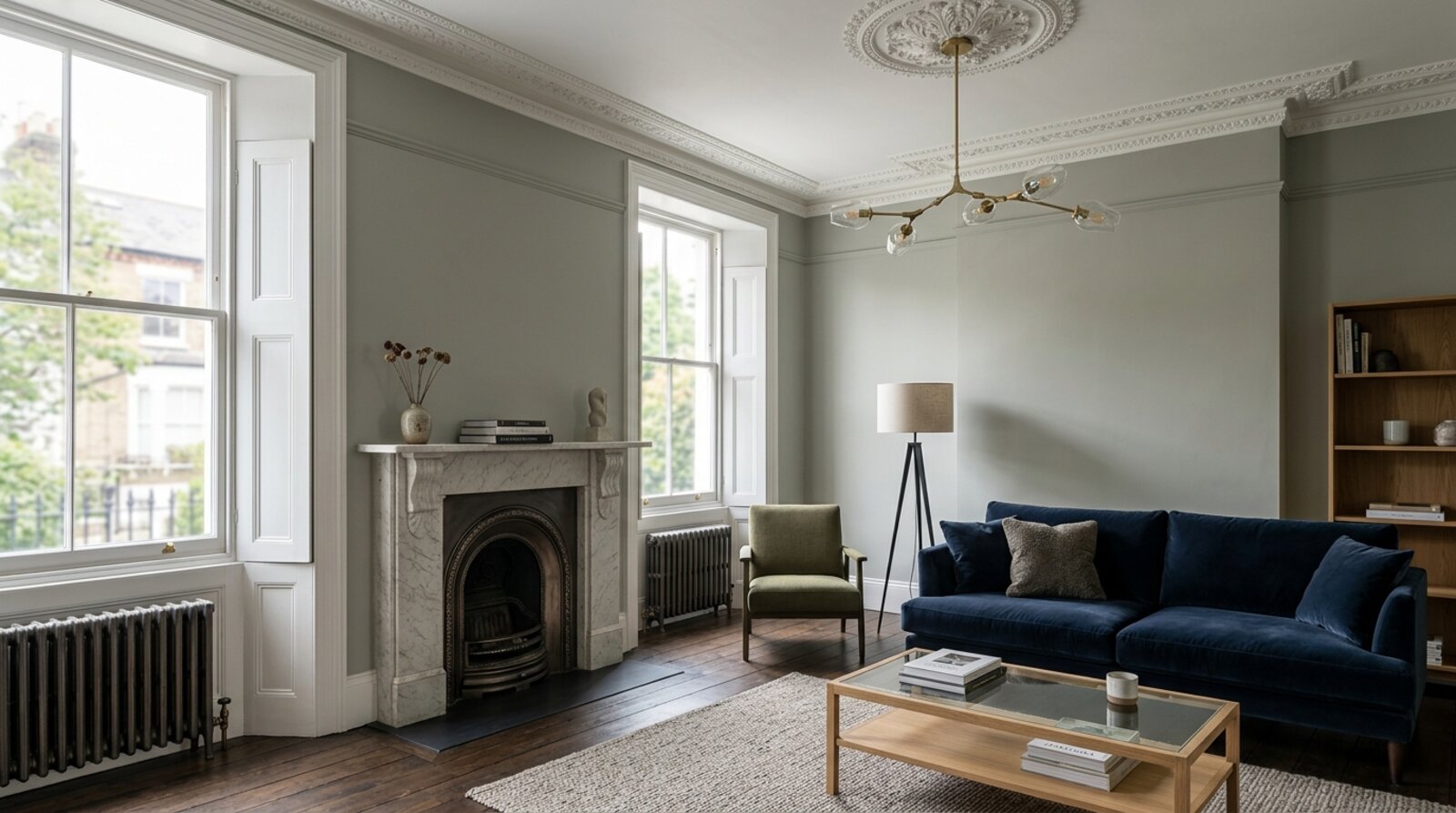
A period home in London asks a fair question of anyone who owns one. How do you live the way you actually live now, with an open kitchen, decent heating and proper lighting, inside a house that was designed for coal fires, separate rooms and servants on the top floor? Get it wrong in one direction and you have a beautiful house that is cold and impractical. Get it wrong in the other and you have stripped out the very details that made the place worth buying.
This guide is for owners of Victorian, Edwardian and Georgian houses across London and the South East who want to modernise sensitively. It covers what defines each era inside, how to blend that character with modern living, the practical constraints unique to old housing stock, what to expect on cost and lead time, and how to brief a designer so a period scheme is handled properly. For the money side in detail, read it alongside our London interior designer cost guide; this page is the period-specific companion to it.
What each era gives you to work with
Before you change anything, it helps to know what you have. The character of a London period home lives in a handful of features, and the era shapes how generous they are.
Georgian (roughly 1714 to 1837)
Georgian houses are about proportion and restraint: tall, well-spaced sash windows, high ceilings, simple but elegant cornicing, panelled doors and good joinery. Rooms are formal and symmetrical. These are the houses where the architecture does most of the work, so a sympathetic scheme tends to be quieter, letting the proportions speak.
Victorian (1837 to 1901)
The most common period stock in London. Expect decorative plaster cornicing and ceiling roses, cast-iron and marble or slate fireplaces, deep skirting boards, picture rails, panelled internal doors, encaustic tiled hallways and original floorboards under the carpet. Ceilings on the main floors are high, often around three metres, which is part of why these rooms feel as good as they do. Layouts are cellular, with a front room, a rear reception and a narrow hall.
Edwardian (1901 to 1910)
Edwardian houses are usually a little lighter and roomier than their Victorian neighbours, often wider with bigger windows and more hallway space. Detailing is simpler and more restrained, with parquet floors, leaded or stained glass, and a move towards the cleaner lines that the Arts and Crafts movement brought in. They tend to adapt to modern living more easily than a tight Victorian terrace.
Balancing heritage detail with how people live now
The central skill in period work is deciding what to keep, what to restore and what to update. A scheme that keeps everything becomes a museum; one that keeps nothing could be in any new-build. The good middle is selective.
Layout: open-plan versus cellular
The instinct is to knock everything through. Resist doing it everywhere. A period house gains a great deal from one generous open space, typically the rear reception opened into the kitchen for family life, while keeping a separate front room and an intact hallway. That preserves the original proportions and the sense of arrival, and it keeps a quiet room to retreat to. Where you do open up, the original cornice line, ceiling height and chimney breasts are worth designing around rather than flattening out.
Kitchens and bathrooms
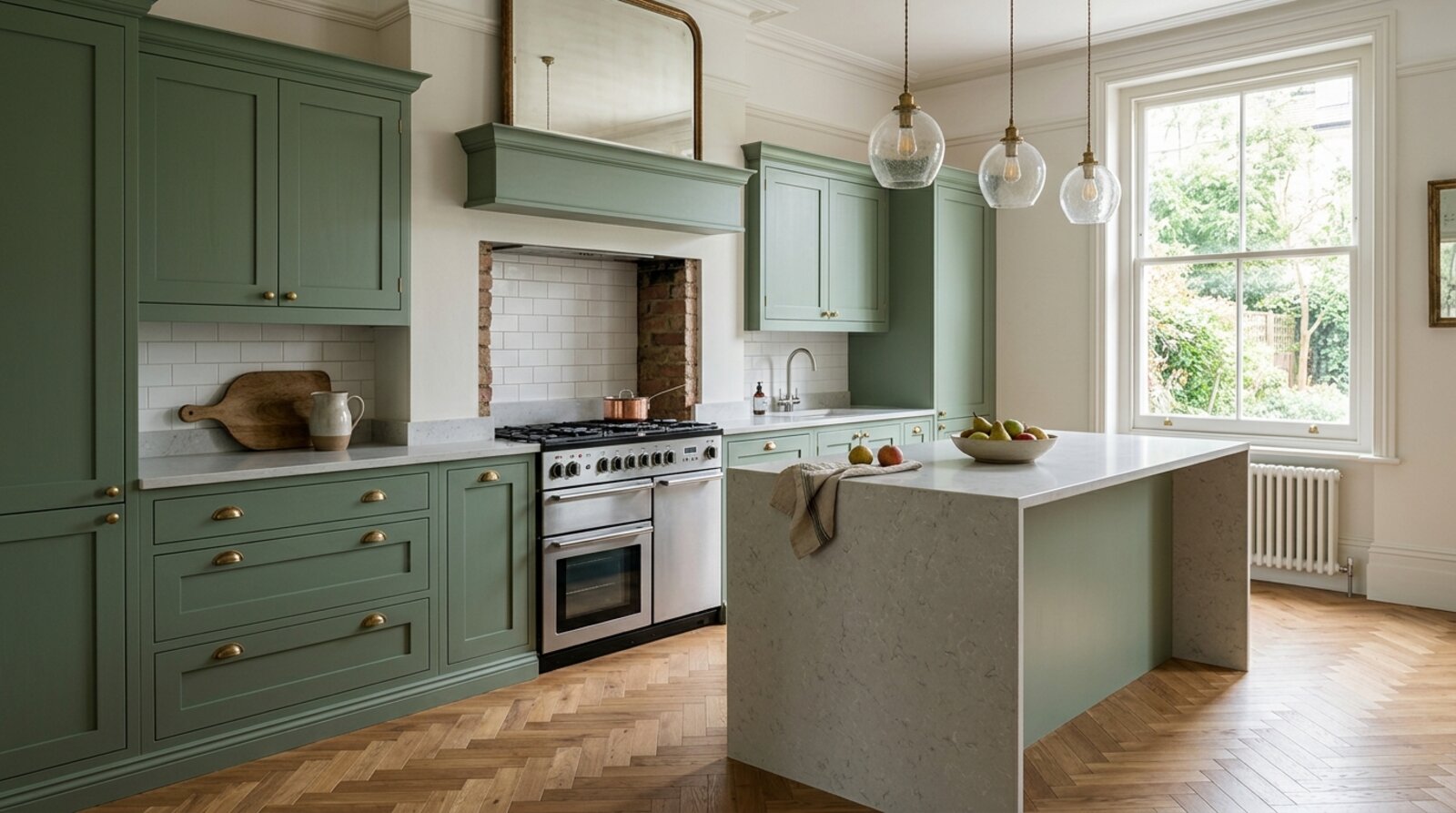
These are the rooms where modern function matters most and where period houses had the least to offer, since the originals were rarely grand. That makes them the natural place to introduce contemporary design. A bespoke kitchen set into the footprint of an old scullery or rear addition, with cabinetry that respects the room's height and a range slotted into a former chimney recess, reads as part of the house rather than an intrusion. Retaining tall skirting, a picture rail or an original sash window keeps the room anchored to its era even when everything in it is new.
Heating, insulation and comfort
Old houses lose heat, and the fix is to work with the building, not against it. Draught-proofing and refurbishing original sash windows usually outperforms ripping them out, and where replacement is ruled out by listing or conservation status, slim secondary glazing is the sympathetic alternative. Insulate where it is hidden, under floors and in the loft, and favour breathable materials, because a solid-walled period house needs to manage moisture rather than be sealed shut. Original fireplaces are worth restoring as features even when the real heat comes from elsewhere.
Lighting older rooms
Period rooms were lit for candles and gas, so they can feel gloomy with a single pendant. The answer is layers: a central fitting for the room and the ceiling rose, wall lights and picture lights at eye level, and discreet task and accent lighting that does not require chasing channels through original plaster you want to keep. Treat the lighting plan as part of the design from the start rather than an afterthought once the walls are decorated.
The practical constraints unique to period stock
This is where period projects differ most from a standard renovation, and where surprises cost the most if they arrive late.
Listed buildings and conservation areas
If your home is listed, the protection under the Planning (Listed Buildings and Conservation Areas) Act 1990 covers the whole building, inside and out. Internal works that affect its special character, such as removing a cornice, altering a staircase or taking out an internal wall, can need listed building consent on top of any planning permission. Most London period houses are not listed, but a great many sit in conservation areas, where permitted development rights are tighter and external changes like new windows, doors or rooflights often need planning permission. The first move on any period scheme is to confirm your home's status with the local planning authority before you commit to a design.
The Party Wall Act
London terraces and semis share walls, so the Party Wall etc. Act 1996 regularly applies. Cutting into a shared wall to insert steel beams for a knock-through, a very common London move, is notifiable work, and a party structure notice generally has to be served on the adjoining owner at least two months before work starts. Decorating does not trigger it; structural work to the shared wall does. Build the notice period into your programme so it does not stall the start on site.
Damp, wiring and the things behind the walls
Old houses come with old services. Rewiring, replumbing, treating damp and replacing decayed timber are common in Victorian and Edwardian homes and are best diagnosed early, because they dictate both budget and sequence. Damp in a solid-walled house is frequently a breathability problem made worse by modern sealants and cement, so the right answer is often a breathable repair rather than a chemical fix. Sorting the fabric first, then designing on top of a sound building, is far cheaper than discovering it halfway through.
What to expect on cost and lead time
Period projects use the same fee models as any London scheme. Design fees run hourly, by the day, per room, or as a 10 to 25 percent share of the project on bespoke whole-home work, and period houses tend to sit at the upper end because they carry more coordination, conservation-led repairs and planning involvement. The fee is separate from the build and furnishing budget, which is the larger figure and is pushed up by old-house tasks like rewiring, damp work, insulation and joinery made to match original profiles. Our cost guide sets out the fee benchmarks in full, and the cost calculator sizes them to your own project.
On timing, allow more than a comparable new-build. Listed building consent or planning in a conservation area adds weeks before work can begin, the two-month party wall notice runs alongside, and bespoke joinery and specialist repairs have their own lead times. A realistic period whole-home programme is measured in months rather than weeks once design, consents and build are added together.
How to brief a designer for a period scheme
A good brief is the difference between a scheme that respects the house and one that fights it.
- State the era and any status. Tell the designer whether the house is listed or in a conservation area at the first meeting; it shapes every later decision.
- Name what stays and what can go. Be explicit about the features you want kept, such as cornicing, fireplaces, sash windows or original floors, and the ones you are happy to lose.
- Flag the practical issues you know about. Damp, dated wiring, a cold rear extension or a leaking bay roof all affect cost and sequence, so raise them early.
- Set a budget out loud. A designer cannot specify a period kitchen to a number you will not name. A range is fine; silence is not.
- Bring references. Images of period homes you admire tell a studio more about the specification level you want than paragraphs of description.
A studio that works on period property in London should be comfortable talking about consents, party walls and breathable repairs as fluently as it talks about fabrics and finishes. If that practical side is missing from an early conversation, it is worth asking why.
The honest summary
Modernising a Victorian, Edwardian or Georgian home in London is a balancing act, not a demolition job. Keep the features that give the house its character, introduce modern function where the old house offered least, work with the building on heat and damp, and handle the planning, party wall and services constraints early so they do not derail the project later. Do that and you get a home that lives the way you need it to without losing the reason you wanted a period property in the first place.
If you own a period home in London or the South East and want a scheme that respects it, start at our homepage to see how we work, then book a consultation and we will talk through your house, its constraints and a realistic plan.
Frequently asked questions
Do I need listed building consent to change the inside of my period home?
Only if your home is listed. Listed status under the Planning (Listed Buildings and Conservation Areas) Act 1990 covers the whole building, inside and out, so internal works such as removing a cornice, altering a staircase or taking down an internal wall can need listed building consent. Most period houses in London are not listed, but many sit in conservation areas, where permitted development rights are restricted and external changes like new windows often need planning permission. Check your home's status with the local planning authority before you design anything.
Can I open up a Victorian or Edwardian house into an open-plan layout?
Usually yes, but selectively. Period houses were built as cellular rooms, and stripping every wall out can leave a home that feels generic and loses the original proportions. A common London approach is to open the rear reception and kitchen into one family space while keeping a separate front room, hallway and at least some period detail. If the wall is structural you will need a structural engineer and building regulations approval, and if it touches a shared wall the Party Wall etc. Act 1996 may apply.
Does the Party Wall Act apply to interior renovations in a terraced house?
It can. The Party Wall etc. Act 1996 covers work to a shared wall, building on the line of junction, and certain excavation near a neighbour's building. Cutting into a party wall to insert steel beams for a knock-through, common in London terraces, is notifiable work. A party structure notice must generally be served on the adjoining owner at least two months before the work starts. Repainting and redecorating do not trigger it; structural work to the shared wall does.
How much does it cost to renovate a period property interior in London?
Design fees follow the same models as any London project: hourly, day rate, per room or a 10 to 25 percent share on bespoke whole-home work. Period homes tend to sit at the higher end because the work involves more coordination, conservation-led repairs and planning. The build and furnishing budget is separate and is the bigger number, raised by tasks specific to old houses such as rewiring, damp treatment, insulation and joinery to match original profiles. Our London cost guide gives the fee benchmarks in detail.
How do I keep the character of a period home while making it warmer and more efficient?
Work with the building rather than against it. Draught-proof and refurbish original sash windows, or add slim secondary glazing where listing or conservation rules rule out replacements, rather than ripping the windows out. Insulate where it is hidden, such as under floors and in the loft, and use breathable materials so an old solid-walled house can still manage moisture. Restore fireplaces as features even if the heat comes from elsewhere. The aim is comfort that does not announce itself by erasing the period detail.
How should I brief a designer for a period property scheme?
Tell the designer the era and any listing or conservation status up front, name which original features you want to keep and which you are happy to lose, and set a budget you will say out loud. Flag practical issues you already know about, such as damp, dated wiring or a cold rear extension. Collect reference images of period homes you admire so the studio can read the specification level you are after. A clear brief lets a designer price and plan the scheme accurately from the first consultation.