After years of beige minimalism and quiet luxury dominating London interiors, a bold new pattern is commanding attention in homes across the capital and South East. Checkerboard and checked patterns, that classic graphic motif that's been around for centuries, are experiencing a significant resurgence, and they're bringing personality, playfulness, and visual interest back into our living spaces.
At Dunelm's recent spring/summer press show, the message was unmistakable. Guests were greeted by checkerboard tables, checkerboard armchairs, and checkerboard rugs. Even a side table featuring an actual chess set built into its tabletop made an appearance. This wasn't subtle trend-spotting. This was a declaration that checks are back, and they're here to make a statement.
For London homeowners who've spent the past few years perfecting their neutral palettes, this shift might feel surprising. But there's something wonderfully liberating about this trend. It offers a way to inject character and visual drama into your home without committing to the full-blown maximalist look that might feel overwhelming in a typical London property.
Why Checked Patterns Are Resonating Now
The timing of this trend's return isn't coincidental. After several years of lockdowns, economic uncertainty, and the relentless march of "quiet luxury" aesthetics that often translated into safe, personality-free interiors, homeowners are craving something different. We want homes that feel alive, interesting, and genuinely reflective of our personalities, not Instagram-perfect show homes.
Checked patterns offer exactly that. They're bold without being garish, structured without being rigid, and timeless without being boring. There's a reason this pattern has endured through centuries of design evolution. From medieval cathedral floors to 1950s diners to contemporary boutique hotels, the checkerboard has proven its versatility time and again.
For London and South East homeowners, this trend also addresses a practical concern. Many of us live in properties with limited square footage, where every design choice needs to work hard. Checked patterns create visual interest and depth without requiring additional accessories or furniture. A single checked rug or feature wall can transform a room's entire character.
The pattern also bridges the gap between traditional and contemporary aesthetics beautifully. In a Victorian terrace in Clapham, black and white floor tiles feel both historically appropriate and utterly modern. In a new-build flat in Canary Wharf, multicoloured checked cushions can soften angular architecture and add warmth.
The Broader Context: Maximalism's Measured Return
The rise of checked patterns sits within a larger shift happening across interior design. After years of Marie Kondo minimalism and Scandinavian-inspired restraint, maximalism is making a comeback, but it's not the overwhelming "more is more" approach of decades past. This is what designers are calling "curated maximalism" or "intentional abundance."
Rather than filling every surface with ornaments and patterns, today's maximalist approach involves strategic boldness. You might have neutral walls throughout your home but introduce drama through a bold checked floor in your hallway. Or maintain simple furniture while adding personality through checked textiles and accessories.
This measured approach makes the trend particularly suitable for London properties, where space is often at a premium. You're not trying to recreate a grand country house aesthetic in a two-bedroom flat in Hackney. Instead, you're using pattern strategically to create impact and personality within the constraints of urban living.
How to Introduce Checks Into Your London Home
The beauty of the checked pattern trend is its remarkable versatility. Whether you're ready to commit to a bold statement or prefer to test the waters with subtle touches, there are options for every comfort level and every room in your home.
Start Small: Accessories and Textiles
If you're new to patterned interiors or unsure about committing to a major change, textiles offer the perfect entry point. Checked cushions, throws, tea towels, or hand towels introduce the pattern without requiring significant investment or permanent changes.
Look for multicoloured checks if you want something that coordinates with existing colour schemes. A checked throw in shades of cream, rust, and green can tie together a living room that already features these tones. Alternatively, go classic with black and white checks for a crisp, graphic look that works in virtually any setting.
The advantage of starting with accessories is flexibility. You can change them seasonally, swap them out if you tire of the look, or gradually build up a collection as your confidence with the pattern grows.
Medium Commitment: Furniture and Upholstery
Once you've lived with the pattern in accessory form and decided you love it, furniture and upholstery offer the next level of commitment. A checked armchair can become a stunning focal point in a living room or bedroom. A checked ottoman provides both pattern and practical seating.
When selecting checked furniture, consider scale carefully. Larger checks create bold, contemporary statements, while smaller checks feel more traditional and restrained. In a compact London flat, smaller checks often work better, preventing the piece from visually overwhelming the space.
Upholstery quality matters here. Since you're making a more significant investment, ensure you choose pieces built to last. Look for hardwood frames, quality springs, and durable fabrics. A well-made checked chair should serve you beautifully for decades, outlasting countless trend cycles.
Bold Statements: Flooring and Feature Walls
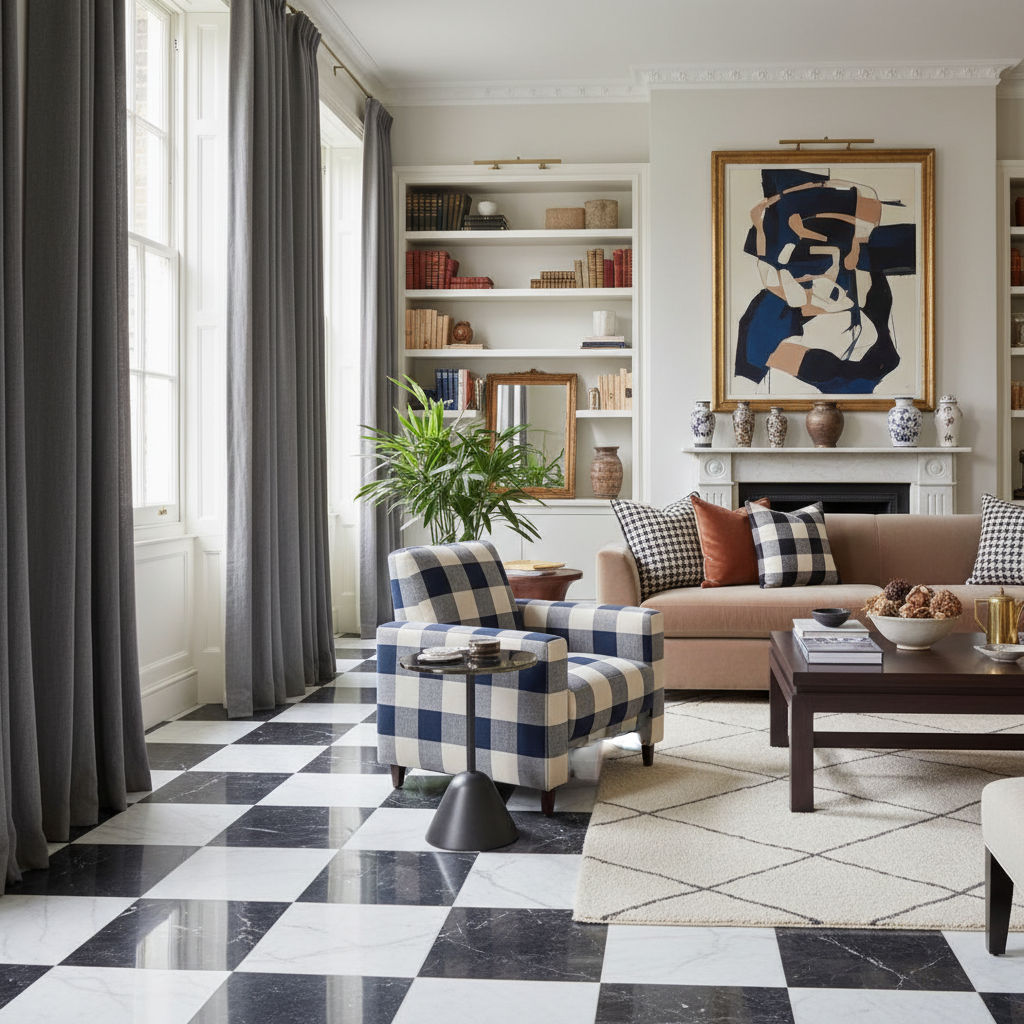
For those ready to fully embrace the trend, flooring and feature walls create dramatic impact. A checked floor, whether tiles, vinyl, or painted wood, transforms a room's entire character.
Kitchens and bathrooms are natural candidates for checked flooring. The pattern has practical advantages in these high-traffic areas, as the busy pattern helps disguise minor dirt and wear. A black and white checked kitchen floor paired with simple cabinetry creates an instantly stylish look that feels both classic and contemporary.
Hallways also benefit beautifully from checked floors. In many London homes, the hallway is narrow and lacks natural light. A bold checked floor draws the eye, creating visual interest in a space that often gets overlooked. Victorian and Edwardian properties with their traditional tiled hallways can embrace this trend simply by restoring or replacing original flooring.
Feature walls in checked patterns work particularly well in smaller rooms where a full floor might feel overwhelming. Consider a checked accent wall behind a bed in a guest room, or in a downstairs toilet where you can embrace drama in a confined space.
Colour Considerations for London Homes
While classic black and white checks remain timelessly chic, don't overlook the potential of coloured variations. The current iteration of this trend embraces checks in virtually every colour combination imaginable.
For homes with abundant natural light (lucky you if you've secured a south-facing London property), bolder colour combinations work beautifully. Think navy and white, forest green and cream, or even multicoloured checks incorporating three or four hues.
For typical London homes with more limited natural light, lighter checked patterns help maintain brightness. Cream and soft grey, pale blue and white, or even tone-on-tone checks in varying shades of the same colour create interest without darkening the space.
Consider your home's existing architecture and period features when selecting colours. In period properties with original features, checked patterns in heritage colours (deep greens, rich burgundies, classic navy) feel harmonious with architectural details. In contemporary properties, you have more freedom to experiment with unexpected colour combinations.
Design Principles for Getting Checks Right
While checked patterns are relatively forgiving, a few design principles will help you achieve professional-looking results.
First, consider scale and proportion. Large checks work best in larger spaces, while smaller checks suit compact rooms. Mixing different scales of checks within one space creates visual confusion, so stick to one scale per room.
Second, balance pattern with plain elements. If you have checked flooring, keep walls and larger furniture pieces relatively simple. If your sofa is checked, let it be the room's pattern hero and resist the urge to add additional competing patterns.
Third, quality matters. A cheap checked rug that's poorly made or badly printed will always look cheap, regardless of how trendy the pattern is. Invest in quality pieces that will age gracefully and maintain their appeal beyond this current trend cycle.
Fourth, consider the room's function. Checked patterns create energy and visual activity, making them excellent choices for social spaces like living rooms, kitchens, and hallways. In bedrooms and studies where you want to encourage relaxation and focus, use the pattern more sparingly or opt for gentler colour combinations.
The Timeless Appeal of Geometric Simplicity
Part of what makes the checked pattern trend so appealing is its fundamental simplicity. Unlike complex florals or intricate damasks, checks have a clean, geometric clarity that feels modern regardless of the era. This gives them remarkable staying power, a valuable quality when you're investing in your London property.
Even if the current peak of this trend passes, checked elements in your home won't suddenly look dated. A quality checked floor will remain stylish decades from now. A well-made checked chair becomes a classic piece rather than a trend victim.
This longevity matters particularly in the London property market, where home improvements need to work for resale value as well as personal enjoyment. Unlike highly specific trends that date quickly, checked patterns have proven their enduring appeal across centuries and continents.
Embracing Personality in Your London Home
Ultimately, the return of checked patterns represents something larger than a simple design trend. It reflects a collective desire to bring personality, playfulness, and individual character back into our homes after years of playing it safe with neutral minimalism.
For London homeowners, this is welcome news. Your home is likely your largest financial investment and the space where you spend most of your time. It should reflect your personality and bring you genuine joy, not simply follow the safest, most resale-friendly path.
Checked patterns offer a relatively accessible way to inject that personality. They're bold enough to make a statement but structured enough to feel sophisticated. They have historical credibility but feel utterly contemporary. They work in period properties and new builds, in sprawling family homes and compact flats.
As we move through 2026, expect to see this pattern appearing with increasing frequency in London homes. Whether you embrace it fully with dramatic checked flooring or simply add a few checked cushions to your sofa, this versatile pattern offers something for every style and every space.
The key, as with any design trend, is to interpret it in a way that suits your home, your lifestyle, and your personal aesthetic. Don't feel pressured to cover every surface in checks just because they're having a moment. Instead, consider where this pattern might genuinely enhance your space and bring you joy.
After all, the best interior design trends are those that make you genuinely happy to be in your home. If checked patterns achieve that for you, embrace them wholeheartedly. If they don't, that's equally valid. The return of maximalist tendencies in design ultimately means more freedom to express individual taste, whether that taste runs to bold patterns or continued minimalism.
For those ready to explore this trend, the current market offers an abundance of checked options at every price point and in every colour imaginable. From high street retailers to boutique homeware shops, the checked pattern is well-represented, making it easy to find pieces that suit your specific needs and budget.
The pattern that's taking over London interiors isn't new, but its current iteration feels fresh, fun, and perfectly timed. After years of neutral restraint, we're ready for something with a bit more personality. Checks deliver exactly that, with a generous dose of visual interest and timeless style.