If you've spent the last few years perfecting your boucle-heavy, gallery-wall-adorned living room, 2026 might be about to shake things up. Leading London interior designers are drawing a line under several overused trends from recent years and championing a fresh direction that's more sculptural, intentional, and surprisingly budget-friendly.
Alex Meachen, founder of Alex Interior Design, and Petra Arko, creative director at Bergman and Mar, have shared their expert insights on what's coming next for London and South East homes. The message is clear: it's time to move beyond Instagram-perfect neutrals and embrace interiors that feel collected, layered, and genuinely personal.
For homeowners in London and the South East who want their properties to feel current without chasing fleeting trends, this shift represents an exciting opportunity. The emerging aesthetic balances sophistication with warmth, minimalism with character, and investment pieces with high-street accessibility.
What's on Its Way Out
Before embracing the new, let's address what leading designers believe should stay in 2025. Understanding these departing trends helps clarify why the incoming aesthetic feels so refreshing.
The Scallop Edge Overload
Curved, scalloped details swept through homes as a welcome antidote to the harsh straight lines that dominated the 2000s and 2010s. From mirror frames to headboards, cushions to console tables, the scalloped edge became ubiquitous. But like many good ideas, it's been overdone.
"Curves are a brilliant way to soften a space, but scallops have been overused in very rigid, symmetrical ways," explains Alex Meachen. "In 2026, softer, more fluid curves, seen in furniture, rugs or accessories, feel more natural and add interest without overwhelming a room."
The takeaway isn't to abandon curves entirely but to choose them more thoughtfully. A single piece with organic, flowing curves creates impact. A room where every surface features identical scalloped edges feels formulaic and dated.
Boucle Furniture Everywhere
Boucle has dominated furniture showrooms for the past few years. This nubby, textured fabric undeniably adds tactile interest and a certain luxurious feel. However, when every sofa, armchair, ottoman, and occasional chair comes upholstered in boucle, the effect becomes monotonous rather than sophisticated.
"Texture matters, but when it's everywhere, it quickly becomes gimmicky rather than comforting," warns Petra Arko. The problem isn't boucle itself but the lack of textural variety when it's used to excess.
For London homeowners with existing boucle pieces, there's no need to panic and replace everything. Instead, consider introducing contrasting textures. Pair a boucle armchair with smooth leather seating, velvet cushions, or linen throws. The variety creates visual interest and prevents your space from looking like it was purchased entirely from one catalogue page.
Instagram Beige Interiors
Perhaps the most significant shift concerns the over-curated, personality-free spaces that have dominated social media. These interiors look flawless in photos but feel emotionally flat in person. Every cushion perfectly placed, every surface styled to within an inch of its life, yet somehow lacking soul.
"Over-curated 'Instagram beige interiors' are perfectly styled but emotionally flat," Petra observes. "Homes should feel layered and lived in, not frozen for a photo."
This trend particularly affected London properties, where homeowners often felt pressure to create Instagrammable spaces that prioritised aesthetic perfection over livability. The result? Beautiful homes that didn't actually function well for the people living in them.
The antidote is what Petra calls "emotional durability", choosing pieces that feel good to live with and improve over time, rather than chasing short-lived trends. This means accepting some imperfection, embracing pieces with personal meaning, and resisting the urge to stage your living room for social media.
Gallery Walls
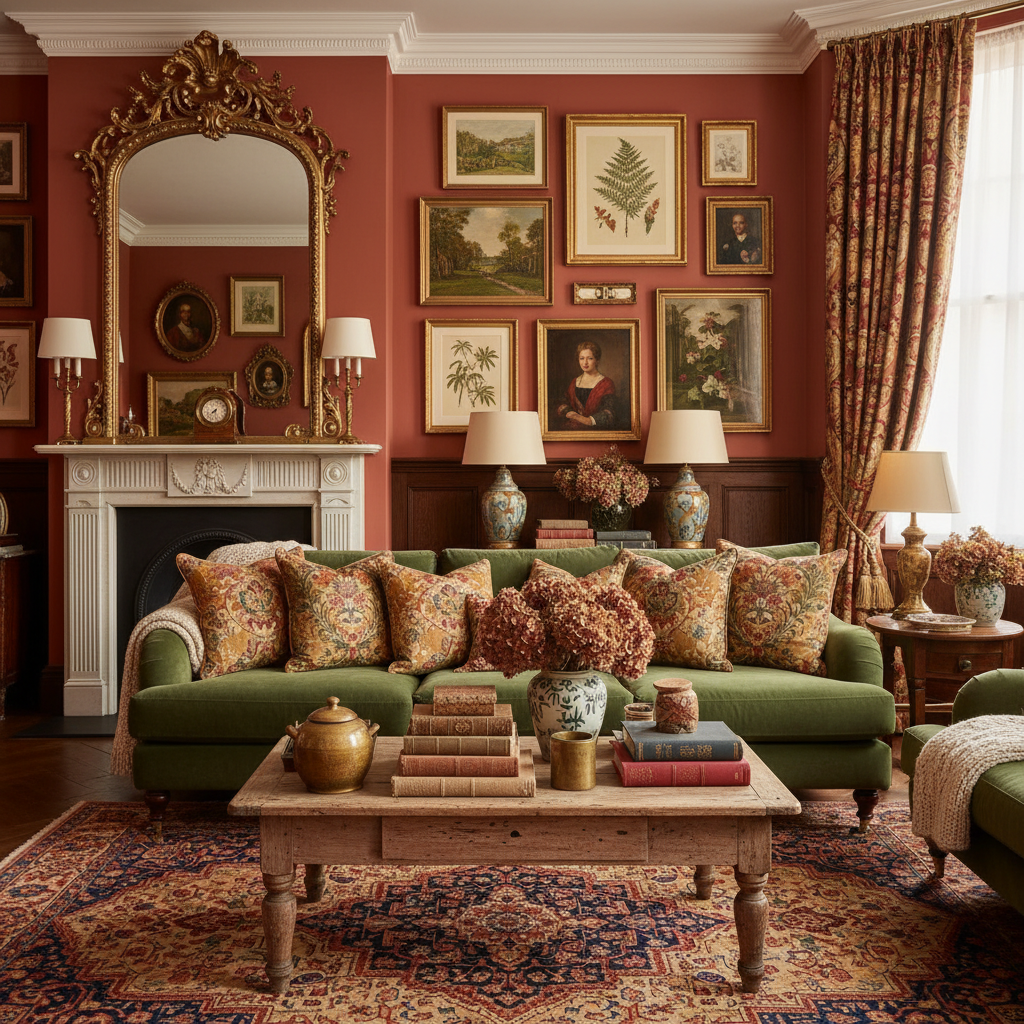
Once considered an accessible way to display art and photographs, gallery walls have reached saturation point. The problem isn't displaying multiple pieces but the cluttered effect that results from covering large wall expanses with competing frames of various sizes.
"Gallery walls have had a long run, but too many competing frames can make a room feel busy rather than calm," notes Alex Meachen. "A move towards one or two standout 'hero' pieces creates a more restful space and allows artwork to feel intentional rather than cluttered."
For London properties, which often feature limited wall space, this shift is particularly welcome. One substantial piece of art or a carefully chosen mirror makes more impact than a dozen smaller items and helps smaller rooms feel more spacious and serene.
Relaxed Roman Blinds
The relaxed Roman blind, with its deliberately sagging middle section, enjoyed a moment as a high-end detail. However, this look has already begun to feel forced and dated.
"Cleaner, straight blinds look fresher and more timeless," Alex suggests. "For an easy update, adding an inexpensive patterned or braided trim can refresh existing blinds without replacing them entirely."
This pragmatic advice suits London budgets perfectly. Rather than ripping out perfectly functional window treatments, a simple trim update provides a fresh look without the expense.
What's Trending for 2026
The incoming trends for 2026 offer sophisticated alternatives that feel both current and enduring. Better still, many are achievable without massive budgets, thanks to improved offerings from high-street retailers.
Warm Futurism
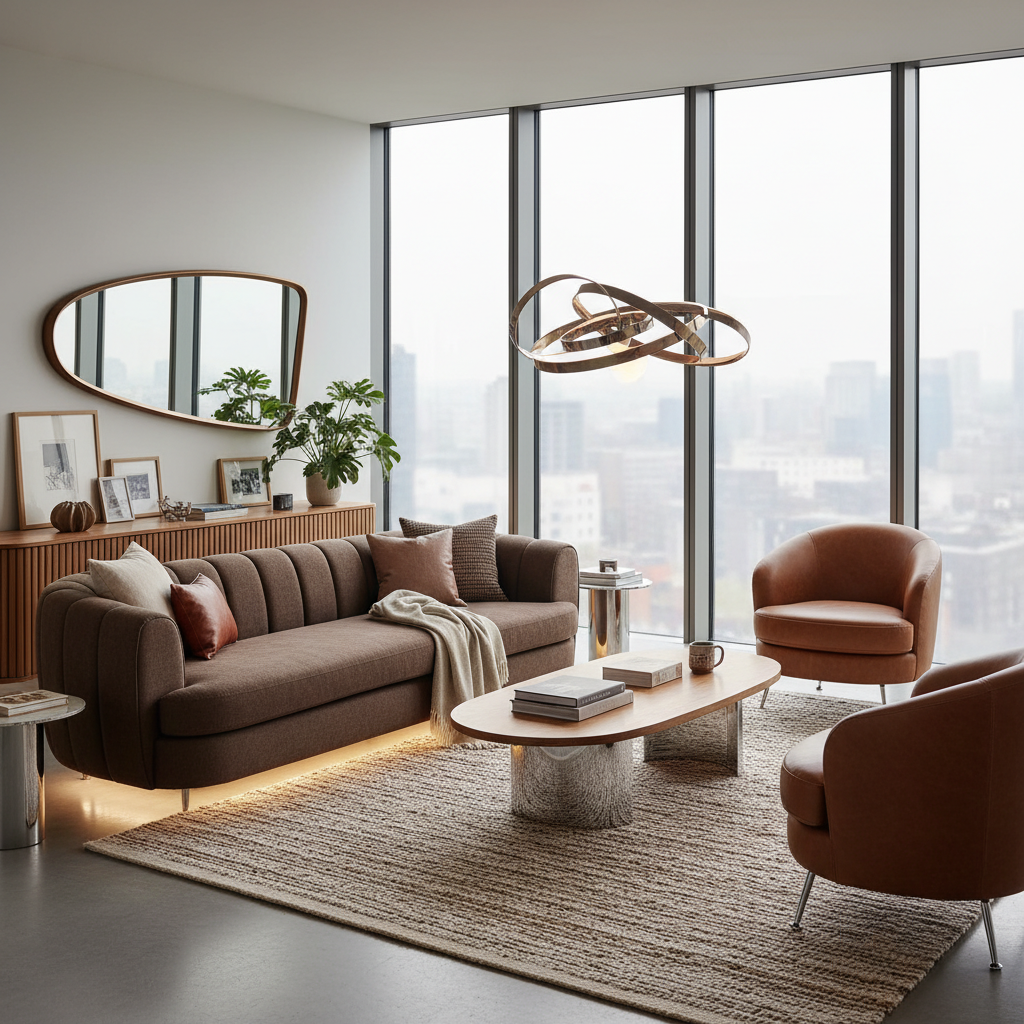
One of the most exciting directions for 2026 combines sleek, modern elements with cosy colours and textures. Think chrome details and smooth surfaces balanced with linen, canvas, and muted pastels like mint or soft peach.
"Chrome is shifting away from bling and into structure, used architecturally rather than decoratively," explains Petra Arko. "Paired with canvas, linen and muted pastels, it feels calm and modern rather than cold or nightclub-like."
This aesthetic works beautifully in London properties, where space constraints often demand streamlined furniture, but residents still crave warmth and comfort. A chrome-legged sofa becomes approachable when dressed with linen cushions and a soft throw. Glass-topped tables feel welcoming when surrounded by tactile seating.
Sculptural Statements
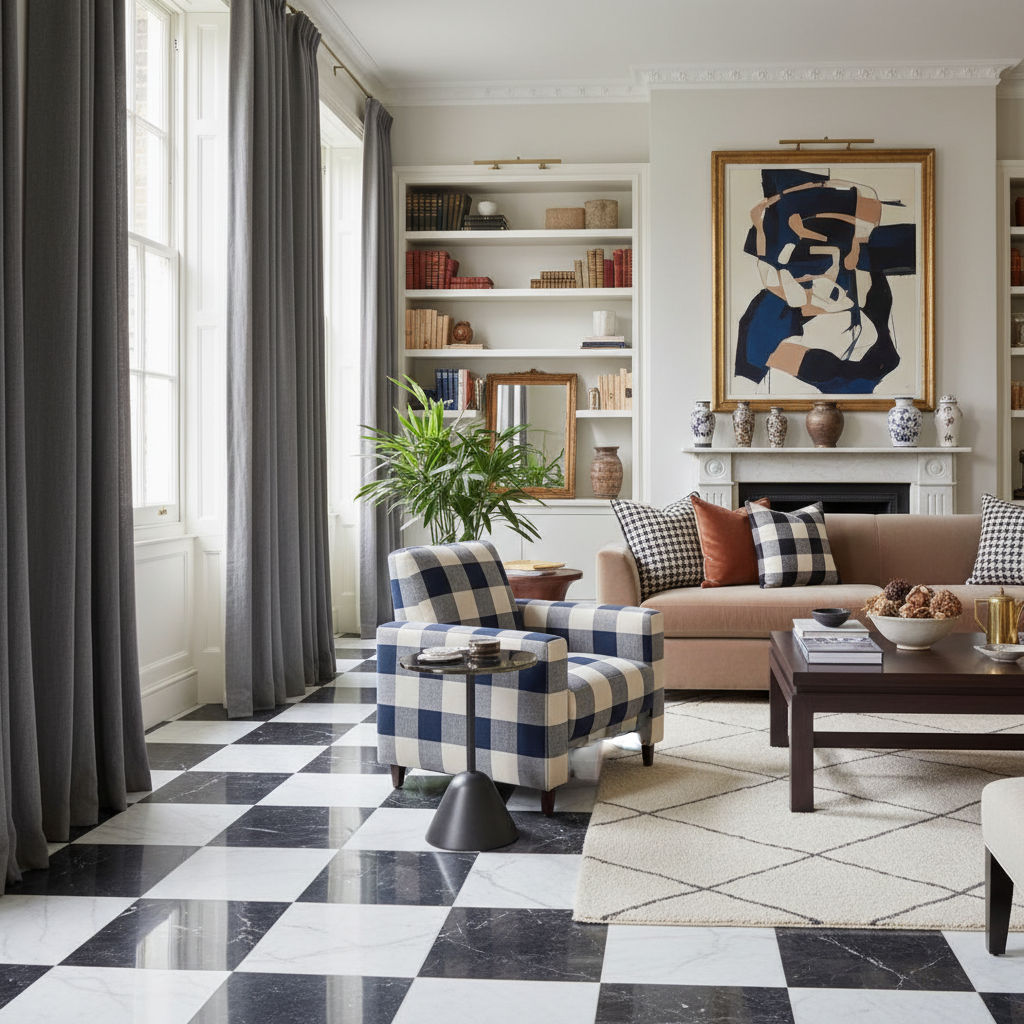
Rather than filling surfaces with numerous small accessories, 2026 embraces a more curated approach focused on fewer, more impactful pieces. These sculptural elements, whether curved furniture, statement lighting, or softly shaped mirrors, add character without clutter.
"With high-street brands offering these styles at sensible prices, it's an accessible way to give a home a more considered, designer feel," Alex Meachen notes.
This trend democratises good design. You no longer need access to exclusive showrooms to achieve a sophisticated look. Retailers like M&S, Next, and online-only brands such as Daals and Pooky are creating furniture and lighting that look far more expensive than their price tags suggest.
For London homeowners, this means refreshing your space with confidence, investing in pieces you'll live with daily, and achieving a grown-up, considered look without excessive spending.
Brown is the New Neutral
After years of beige and grey dominance, rich brown tones are claiming neutral territory. Caramel, bark, tobacco, and cacao shades bring depth and maturity that beige simply can't match.
"Used as layered warmth rather than a safety choice, brown brings depth and maturity to interiors and works beautifully with both metals and natural materials," Petra explains.
Brown's versatility makes it particularly valuable for London properties with diverse architectural features. It complements both Victorian character details and modern minimalist spaces. Whether used for entire sofas, accent walls, or decorative pieces, brown creates a grounded, sophisticated foundation.
Pair brown tones with brass or copper metals for warmth, or with chrome and glass for contemporary contrast. Layer different brown shades together, from pale caramel to deep chocolate, to create visual interest without introducing stark colour contrasts.
Low-Level Smart Lighting
The overhead "big light" is officially past its prime. In 2026, layered, controllable lighting takes centre stage, and technology has made this approach both affordable and accessible.
"Affordable smart lighting now makes it easy to layer table lamps, wall lights and floor lamps, all controlled via an app or Alexa," Alex shares. "With dimmable bulbs and pre-set scenes, you can change the mood of a room instantly, without expensive rewiring or renovations."
This trend addresses a practical concern for London homeowners: many period properties lack sufficient electrical outlets or the budget for extensive rewiring. Smart bulbs solve this problem elegantly. Install them in existing lamps and overhead fixtures, then control everything from your phone.
The result transforms how spaces feel throughout the day. Bright, energising lighting for morning coffee, softer ambient lighting for evening relaxation, and everything adjustable without touching a single switch.
Deeper Greens
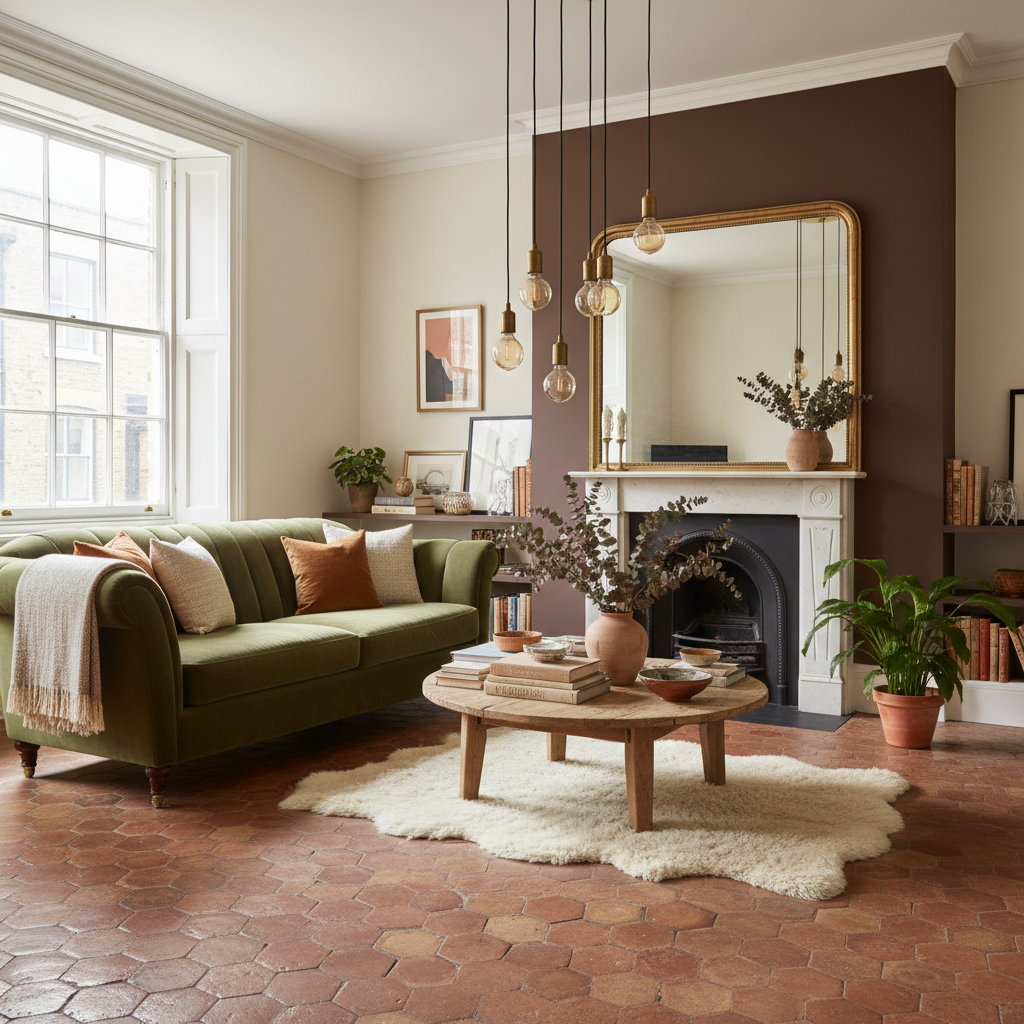
Sage green has had its moment. For 2026, earthier, more botanical green pigments are emerging: moss, elm, and rich olive tones that feel grounded and sophisticated.
"These more botanical tones feel grounded and sophisticated, and they bridge warm browns with cooler metals effortlessly," Petra observes.
These deeper greens work particularly well in London homes, evoking the city's many parks and green spaces while feeling more mature than their lighter predecessors. Use them for feature walls, upholstery, or accessories. They pair beautifully with the trending brown neutrals and create striking contrast against warm futurism's chrome details.
Versatile, Multi-Functional Seating
London properties, especially in the South East, often require furniture to work harder. Space comes at a premium, so pieces that adapt to different needs offer genuine value.
"Homes need to be flexible, and furniture is following suit," Alex notes. "Versatile seating, from side tables that double as stools to swivel armchairs, makes it easier to adapt a space for everyday life."
Look for pieces that can shift and move: armchairs on casters, ottomans with hidden storage, side tables that work as occasional seating. These adaptable elements suit modern living far better than large, fixed furniture and make hosting or reworking a layout effortless.
Petra echoes this sentiment: "Furniture that's sculptural but practical, storage built in, clutter kept out."
Tactile Glass and Visible Process Objects
Finally, 2026 celebrates imperfection. Furnishings and decorative pieces that reveal their handmade origins, complete with bubbles, wonky lines, and organic irregularities, add human character to interiors.
"Expect more bubble glass, fluting and heavy, imperfect forms," Petra predicts. "These pieces add texture, catch light beautifully in the evening, and celebrate craftsmanship rather than perfection, surfaces that show process and feel human."
This trend counterbalances the sleek elements of warm futurism and reflects a broader cultural shift toward valuing authenticity over perfection. A hand-blown glass vase with visible bubbles tells a story. A perfectly uniform factory-made version doesn't.
Making It Work for London Properties
The beauty of these 2026 trends lies in their accessibility. Unlike previous design movements that required complete overhauls or substantial budgets, this year's direction encourages thoughtful editing, strategic additions, and embracing what you already own.
Start by assessing what you have. If your space suffers from boucle overload or scalloped excess, consider which pieces you genuinely love and which you can replace or rehome. Sometimes a simple reupholstery project or new throw cushions creates the textural variety you need.
Invest in one or two sculptural statement pieces rather than numerous small accessories. A remarkable floor lamp, an organically shaped mirror, or a piece of tactile glassware creates more impact than a dozen generic decorative items.
Embrace brown. If you've been living with beige and grey for years, introducing warm brown tones feels like a breath of fresh air. Start small with cushions, throws, or artwork if you're uncertain about committing to larger pieces.
Upgrade your lighting. This relatively inexpensive change transforms how your entire space feels. Replace standard bulbs with smart versions, add a few well-chosen lamps, and suddenly you have lighting that adapts to every moment of your day.
Most importantly, let personality show. The design community is moving away from over-curated perfection toward homes that feel collected and genuinely lived in. That vintage find from a South London market? Display it proudly. The slightly imperfect handmade pottery? Put it front and centre.
Looking Forward
The overarching theme for 2026 is maturity: in colour choices, in furniture selection, in how we light and style our spaces. After years of chasing Instagram perfection and fleeting trends, London homeowners are ready for interiors that feel substantial, personal, and built to last.
"I'm hoping to see people choosing pieces that feel good to live with and improve over time, rather than chasing short-lived trends," Petra concludes. "More confidence in mixing old and new, and a greater willingness to let personality show, homes that feel collected, not curated for social media."
For London and South East residents, this shift represents creative freedom. Your home doesn't need to look like everyone else's to be beautiful. In fact, the most compelling interiors for 2026 will be those that defy easy categorisation, mixing sculptural modernity with lived-in comfort, warm browns with cool chrome, and investment pieces with high-street finds.
The result? Spaces that function beautifully for your actual life, look sophisticated without trying too hard, and improve with age rather than dating rapidly. That's a trend worth embracing.