Part P Building Regs: The 3 Jobs You Must Notify
Almost every renovation touches the wiring, and almost every homeowner is told something different about what has to be signed off. In England, Part P building regulations are narrower than the folklore suggests. Regulation 12(6A) of the Building Regulations 2010 makes exactly three kinds of electrical work notifiable: installing a new circuit, replacing a consumer unit, and any addition or alteration to existing circuits in a special location. That is the whole list. Everything else, as Approved Document P puts it, "is not notifiable", though it must still comply with BS 7671.
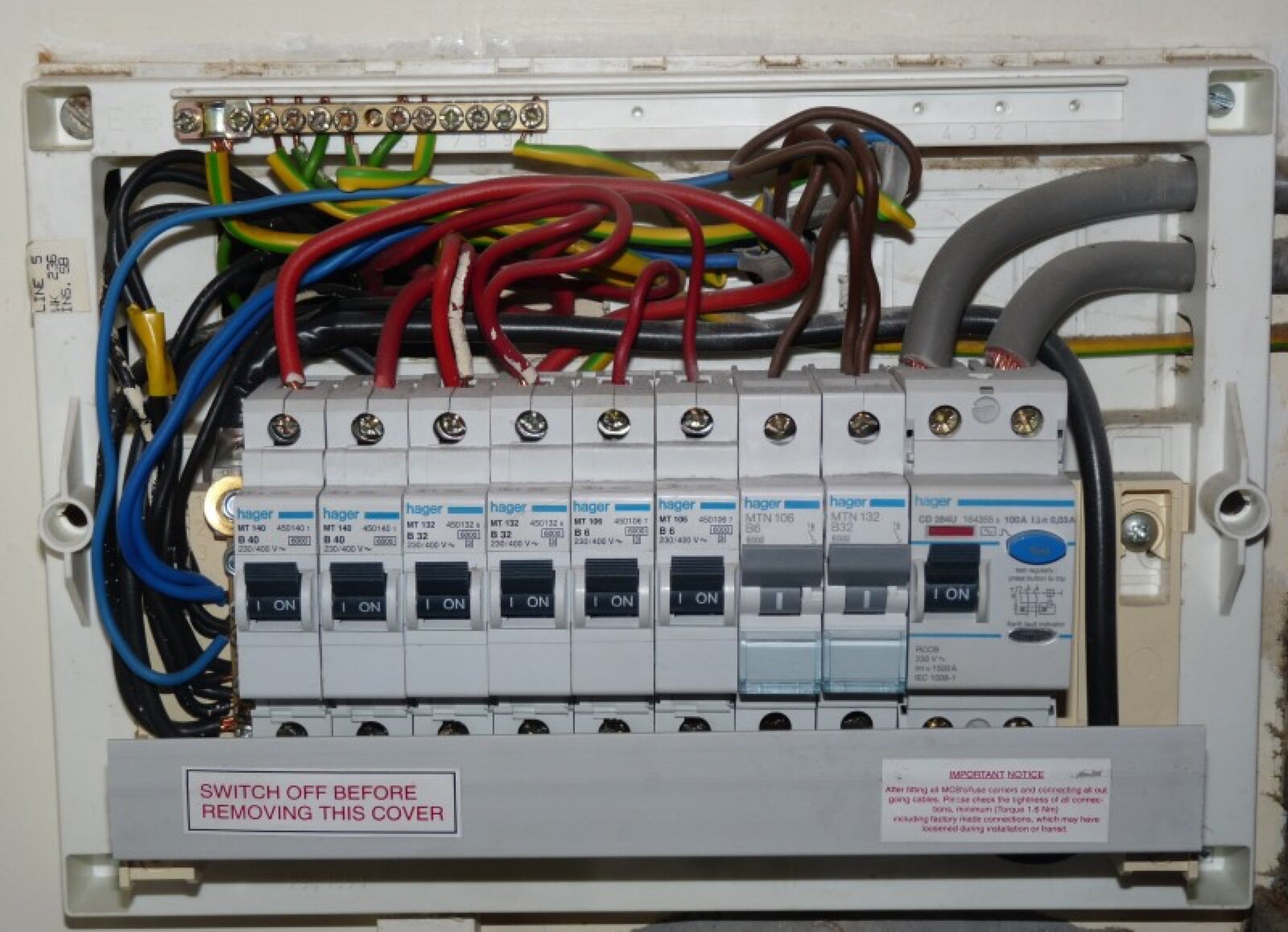

The three notifiable jobs, in the regulation's own words
Regulation 12(6A) requires a building notice or full plans where the work consists of:
- "the installation of a new circuit"
- "the replacement of a consumer unit"
- "any addition or alteration to existing circuits in a special location"
Notification has to happen before the work starts if you are going through building control directly. If a registered electrician is doing it, their scheme handles it after the fact instead, which is why almost nobody sees the paperwork.
What counts as a "special location"
This is the part people get wrong, because "the bathroom" is not the definition. The regulation defines a special location as a specific volume of space, not a room.
Within a room containing a bath or shower, the special location is the space surrounding the bath tap or shower head, extending:
- Vertically from finished floor level to 2.25 metres, or to the shower head itself where that is fixed higher than 2.25 metres.
- Horizontally 0.6 metres from the edge of the bath tub or shower tray; or, where there is no tub or tray, 1.2 metres from the centre point of a wall or ceiling-mounted shower head.
A room containing a swimming pool or a sauna heater is also a special location, in full.
The practical consequences are worth spelling out. Moving a shaver socket on the far wall of a large bathroom, more than 600mm from the bath, is not notifiable under Part P. Adding a spur inside that 600mm zone is. And Approved Document P carries a separate note that socket-outlets "should not be located within 3m of a bath tub or shower tray", which is a design rule rather than a notification trigger, but it catches out a lot of en-suite layouts. Our guides to minimum bathroom size and bathroom clearances cover the dimensional side of the same rooms.
What is not notifiable
Approved Document P is direct: all electrical installation work other than the three items above is not notifiable, "namely additions and alterations to existing installations outside special locations, and replacements, repairs and maintenance anywhere".
So, on a typical London refurbishment:
| Work | Notifiable? |
|---|---|
| Adding sockets to an existing ring in a living room | No |
| Replacing light fittings, switches and socket faceplates | No |
| Running a new circuit from the consumer unit for a kitchen island | Yes |
| Swapping an old fuse box for a modern consumer unit | Yes |
| Moving a shaver socket 400mm from the bath edge | Yes |
| Moving that socket in a bedroom | No |
| Installing a built-in cooker on the existing cooker circuit | No |
| Installing a built-in cooker that needs a new cooker circuit | Yes |
| Connecting an electric gate to an existing isolator | No |
| Running a new circuit from the consumer unit to that isolator | Yes |
Those last four are worked examples from Approved Document P itself, and they show the logic: Part P follows the circuit, not the appliance. Fixed equipment is within the scope of Part P even where the final connection is a standard 13A plug and socket, but it is only notifiable if it involves one of the three listed operations. The same applies to prefabricated modular wiring, the plug-and-socket kitchen lighting systems that are now common.
Who signs it off: the three certification routes
For notifiable work, Approved Document P allows exactly three procedures:
- Self-certification by a registered competent person. The electrician is registered with a scheme, does the work, issues a BS 7671 electrical installation certificate and notifies the scheme, which issues the Building Regulations compliance certificate and tells the local authority. No building control fee, no inspection booking.
- Third-party certification by a registered third-party certifier. Useful where an installer is not scheme-registered: a registered third party inspects and certifies the work instead of building control.
- Certification by a building control body. You give a building notice or deposit full plans before starting, pay the fee, and the authority inspects.
Whichever route, the work should be inspected and tested in accordance with BS 7671. Electrical inspection and test forms go to the person who ordered the work; the Building Regulations certificate normally goes to the occupier, though in a rented property it may go to whoever ordered the work with a copy to the occupier.
The one that costs money: route 3 is the expensive one, and it is where DIY and unregistered work ends up. Booking building control after the fact means paying for a regularisation inspection on work that may already be plastered over. Establishing which route your electrician is using is a five-second question at quoting stage, and it is worth asking every time.
Which version of BS 7671 applies in 2026
Part P sets the notification rules; BS 7671, the IET Wiring Regulations, sets the technical standard, and it moved this year. Amendment 4 was published on 15 April 2026 as BS 7671:2018+A4:2026, and from that date electrical work should comply with it. The previous version, BS 7671:2018+A2:2022+A3:2024, is withdrawn on 15 October 2026, so there is a six-month overlap in which designs begun under the old amendment can be completed. Amendment 4 adds a dedicated chapter on battery energy storage systems, a new section on functional earthing and bonding for ICT equipment, and a major revision of the medical locations section.
For a domestic renovation, the practical relevance is mostly the battery storage chapter, which matters if your project includes a home battery alongside solar, and the fact that a certificate issued this autumn should reference the correct amendment. Ask which version your certificate cites.
How this fits a renovation programme
Electrical notification rarely delays a project on its own, but it interacts with everything else that does.
- First fix is the deadline, not completion. If you are going through building control rather than a registered electrician, the notice has to be in before the work starts, which in practice means before first fix, not before the electrician turns up to test.
- Certificates matter at sale. A buyer's solicitor will ask for the Building Regulations compliance certificate for a rewire or a consumer unit change. Missing paperwork on notifiable work is one of the standard causes of a retention or a price chip.
- Leasehold and listed work stack on top. Part P compliance says nothing about whether you had the landlord's consent or listed building consent. See licence to alter a leasehold flat and listed building interior alterations.
- Other parts of the regulations still apply. Approved Document M recommends mounting wall sockets and switches at accessible heights in new dwellings, and suggests consumer units be mounted with switches between 1350mm and 1450mm above floor level as one way of complying. Worth knowing before the boards go on.
Our broader guide to building regulations for a London renovation sets Part P against the parts you are more likely to trip over, and planning permission for internal alterations covers the consents side. Everything else we publish is on the Vertigo Interiors homepage.
The three questions to ask your electrician
- Is any of this work notifiable, and which of the three items does it fall under? A competent electrician will answer instantly.
- Which certification route are you using, and are you registered? If the answer is building control, find out who is paying the fee and when the notice goes in.
- What certificates will I receive, and against which version of BS 7671? You should end up with a BS 7671 electrical installation certificate and, for notifiable work, a Building Regulations compliance certificate.
Get those three answers in writing at quote stage and the paperwork side of the electrics is finished before the first cable is pulled.
Frequently Asked Questions
What electrical work is notifiable under Part P?
Three things, under regulation 12(6A) of the Building Regulations 2010: installing a new circuit, replacing a consumer unit, and any addition or alteration to existing circuits in a special location. All other electrical installation work is not notifiable, though it must still comply with BS 7671.
Is all work in a bathroom notifiable?
No. Only work within the defined special location, which is the space around the bath tap or shower head: up to 2.25 metres high, and 0.6 metres horizontally from the edge of the bath or tray, or 1.2 metres from the centre of a shower head where there is no tray. Work elsewhere in the same bathroom is not notifiable, though sockets should not be located within 3 metres of a bath or shower tray.
Do I need building control for adding sockets?
Not if you are adding points to an existing circuit outside a special location. That is explicitly non-notifiable. Running a brand new circuit from the consumer unit is notifiable, whatever it feeds.
Who can certify notifiable electrical work?
One of three: a registered competent person self-certifying, a registered third-party certifier, or a building control body. Registered electricians are the cheapest route because there is no building control fee and no inspection to book.
Which version of the wiring regulations applies now?
BS 7671:2018+A4:2026, published on 15 April 2026. The previous version, BS 7671:2018+A2:2022+A3:2024, is withdrawn on 15 October 2026, giving a six-month overlap. Amendment 4 adds a chapter on battery energy storage systems and a new section on functional earthing for ICT equipment.
What happens if notifiable work was never notified?
You can apply to the local authority for regularisation, which means paying for an inspection of work that may already be covered up, and sometimes opening it up again. It is also the paperwork a buyer's solicitor asks for on a rewire or consumer unit change, so it tends to surface at the worst possible moment.
Sources
- Approved Document P, Electrical safety, dwellings, 2013 edition, including regulation 12(6A) and the special location definition: gov.uk
- Building Regulations 2010, regulation 12: legislation.gov.uk
- BS 7671:2018+A4:2026 publication and transition dates: NICEIC
Checked on 5 September 2026. Part P applies to dwellings in England; Wales, Scotland and Northern Ireland have their own regimes. This is general guidance, not a substitute for advice from a registered electrician on your own installation.