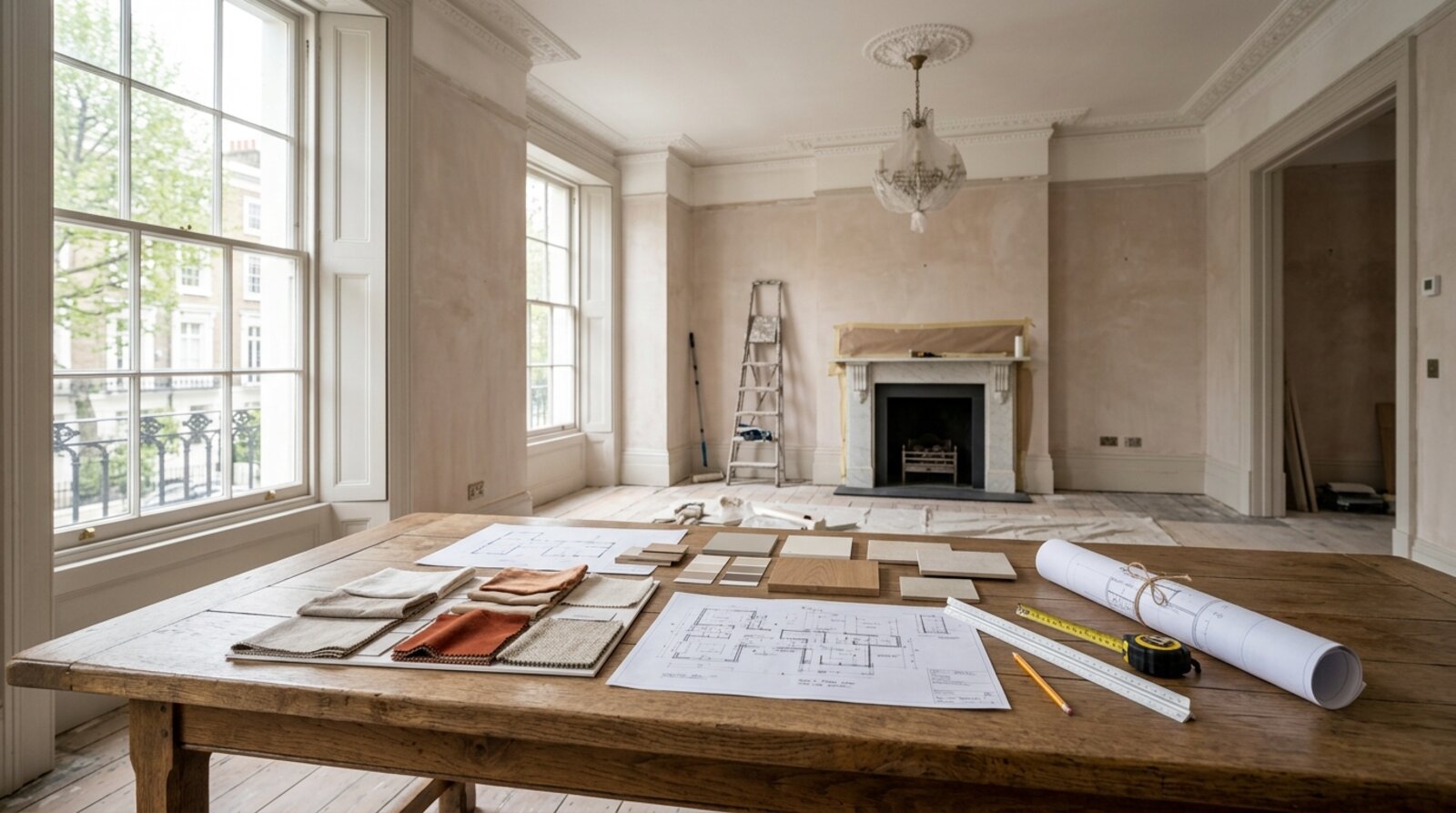
"How long will it take?" is usually the second question we hear, right after "how much will it cost?". The honest answer is that a designer-led project runs longer than most people expect, because the design itself takes weeks before anyone touches a wall, and because the best furniture and joinery are made to order rather than pulled off a shelf.
This guide sets out a realistic timeline for a London home, phase by phase, with week ranges you can actually plan around. We have separated single rooms from whole-house schemes, and period properties from new-builds, because those distinctions change the numbers more than anything else.
If you are still weighing up whether to commission a designer at all, our guide on working with an interior designer covers the process and the relationship in more depth. For pricing, see our London cost guide or run rough numbers through the cost calculator.
The Short Answer
Before the detail, here are the typical end-to-end ranges we see, from first consultation to the day the room is styled and photographed:
- Single room, decorative refresh (no structural work): around 8 to 16 weeks.
- Single room, full renovation (new bathroom or kitchen): around 3 to 6 months.
- One floor or a major part of a home: around 4 to 8 months.
- Whole house with structural work and bespoke joinery: around 9 to 18 months.
Two numbers inside those ranges surprise people. The design phase alone is commonly 6 to 12 weeks before procurement starts, and bespoke furniture or fitted joinery often needs 8 to 16 weeks to make. Those two facts, more than slow trades, are what set the overall length.
Phase 1: Initial Consultation (Week 0 to 2)
The first meeting establishes scope, budget and whether you and the designer are a good fit. We look at the spaces, talk about how you live, and discuss what you want to achieve and what you can spend. After that, you receive a proposal setting out the services, the fee and an outline programme.
This phase is short in working hours but can stretch in calendar time, because it depends on diaries and on how quickly you sign off the proposal. Allow one to two weeks from first contact to a signed agreement.
Phase 2: Survey and Brief (Week 1 to 3)
Once appointed, we measure the property accurately and document your brief in detail: lifestyle, must-haves, the things you cannot stand, and any fixed points such as a piece of furniture you are keeping. For an older London property this is also when a measured survey often picks up the quirks that later affect timing, out-of-square walls, a chimney breast someone wants removed, or services that are well past their useful life.
Phase 3: Concept and Mood Boards (Week 2 to 6)
Concept development is where the scheme takes shape. Expect mood boards, colour palettes, spatial layouts and furniture direction, usually as a small number of options to compare. For a single room this is a couple of weeks. For a whole house, where every room has to relate to the next, concept work can run four to six weeks on its own.
Your input here directly affects the schedule. Quick, decisive feedback keeps the programme tight; long gaps between presentation and sign-off are the most common reason a project quietly slips.
Phase 4: Detailed Design and Specification (Week 4 to 12)
With a concept agreed, the design is developed into specific proposals: detailed plans, joinery drawings, lighting layouts, finishes, and a full specification of every product and material. This is the documentation a contractor needs to price the job accurately and build it without guessing.
This phase is where bespoke elements are designed in detail, and it is worth doing properly, because changes made after manufacturing starts are expensive and slow. For a whole-house scheme, detailed design and specification commonly take six to twelve weeks.
Phase 5: Procurement and Lead Times (Week 8 onward)
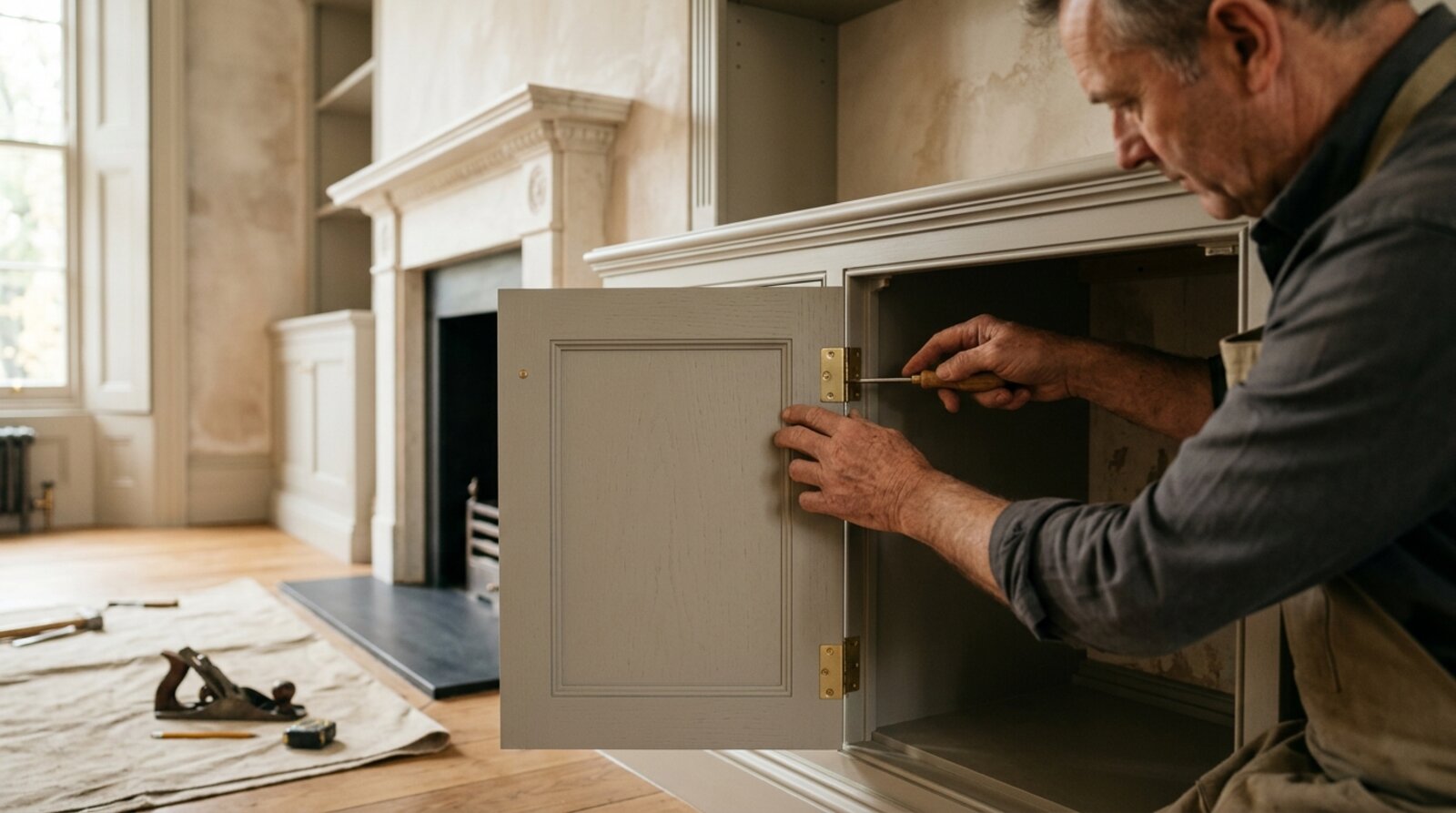
Procurement is where the calendar really stretches, and it largely runs in parallel with building works rather than after them. The key is that the longest-lead items are ordered the moment the scheme is approved. Typical lead times we plan around:
- Bespoke fitted joinery: 8 to 16 weeks from approved drawings.
- Made-to-order sofas and upholstery: 8 to 14 weeks, sometimes longer for specialist makers.
- Bespoke or imported curtains and blinds: 6 to 10 weeks.
- Stone, specialist tiles and certain lighting: 4 to 12 weeks.
A single late decision on, say, a kitchen worktop can push a finish date back by two or three months, which is why we press for sign-off on long-lead items first and lower-impact items later.
Phase 6: Contractor Scheduling and Building Works
For anything beyond decoration, you need a contractor, and good ones in London are usually booked weeks or months ahead. Securing the right team and slotting into their programme is part of the timeline, not separate from it. Building works themselves vary enormously: a bathroom might be three to five weeks on site, a kitchen four to eight weeks, and a whole-house renovation can run several months of continuous work.
This is also where London-specific factors bite hardest. If your work affects a shared wall or involves excavation near a neighbour, the Party Wall etc. Act 1996 applies. You generally must give two months' notice before work to a party structure, and one month before certain excavation works, before that work can begin. In a terrace, that notice period needs to be served early or it becomes a hard delay (Federation of Master Builders: party wall agreements).
If your home is listed or in a conservation area, expect a consent application. Listed building consent carries a statutory target of eight weeks for a decision once the application is validated, and longer for major or complex schemes (Planning Portal: listed building consent). That clock should be started as early as possible, because nothing structural can proceed until consent is granted.
Phase 7: Installation, Styling and Handover
The final phase is what most people picture when they imagine "the designer arriving": furniture delivered and placed, curtains hung, art and accessories styled, and a snagging list worked through until everything is right. For a single room this can be a day or two; for a whole house it is often a phased installation over two or three weeks as deliveries land. We do not consider a project finished until the snags are closed and the home actually works the way it was designed to.
Single Room vs Whole House
The biggest driver of length is simply scope. A single decorative room has few moving parts and a short critical path. A whole house multiplies the decisions, the deliveries and the trades, and forces everything to be coordinated so rooms relate to one another. As a rule of thumb, doubling the number of rooms does more than double the management effort, which is part of why whole-house schemes are quoted in months rather than weeks.
Period Property vs New-Build
Period homes, which describe a large share of London's housing, tend to run longer and less predictably. They reveal surprises once works begin, and any listed or conservation status adds consent steps and tighter material choices. A good contingency for an older property is a few weeks on top of the headline programme.
New-builds and recently converted flats are usually more predictable structurally, so the timeline is set mainly by furniture and joinery lead times rather than by building work. The design can move quickly; the wait is for things to be made.
What Drives Delays, and How to Avoid Them
Across hundreds of programmes, the same few causes account for most slippage:
- Late client decisions. The single most common cause. Sign off concepts and specifications promptly; if you need thinking time, say so rather than letting it drift.
- Long furniture and joinery lead times. Order the longest-lead items the moment the scheme is approved, not when site work finishes.
- Party wall and consent timing. Serve notices and lodge applications early so statutory clocks run in parallel with design, not after it.
- Hidden conditions in older homes. Build in contingency time and money so a damp surprise does not derail the whole programme.
Planning Your Own Timeline
Work backwards from when you want to be living in the finished home. For a whole-house project, that means engaging a designer roughly 9 to 12 months ahead, and earlier still for a listed property. For a single room, three to four months gives furniture and bespoke items enough time to be made and delivered without anyone having to rush the decisions that matter.
If you would like a realistic programme for your own property, we are happy to talk it through. You can start from the Vertigo Interiors homepage, or get in touch and we will map out the likely phases and timings for your specific project.
Frequently asked questions
How long does a typical interior design project take?
A single room with light works usually runs around 8 to 16 weeks from first consultation to final styling. A full renovation of one floor typically takes 4 to 8 months, and a whole-house scheme involving structural work and bespoke joinery commonly runs 9 to 18 months. The design phase often takes 6 to 12 weeks before any tools are picked up, and procurement and building works account for most of the rest.
Why do interior design projects in London take longer than expected?
Bespoke joinery and upholstered furniture carry long lead times, often 8 to 16 weeks. London terraces frequently trigger the Party Wall etc. Act 1996, which requires up to two months' notice to neighbours before structural work can start. Listed buildings and conservation areas add consent applications with a statutory eight-week target. Client decisions made late are the single most common cause of slippage.
How far in advance should I start planning my project?
For a whole-house project you should ideally engage a designer 9 to 12 months before you want to be living in the finished home, and longer if it involves a listed property or planning consent. For a single room, allow at least 3 to 4 months so furniture and bespoke items have time to be made and delivered.
Do period properties take longer than new-builds?
Usually yes. Period homes reveal surprises once work begins, such as damp, uneven structure or outdated services, and any listed or conservation status adds consent steps. New-builds tend to be more predictable structurally, so the timeline is driven mainly by furniture and joinery lead times rather than by building works.
How can I keep my interior design project on schedule?
Sign off concepts and specifications promptly, serve any party wall notices and lodge consent applications early, order long-lead items as soon as the scheme is approved, and build a realistic contingency of a few weeks into the programme. Most delays come from late decisions and late ordering rather than from slow trades.